Please ensure Javascript is enabled for purposes of website accessibility Higher Inflation, Contained Expectations
hk
en
institutional
institutional
false
true
Gathering data
Disclaimer Not Available

Higher inflation, contained expectations

Higher inflation, contained expectations

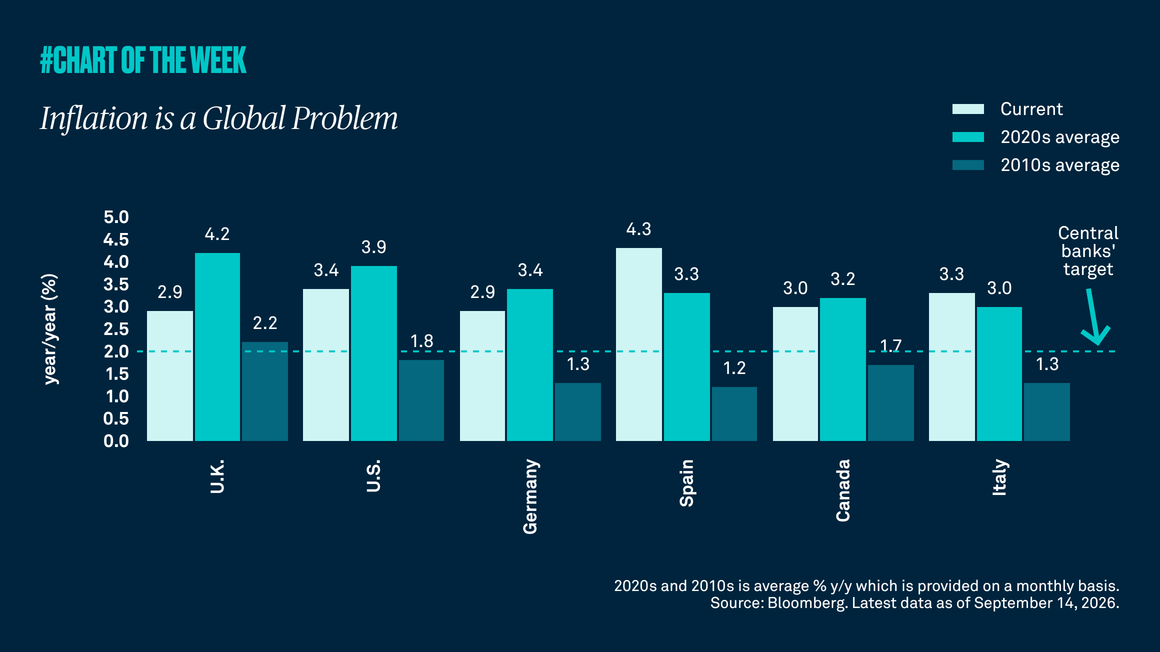
Inflation has jumped since the Strait of Hormuz closed, squeezing consumers through higher gas and utility bills and pressuring businesses with higher freight and operating costs. Yet, longer-term inflation expectations remain contained, suggesting this looks more like a temporary energy shock than a lasting inflation upswing.
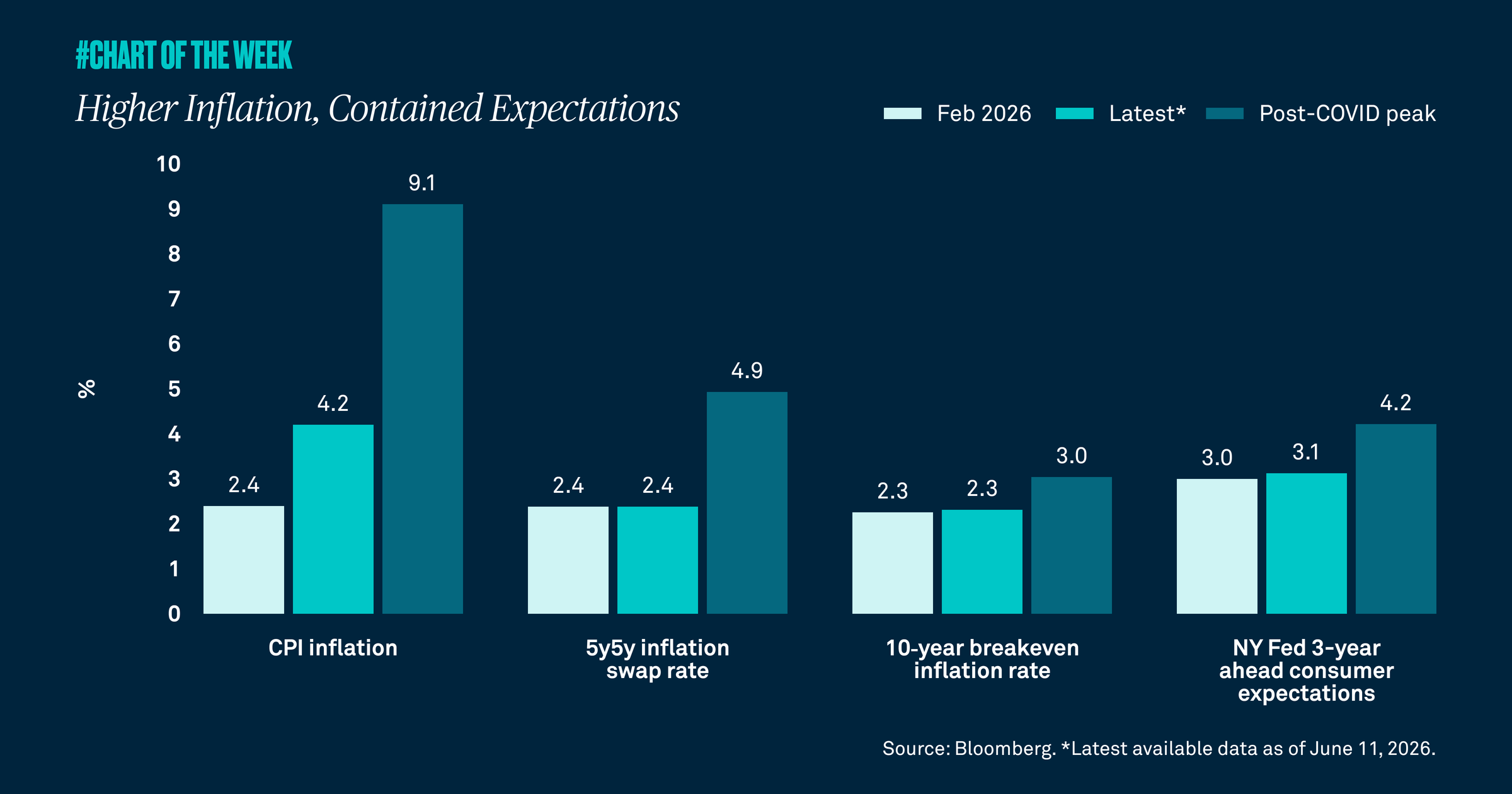

Inflation has risen since the start of the Iran conflict and the closure of the Strait of Hormuz, driven largely by higher energy costs. Consumers are feeling it through higher gasoline and utility bills, while business owners are facing higher freight, utility and operating costs.

Since February, annual inflation has increased to 4.2% from 2.4%. Yet, longer-term inflation expectations have stayed well anchored, suggesting households and markets still view this as an energy-driven shock rather than the start of a lasting inflation upswing. We share this view, and believe Middle East tensions should ease sooner rather than later given the pending peace deal, which will allow energy prices to normalize over time. Still, we could see higher inflation prints over the next several months, which, combined with a resilient economy, should keep the Federal Reserve on hold.

While near-term volatility is possible, we remain constructive on U.S. equities, supported by resilient earnings, solid capital spending and a stabilizing labor market over the long term. 
RELATED CONTENT
Is the market rally broadening?
Chart of the Week | Macroeconomic

Stocks, as measured by the S&P 500, are up over 13% through early August. The solid gains have been fueled by a resilient economy, steady consumer spending, optimism around artificial intelligence and better-than-expected earnings growth. Still, some investors worry the advance may be too concentrated in technology and that AI-capex monetization may fall short of expectations. A closer look suggests that it is not just tech moving the market higher.

Fed friction?
Chart of the Week | Macroeconomic

Markets are navigating tensions between a Fed that offers less guidance and an inflation backdrop that remains sticky. Added uncertainty from Middle East tensions and energy-price swings is further shaping sentiment, with recent moves in Treasury yields suggesting the market wants the Fed to hike. However, with yield volatility expected to linger in the near term, we see today’s elevated Treasury yields as an especially compelling opportunity in fixed income.

cotw_27_07_2026
Chart of the Week | Macroeconomic

The war in Iran has increased volatility across fixed income markets, pushing municipal bond yields higher as investors reassess inflation risk, energy costs and the path of Federal Reserve policy. Even so, historically elevated municipal bond yields present a compelling opportunity for tax-sensitive investors.

Sizing up small caps
Chart of the Week | Macroeconomic

Small caps have outperformed this year despite the threat of higher interest rates, suggesting the rally is being driven by more than just diversification away from large cap tech stocks. Improving earnings expectations and a resilient U.S. economy support our view that small caps have further upside from here.

Gathering data
Disclaimer Not Available

CONTACT US  |  +852 3926 0600