Please ensure Javascript is enabled for purposes of website accessibility Impact of Geopolitics over Time?
fr
fr
intermediary
intermediary
false
true
Gathering data
Disclaimer Not Available

Impact of geopolitics over time?

Impact of geopolitics over time?

Tensions between the U.S./Israel and Iran have recently boiled over into a military conflict, which has given many investors the jitters. However, our research shows that equity market pullbacks resulting from geopolitical events are often short lived with the S&P 500 typically higher in the months following these events.  
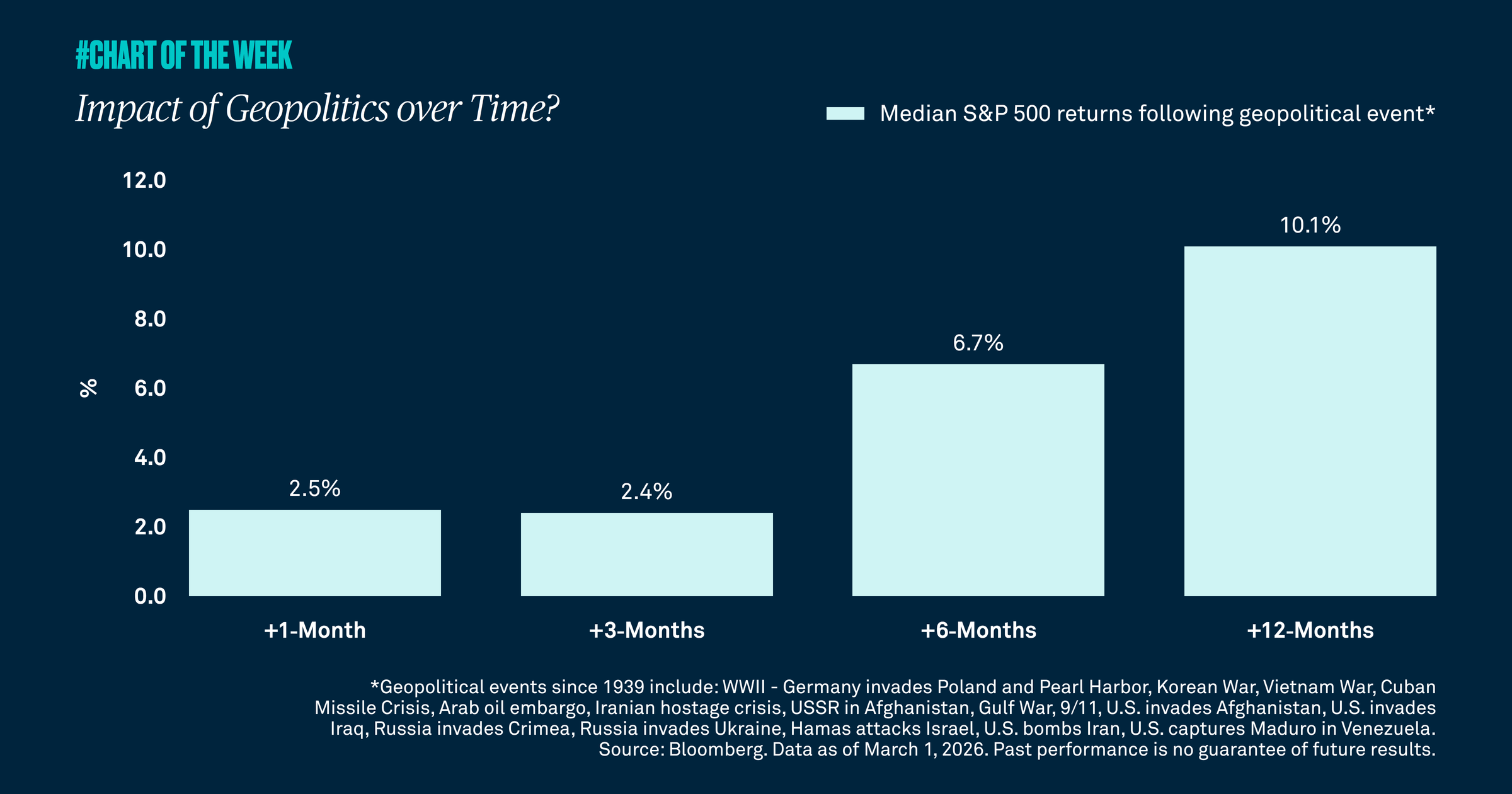

The events in the Middle East involving the U.S., Israel and Iran have led many investors to worry about the near-term implications for financial markets and oil in particular. As largely expected, the biggest impact has been on the price of oil. While it may be hard to know how long this conflict will last, history demonstrates that as long as there is no sustained energy supply shock, S&P 500 returns are higher one, three, six and 12 months after a geopolitical conflict according to data since 1939.

Over time, it’s equity market fundamentals — earnings and interest rates ― that drive markets. Given that the fundamentals remain supportive, we reiterate our constructive outlook on global growth and markets in 2026, reminding investors that a globally diversified portfolio will help navigate near-term uncertainty and preserve wealth. 
AUTRES ARTICLES ASSOCIÉS
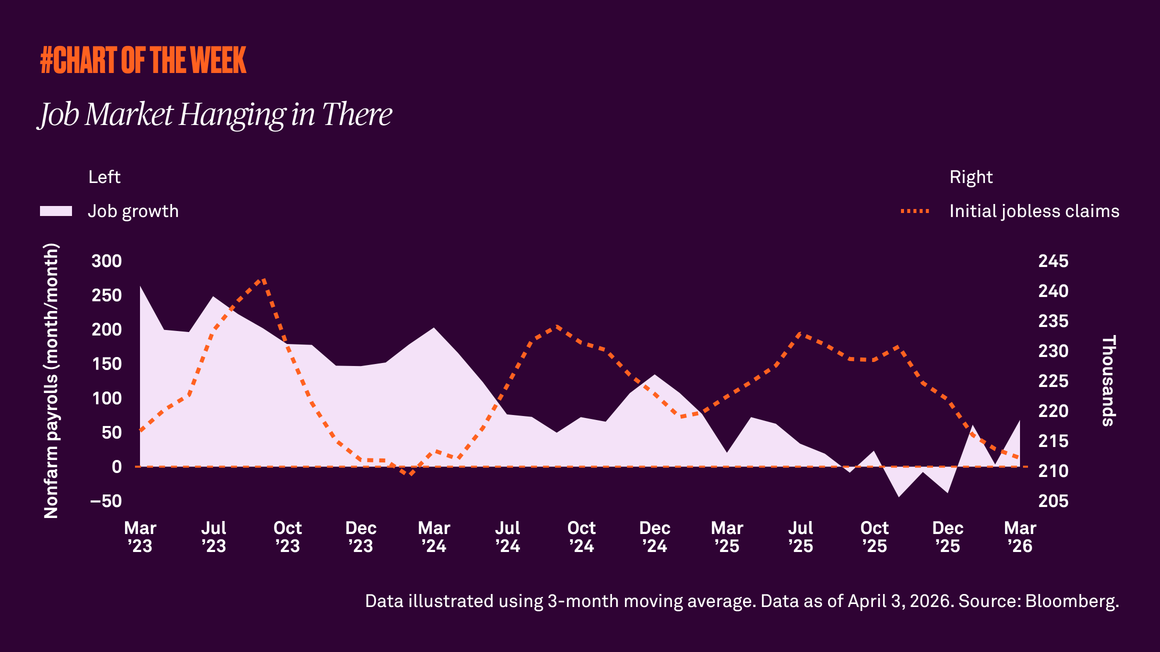
Job market hanging in there
Chart of the week | Macroéconomique

Recent jobless claims data point to a resilient U.S. labor market, with both initial and continuing claims remaining low and signaling that unemployment is still contained. Although job growth has softened and remains subdued, March’s job growth of 178,000, the highest since 2024, is encouraging. Our constructive outlook still holds despite continued uncertainty related to the war in the Middle East.

cotw-30-03-2026-thumbnail-580x326px
Chart of the week | Macroéconomique

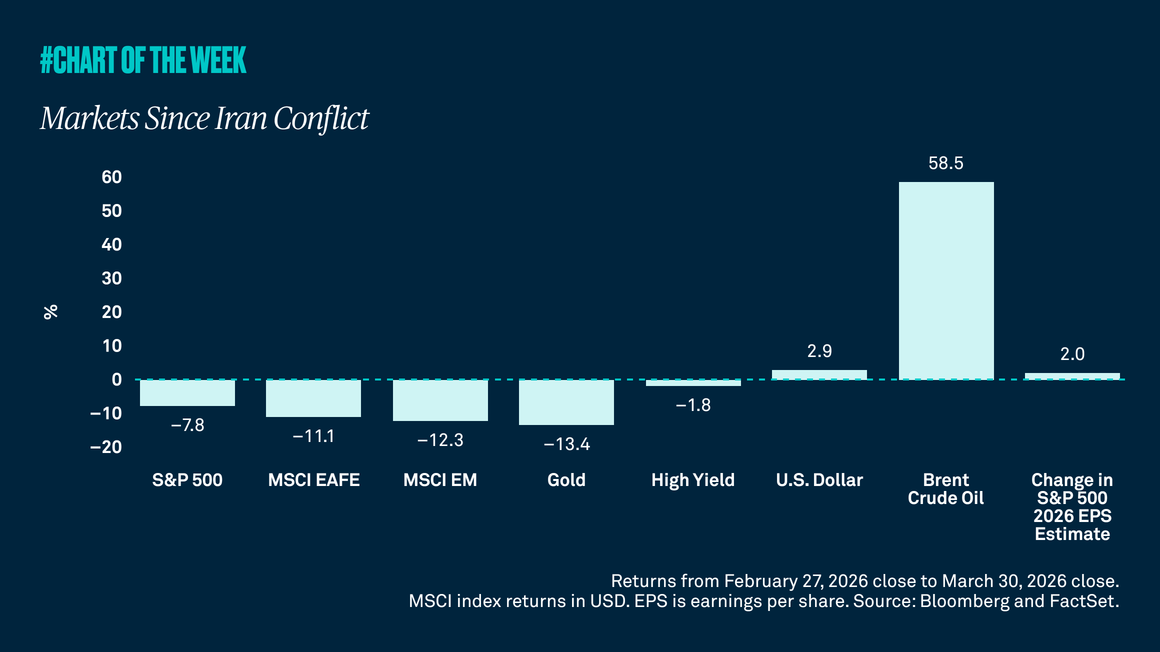
Markets are reacting to the Middle East conflict with sharp moves across asset classes, signaling broad risk repricing and shifting safe haven behavior. While volatility is elevated, fundamentals like earnings growth continue to support our constructive outlook.

Signals from spreads
Chart of the week | Macroéconomique

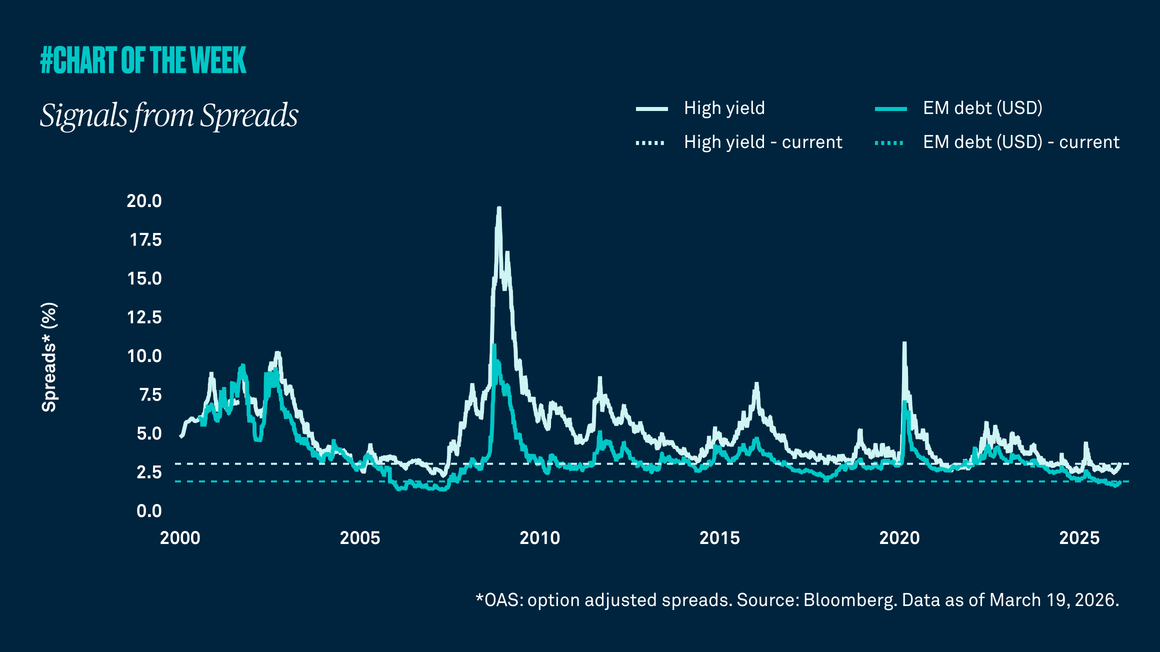
Credit spreads have risen yet remain historically low, reinforcing our view that the oil shock is likely temporary — not a driver of long-term growth concerns.

Dollar strength: what does it mean for markets?
Chart of the week | Macroéconomique

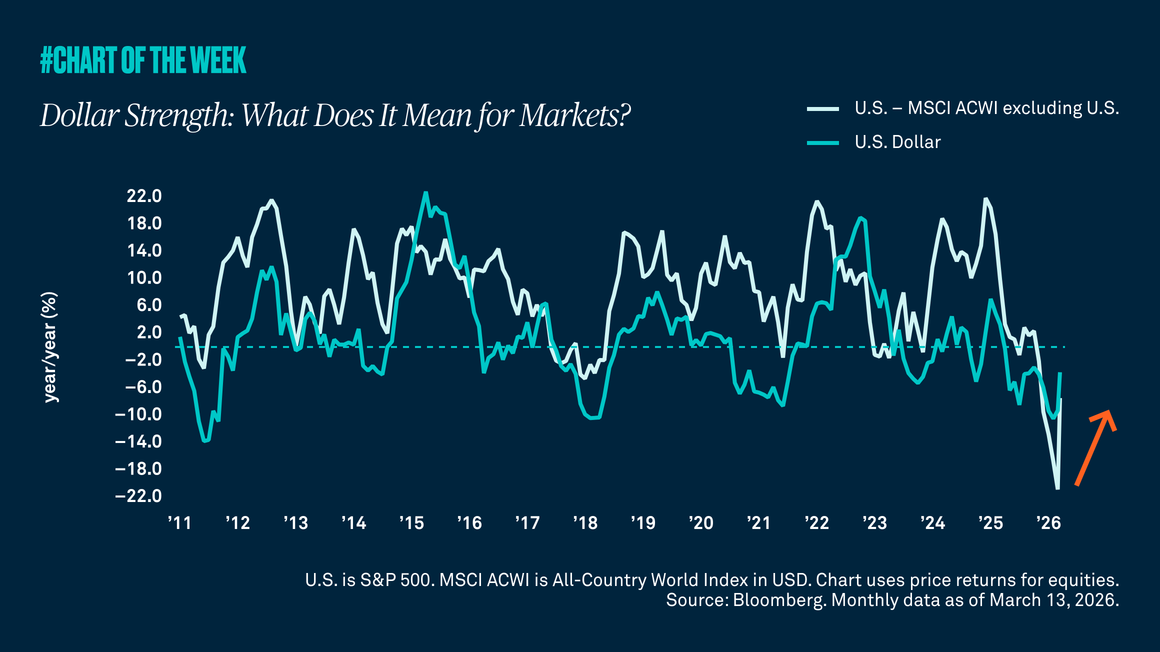
Geopolitical tensions have lifted oil prices, sent U.S. stocks slightly lower and driven flows into the safety of the U.S. dollar, which has strengthened versus peers. While a weaker dollar previously supported international equity outperformance, dollar stabilization now suggests that tailwind is fading, underscoring the importance of diversification across regions and asset classes.

Gathering data
Disclaimer Not Available

Ce document constitue une communication marketing