Please ensure Javascript is enabled for purposes of website accessibility Positive on Productivity?
fi
en
intermediary
intermediary
false
true
Gathering data
Disclaimer Not Available

Positive on productivity?

Positive on productivity?

Productivity, or output per hour worked, is a key driver of long-term economic growth. Now, after years of stagnation, productivity is on the rise again, a positive sign for future growth.
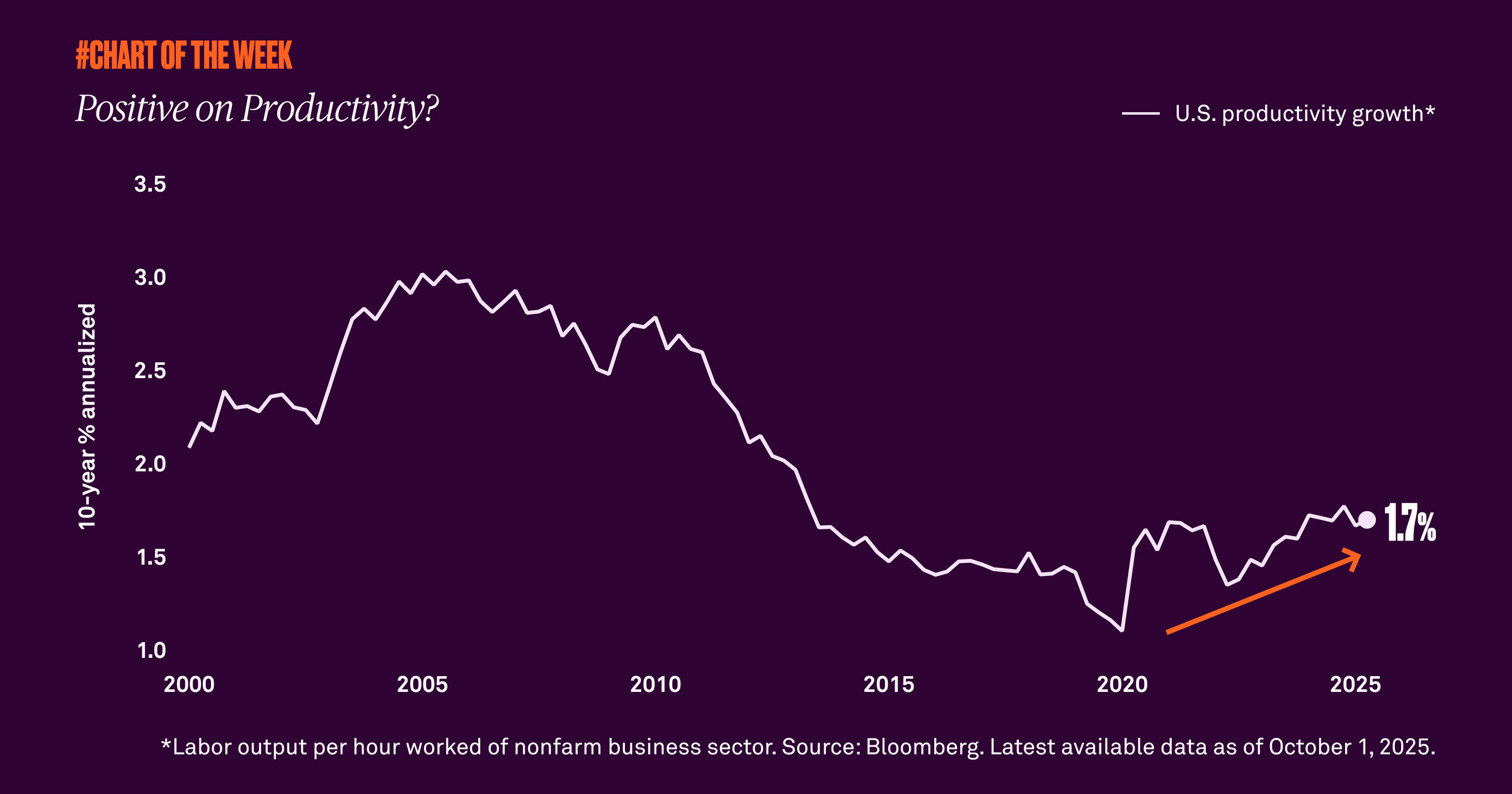

The level of productivity in the U.S. economy is something we watch closely because it is a key driver of long-term economic growth: it measures how efficient a country is at producing goods and services with a given level of inputs. Now, after years of stagnation, productivity growth, as measured by output per hour worked, is on the rise again. Productivity has expanded 1.7% on an annualized basis over the last 10 years.

Several factors have been weighing on economic growth of late. One is a reduced labor supply owing to an aging population and declining immigration. Additionally, the job market has been softening as payroll growth has stalled in recent months. In the face of these structural challenges, enhanced productivity may be critical to improving economic growth.

We therefore believe there is reason for optimism. With capital expenditures increasing thanks to provisions in this year’s tax and spending bill, we anticipate a continued acceleration in investment in and adoption of artificial intelligence, which could further improve productivity.

Additionally, higher productivity allows the economy to expand without adding inflationary pressures, which is critical at a time when inflation remains above the Federal Reserve’s 2% target. Given our productivity expectations, our view on the U.S. economy remains constructive. 
RELATED CONTENT
A good outlook for global earnings
Chart of the Week | Macroeconomic

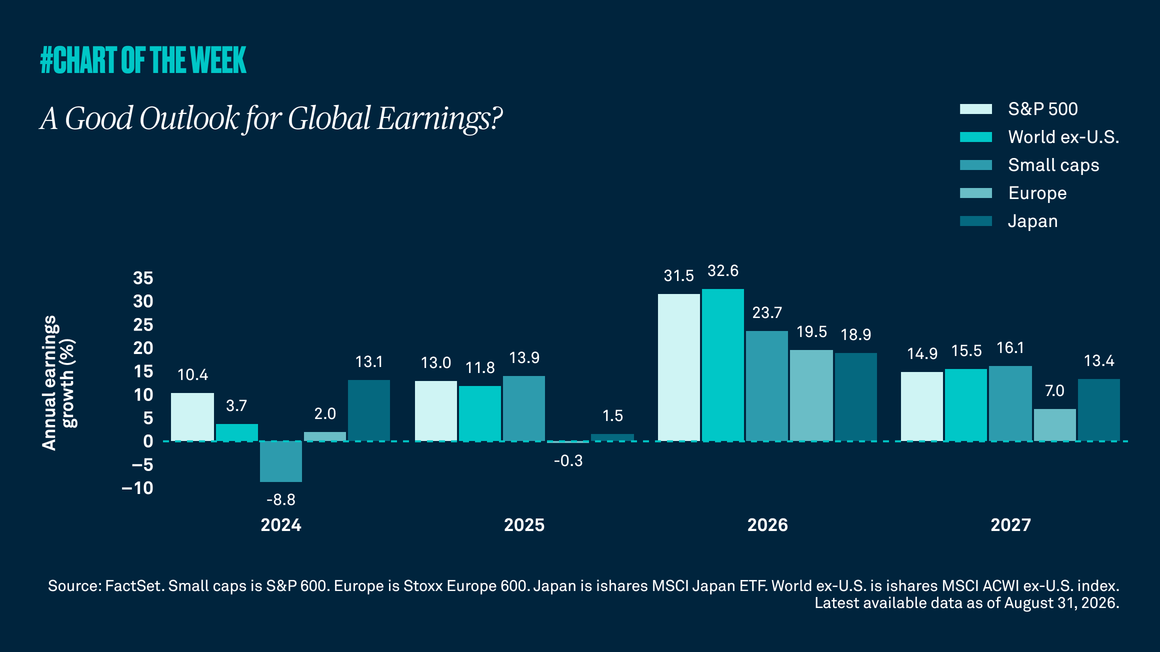
Global earnings growth has been strong this year, led by the U.S. and reinforced by improving profit growth across Europe, Japan and other major markets. While volatility may rise in the near term, above-average earnings and broader global participation remain supportive of global equities.

In a real regime shift?
Chart of the Week | Macroeconomic

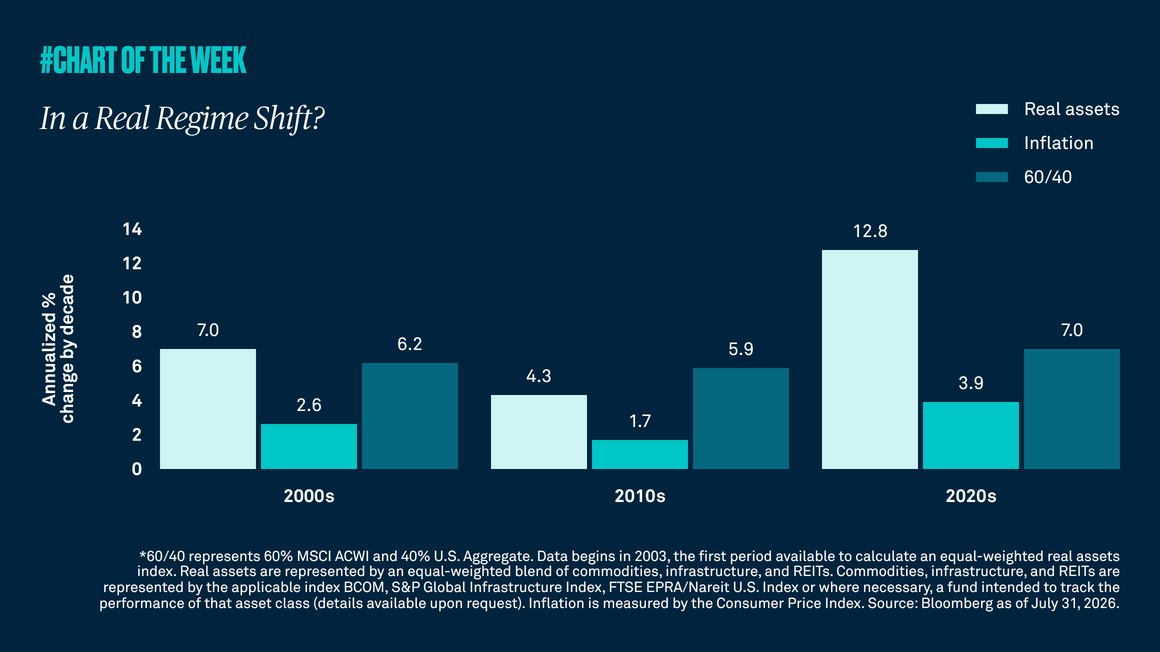
Higher inflation has been a dominant theme of the current decade. In addition to price shocks, it is being shaped by secular investment trends in infrastructure, defense spending, onshoring and the ongoing AI buildout. These structural changes reinforce the case for looking beyond traditional 60/40 portfolios to include real assets as a source of diversification and return potential in portfolios.

Getting real with real assets
Chart of the Week | Macroeconomic

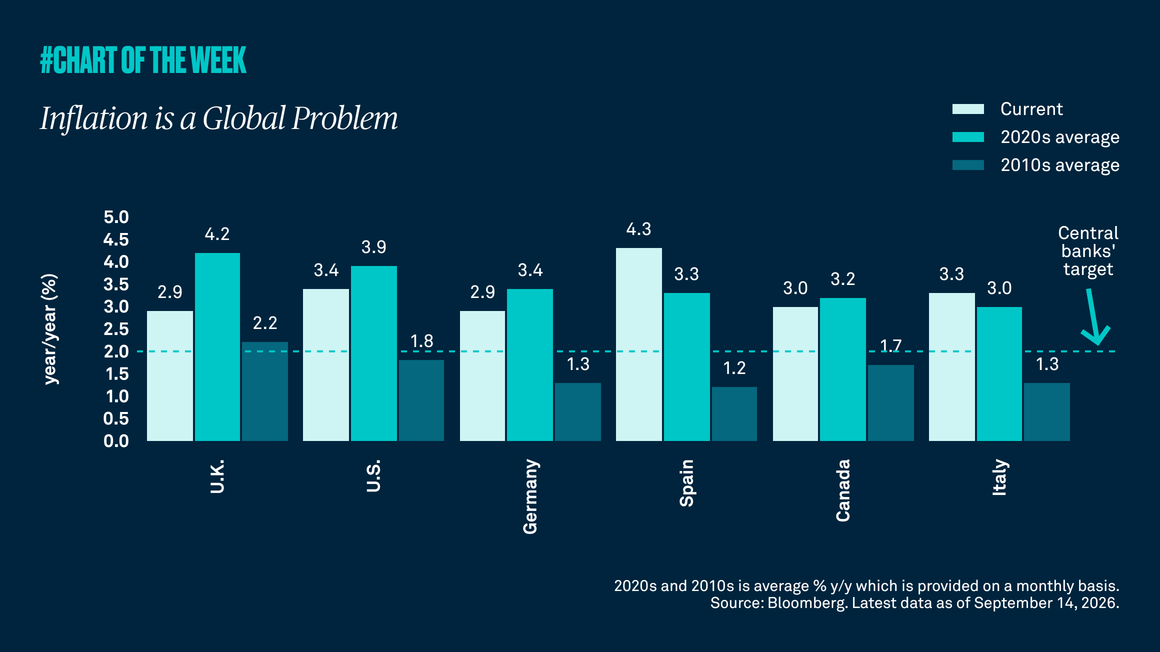
Inflation appears to have transitioned from its pre-Covid average of 2% to a stickier point closer to 3%, and we do not expect a near-term return to prior levels. In this environment, we believe real assets, such as commodities, infrastructure and REITs, can provide inflation protection, diversification and return potential.

Not in a bubble
Chart of the Week | Macroeconomic

As the S&P 500 approaches all-time highs, there are renewed concerns among investors about elevated valuations. However, historically strong profitability and expected earnings growth appear to support current pricing. In addition, the current S&P 500 price-to-earnings (P/E) ratio is roughly equal to the average since Covid. As a result, we do not view U.S. equities as being in bubble territory and we remain constructive on the asset class.

Gathering data
Disclaimer Not Available

This is a marketing communication