Please ensure Javascript is enabled for purposes of website accessibility Will Markets Remain Resilient?
ch
en
intermediary
intermediary
false
true
Gathering data
Disclaimer Not Available

Will Markets Remain Resilient?

Will Markets Remain Resilient?

Global equities have risen an annualized 11% since 2020 despite repeated shocks, as resilient growth and earnings have helped markets recover from periods of volatility. While the U.S.-Iran conflict poses near-term inflation and growth risks, markets remain constructive as earnings expectations continue to improve.
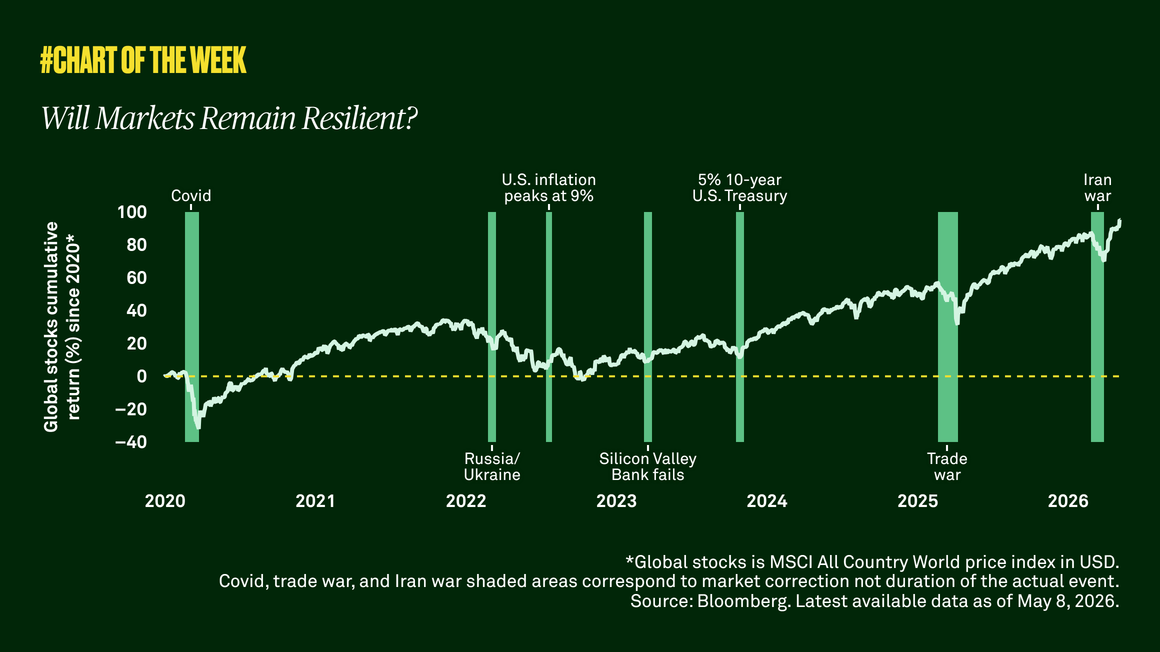

Since 2020, global equities have delivered strong gains of an annualized 11% even after absorbing a series of shocks, including the pandemic, the Russia-Ukraine war, inflation spikes, aggressive central bank rate hikes, and tariffs. Each of these events drove volatility and selloffs, but markets repeatedly recovered as growth proved more durable than anticipated and investors continued to look through near-term turbulence.

Now, with the U.S. entangled in conflict with Iran, investors face a geopolitical shock that could push energy prices higher, reignite inflation and weigh on global growth in the near term. Even so, markets appear to be pricing this as a temporary event rather than the start of something associated with a longer downturn.

In the U.S., resilient economic growth and stronger-than-expected earnings are supporting higher equity prices this year despite these risks. A renewed inflation wave or disappointing returns on AI-related capital spending could still pressure profits and growth, but for now, earnings expectations are increasing. As a result, we believe risk sentiment in the U.S. and globally remain constructive.
RELATED CONTENT
Play the long game
Chart of the Week | Macroeconomic

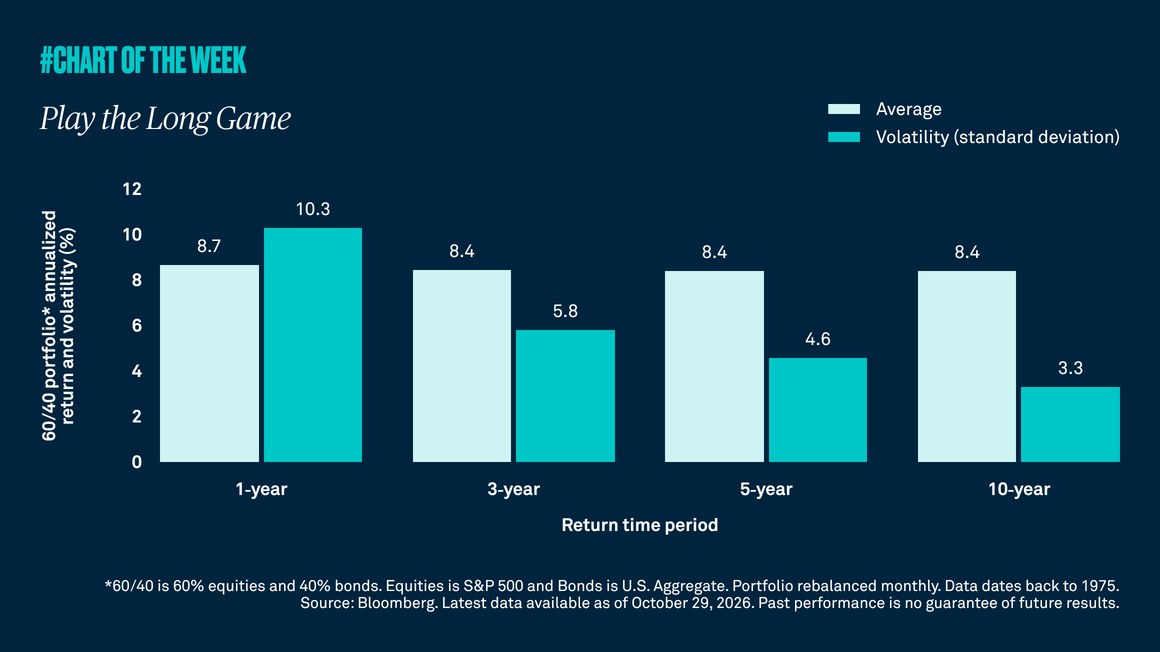
When it comes to investing, time matters. While headlines and short-term perspectives can lead investors to try and time the market, investors have historically been rewarded by playing the long game. Rather than overreacting to market noise, investing over longer time periods can help smooth the ride without sacrificing returns. The lesson: stay diversified and invested for the long term.

Contained contagion?
Chart of the Week | Macroeconomic

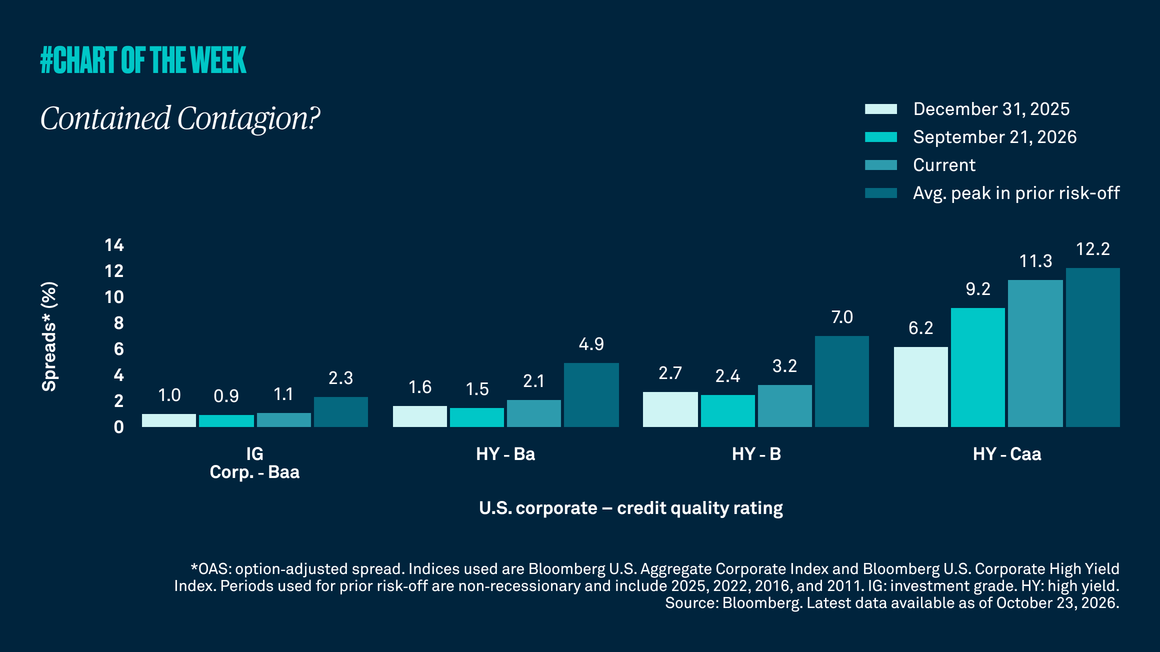
U.S. high yield credit spreads have widened year to date, reflecting greater investor caution about perceived default risk. The move also raises concerns about possible credit contagion. However, because spread widening has been concentrated in the lowest-quality issuers rather than higher-quality issuers, we don’t anticipate broader market stress.

Can the bull run in corporate margins continue?
Chart of the Week | Macroeconomic

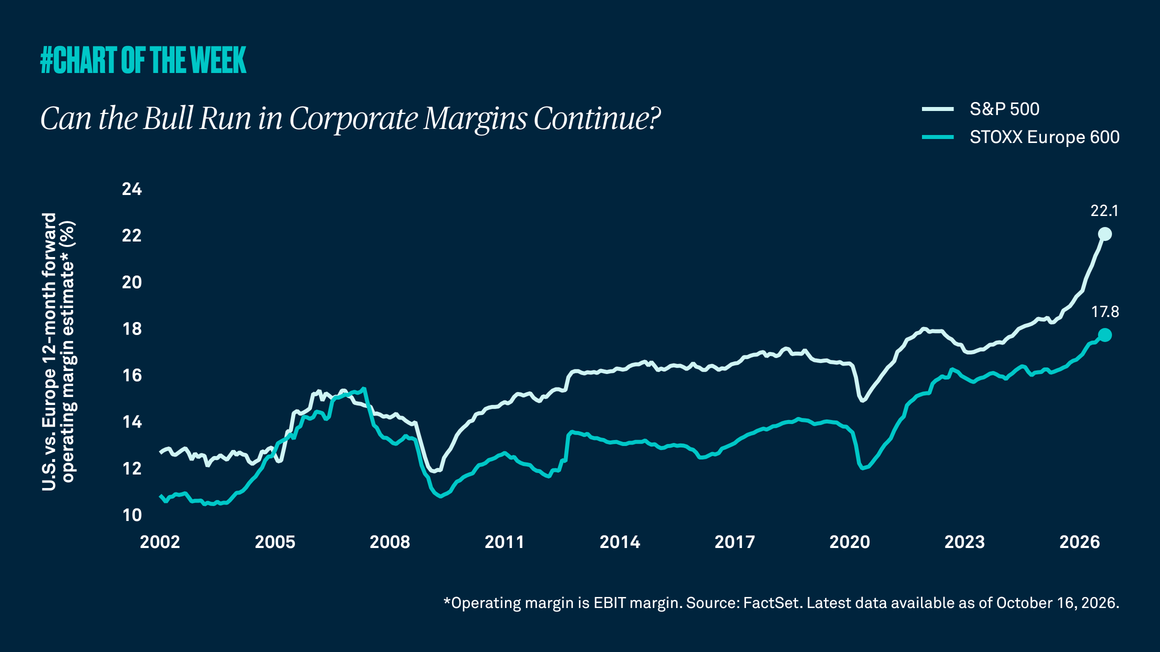
Higher inflation and elevated interest rates typically weigh on corporate profitability, yet corporate margins continue to climb to record highs. While that strength is evident both in the U.S. and abroad, U.S. outperformance versus Europe is now the widest on record. Stronger margins have helped contribute to better-than-expected earnings and reinforce U.S. equity leadership. The question now is whether that strength can persist?

Higher yields, but lower sensitivity
Chart of the Week | Macroeconomic

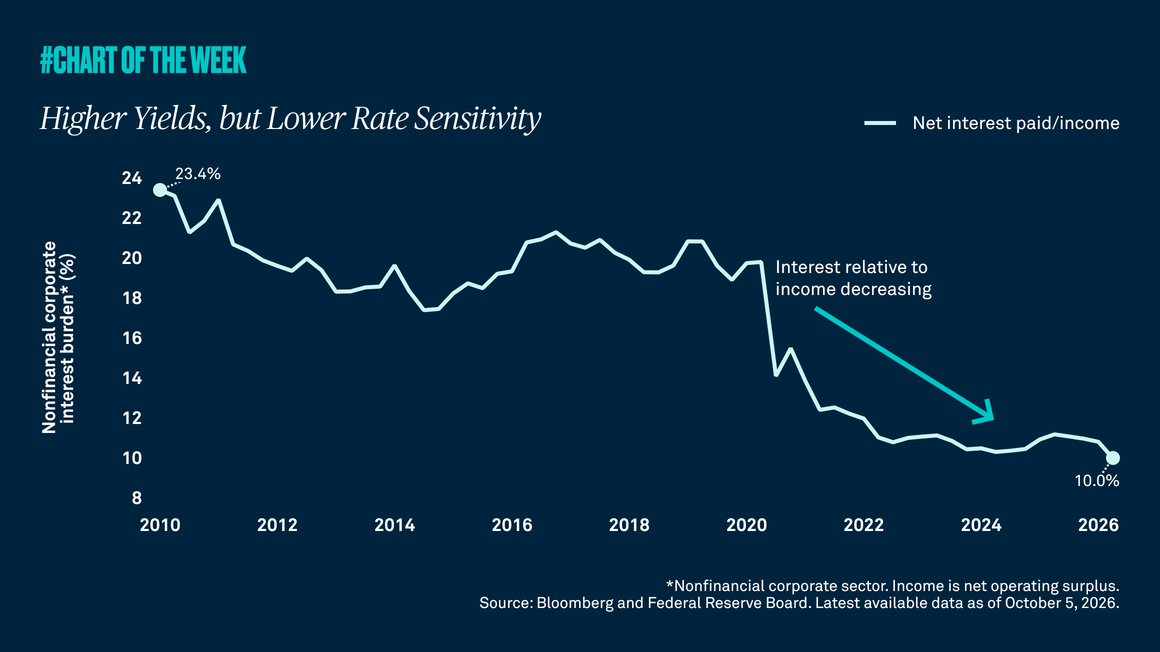
Higher interest rates have become a frequently cited risk to corporate earnings and the economy. The conventional thinking is straightforward: when borrowing costs rise, companies face higher interest expenses, profits come under pressure, and economic growth slows. While there is truth to that relationship, the current cycle may differ from investors’ expectations.

Gathering data
Disclaimer Not Available

This is a marketing communication