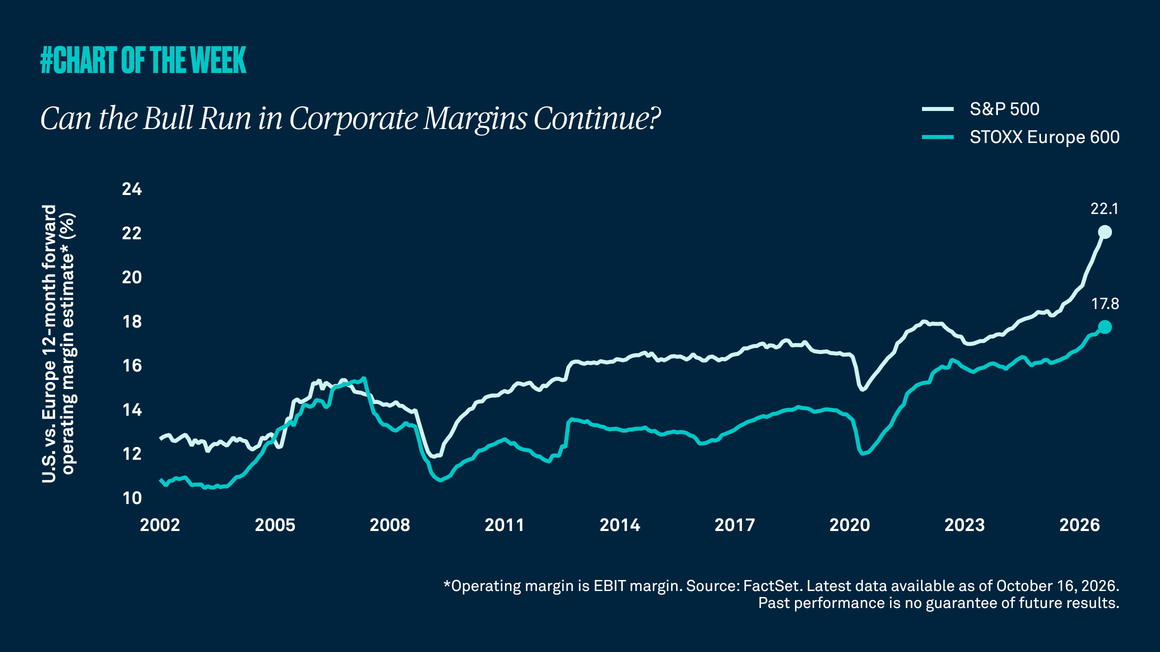
A surge in energy prices pushed the latest U.S. Consumer Price Index (CPI) reading above forecasts, reinforcing the case that inflation could remain higher for longer. Higher energy prices have also increased market volatility and uncertainty around the path of interest rates.
Even so, we continue to believe the overall growth backdrop remains supportive. Solid economic activity, alongside higher inflation, may favor select equities and real assets, highlighting the importance of staying invested. We believe that prolonged inflation and elevated volatility call for a more deliberate portfolio approach. Here are three moves worth considering.
1. Consider Global Infrastructure
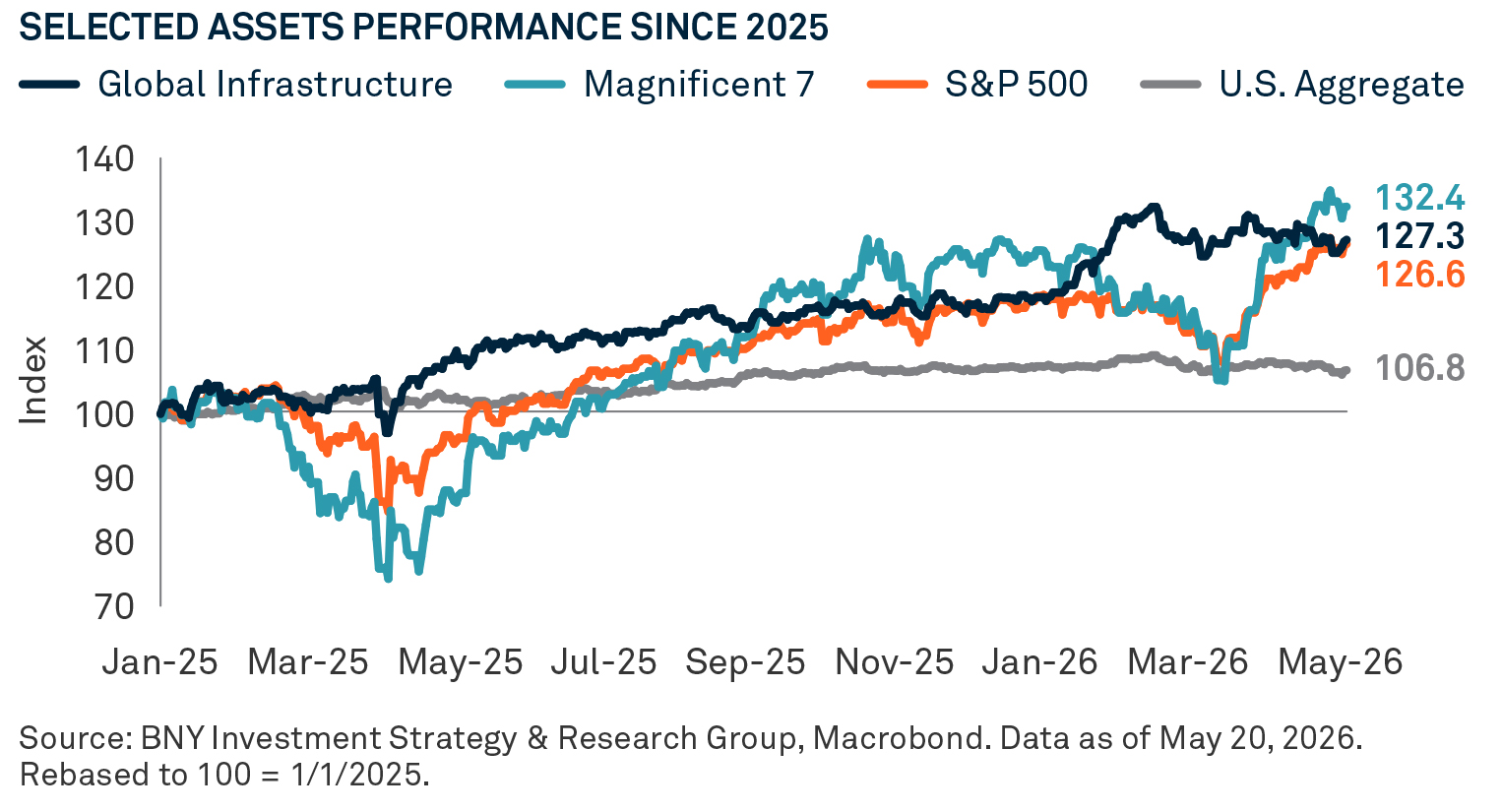
Global infrastructure tends to be more resilient (and may even benefit) in a higher-inflation environment due to its pricing power and relatively stable income streams. We also believe the asset class is a beneficiary of long-term spending trends related to growing artificial intelligence (AI) infrastructure demand.
2. Be More Selective in Equities
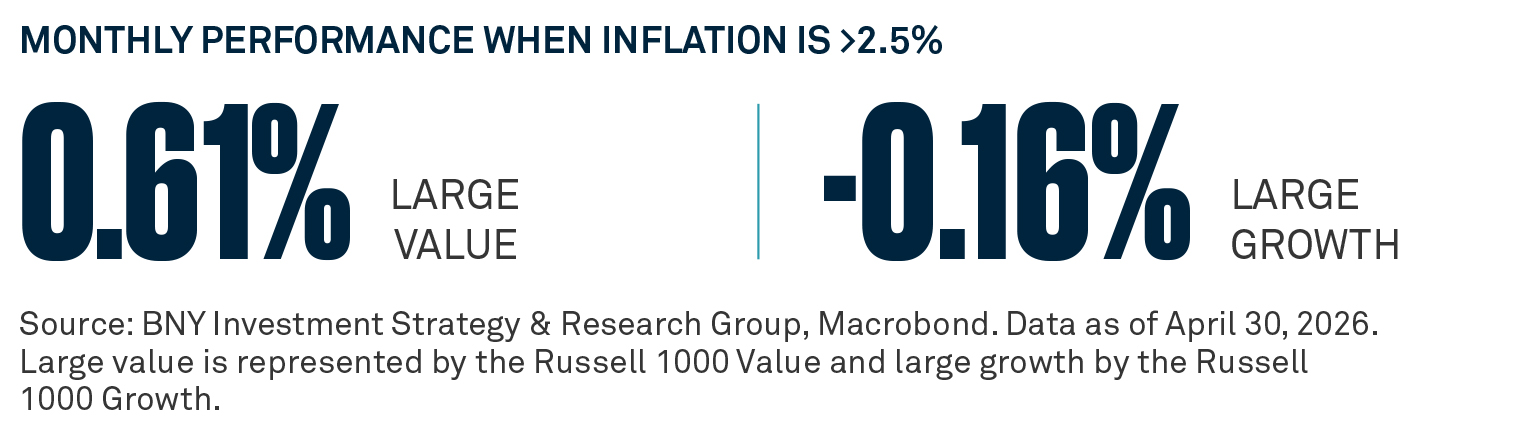
Large cap value has historically outperformed large cap growth during periods of rising inflation. We also believe value-oriented sectors, such as healthcare, are well positioned to capitalize on productivity gains tied to AI adoption.
3. Go Shorter in Bonds
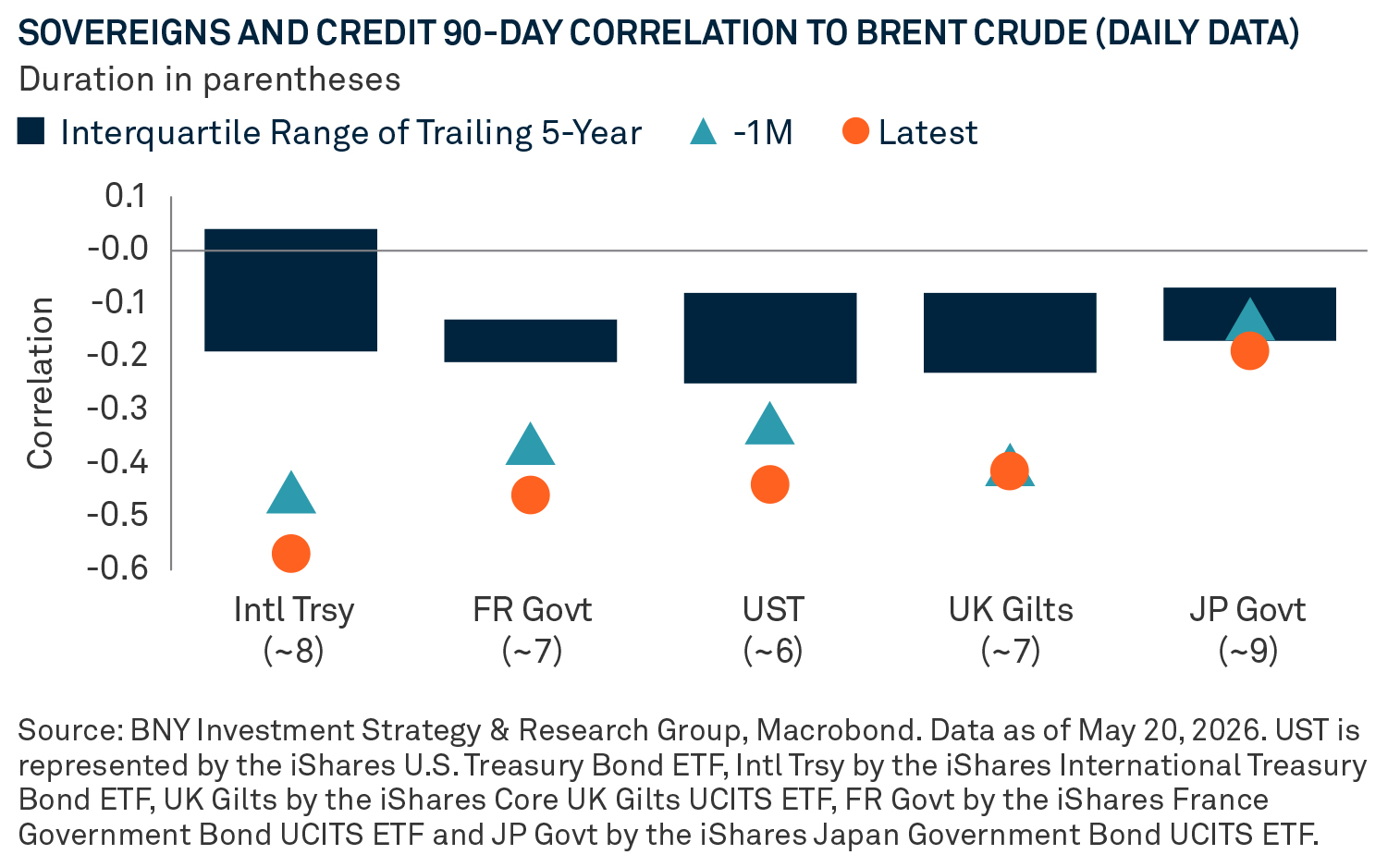
Persistent inflation concerns and elevated oil prices continue to push short-term rate expectations higher. In this environment, the relationship between oil prices and fixed income returns has turned negative, tempering some of the hedging benefits that bonds have traditionally provided. While higher yields are creating more attractive income opportunities, we favor shorter durations. Inflation risks remain, and longer-dated bonds are still vulnerable to further rate moves.
GLOSSARY
Artificial intelligence (AI) refers to computer systems that can perform tasks typically requiring human intelligence, such as visual perception, speech recognition, decision-making and language translation. Consumer Price Index (CPI) is a measure of the average change in prices of a fixed basket of goods and services purchased by households, used to track inflation and the cost of living. Global Infrastructure (S&P Global Infrastructure Index) is designed to track 75 companies from around the world chosen to represent the listed infrastructure industry while maintaining liquidity and tradability. iShares U.S. Treasury Bond ETF seeks to track an index of U.S. Treasury bonds across the full maturity spectrum. iShares International Treasury Bond ETF seeks to track an index that includes government bonds from non-U.S. developed markets. iShares Core UK Gilts UCITS ETF aims to replicate the performance of the FTSE Actuaries UK Conventional Gilts All Stocks Index, which represents the UK government bond market across all maturities. iShares France Government Bond UCITS ETF tracks the performance of French government bonds, offering investors exposure to euro-denominated, investment-grade sovereign debt. iShares Japan Government Bond UCITS ETF tracks the Bloomberg Japan Treasury Index, offering exposure to Japanese government bonds denominated in yen. Magnificent Seven is the name used to describe megacap tech growth stocks Alphabet, Amazon, Apple, Meta, Microsoft, Nvidia and Tesla. S&P 500 is an index designed to track the performance of the largest 500 U.S. companies. U.S. Aggregate (Bloomberg U.S. Agg Total Return Value Unhedged USD Index) is a widely accepted, unmanaged total return index of corporate, government and government-agency debt instruments, mortgage-backed securities and asset-backed securities with an average maturity of 1–10 years.
DISCLAIMER
The information contained herein reflects general views and is provided for informational purposes only. This material is not intended as investment advice nor is it a recommendation to adopt any investment strategy.
Opinions and views expressed are subject to change without notice.
Past performance is no guarantee of future results.
ISSUING ENTITIES
This material is only for distribution in those countries and to those recipients listed, subject to the noted conditions and limitations: • United States: by BNY Mellon Securities Corporation (BNYSC), 240 Greenwich Street, New York, NY 10286. BNYSC, a registered broker-dealer and FINRA member, has entered into agreements to offer securities in the U.S. on behalf of certain BNY Investments firms. • Europe (excluding Switzerland): BNY Mellon Fund Management (Luxembourg) S.A., 2-4 Rue EugèneRuppertL-2453 Luxembourg. • UK, Africa and Latin America (ex-Brazil): BNY Mellon Investment Management EMEA Limited, BNY Mellon Centre, 160 Queen Victoria Street, London EC4V 4LA. Registered in England No. 1118580. Authorised and regulated by the Financial Conduct Authority. • South Africa: BNY Mellon Investment Management EMEA Limited is an authorised financial services provider. • Switzerland: BNY Mellon Investments Switzerland GmbH, Bärengasse 29, CH-8001 Zürich, Switzerland. • Middle East: DIFC branch of The Bank of New York Mellon. Regulated by the Dubai Financial Services Authority. • South East Asia and South Asia BNY Mellon Investment Management Singapore Pte. Limited Co. Reg. 201230427E. Regulated by the Monetary Authority of Singapore. • Hong Kong: BNY Mellon Investment Management Hong Kong Limited. Regulated by the Hong Kong Securities and Futures Commission. • Japan: BNY Mellon Investment Management Japan Limited. BNY Mellon Investment Management Japan Limited is a Financial Instruments Business Operator with license no 406 (Kinsho) at the Commissioner of Kanto Local Finance Bureau and is a Member of the Investment Trusts Association, Japan and Japan Investment Advisers Association and Type II Financial Instruments Firms Association. • Brazil: ARX Investimentos Ltda., Av. Borges de Medeiros, 633, 4th floor, Rio de Janeiro, RJ, Brazil, CEP 22430-041. Authorized and regulated by the Brazilian Securities and Exchange Commission (CVM). • Canada: BNY Mellon Asset Management Canada Ltd. is registered in all provinces and territories of Canada as a Portfolio Manager and Exempt Market Dealer, and as a Commodity Trading Manager in Ontario. All issuing entities are subsidiaries of The Bank of New York Mellon Corporation. BNY Investments is the brand name for the investment management business of BNY and its investment firm affiliates worldwide.
NOT FDIC INSURED | NO BANK GUARANTEE | MAY LOSE VALUE
© 2026 THE BANK OF NEW YORK MELLON CORPORATION
MARK-942177-2026-05-22
GU - 866 Exp: 30 mai 2027