Please ensure Javascript is enabled for purposes of website accessibility Where’s the long-term value in AI?
at
de
institutional
institutional
false
true
Gathering data
Disclaimer Not Available

Where’s the long-term value in AI?

Where’s the long-term value in AI?

AI investment enthusiasm is rising, but returns will vary widely. Long-term value is more likely where practical, commercially viable use cases are already beginning to emerge, says Walter Scott’s George Dent.
noimage


    Key points:

  • Walter Scott has more confidence in upstream beneficiaries of artificial intelligence (AI) than heavy capital-spending companies.
  • Evidence is growing that some companies can monetise AI, changing the overall outlook.
  • Many current AI applications may not become profitable or endure over time.
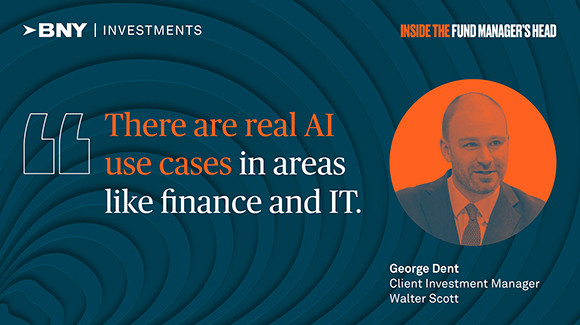
  • Finance and IT already show practical AI use cases with clear value.
  • Capital spending risks remain, but strong cash generation reduces the likelihood of broader systemic problems.


3468159  Exp: 25 september 2026

VERWANDTE THEMEN
Musical chairs in fixed income
Artikel | Anleihen

Leaders rotate in and out. No single fixed income sector consistently dominates performance over time, and strong performance in one sector rarely carries over from one year to the next. For example, emerging markets local debt and global bonds — two of 2024’s worst performers — rebounded strongly in 2025. Timing fixed income markets and predicting which sector will lead next is extremely difficult.

Staying invested: don't miss the best days
Artikel | Aktien

Market volatility is unsettling. When the market waters get rough, investors can be tempted to jump out to try to avoid short-term losses. But historically, some of the market’s biggest gains occur when volatility is highest, making them difficult to predict and easy to miss.

Is the market rally broadening?
Chart of the Week | Makroökonomisch

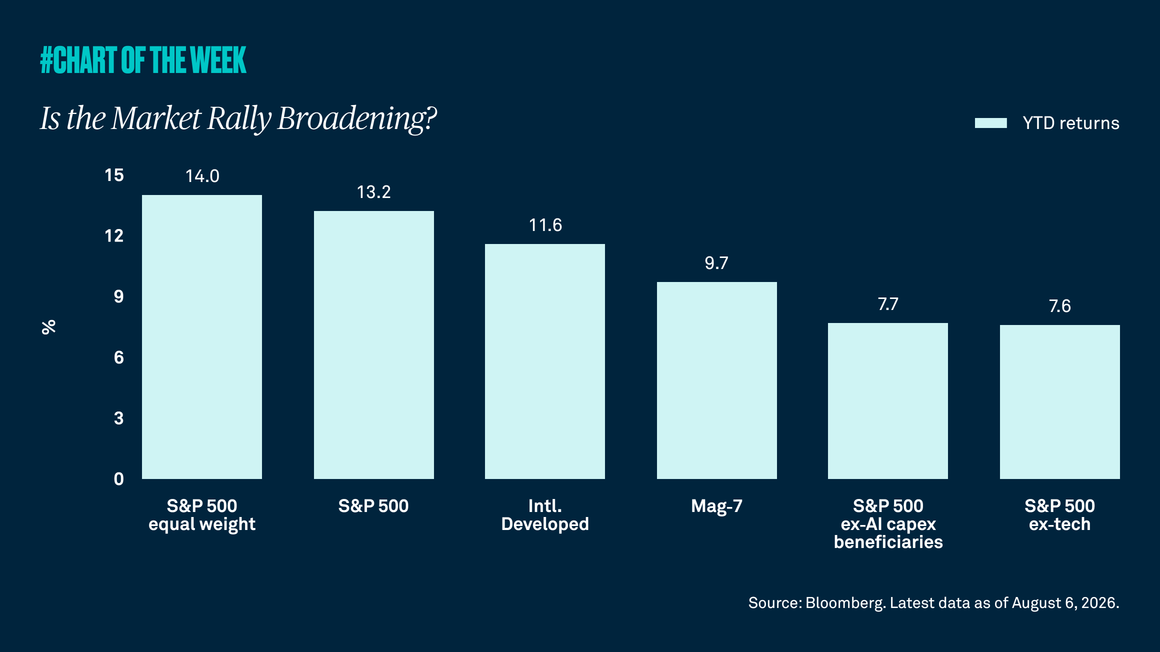
Stocks, as measured by the S&P 500, are up over 13% through early August. The solid gains have been fueled by a resilient economy, steady consumer spending, optimism around artificial intelligence and better-than-expected earnings growth. Still, some investors worry the advance may be too concentrated in technology and that AI-capex monetization may fall short of expectations. A closer look suggests that it is not just tech moving the market higher.

Why may correlations turn positive?
Artikel | Makroökonomisch

Positive correlation between risk assets and government bonds breaks the roles these asset classes play within a portfolio. Here, we outline why correlations have risen, and how investors can seek to limit the impact on their portfolios.

Gathering data
Disclaimer Not Available

Dies ist eine Marketingkommunikation