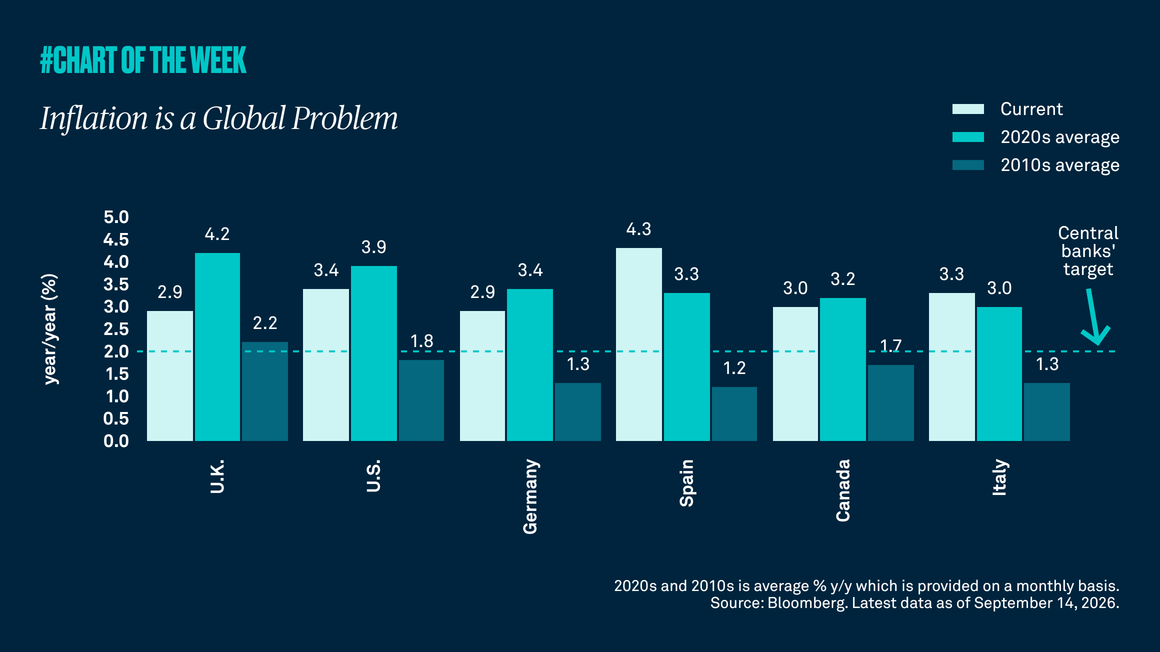
Inflation appears to have transitioned from its pre-Covid average of 2% to a stickier point closer to 3%, and we do not expect a near-term return to prior levels. In this environment, we believe real assets, such as commodities, infrastructure and REITs, can provide inflation protection, diversification and return potential.
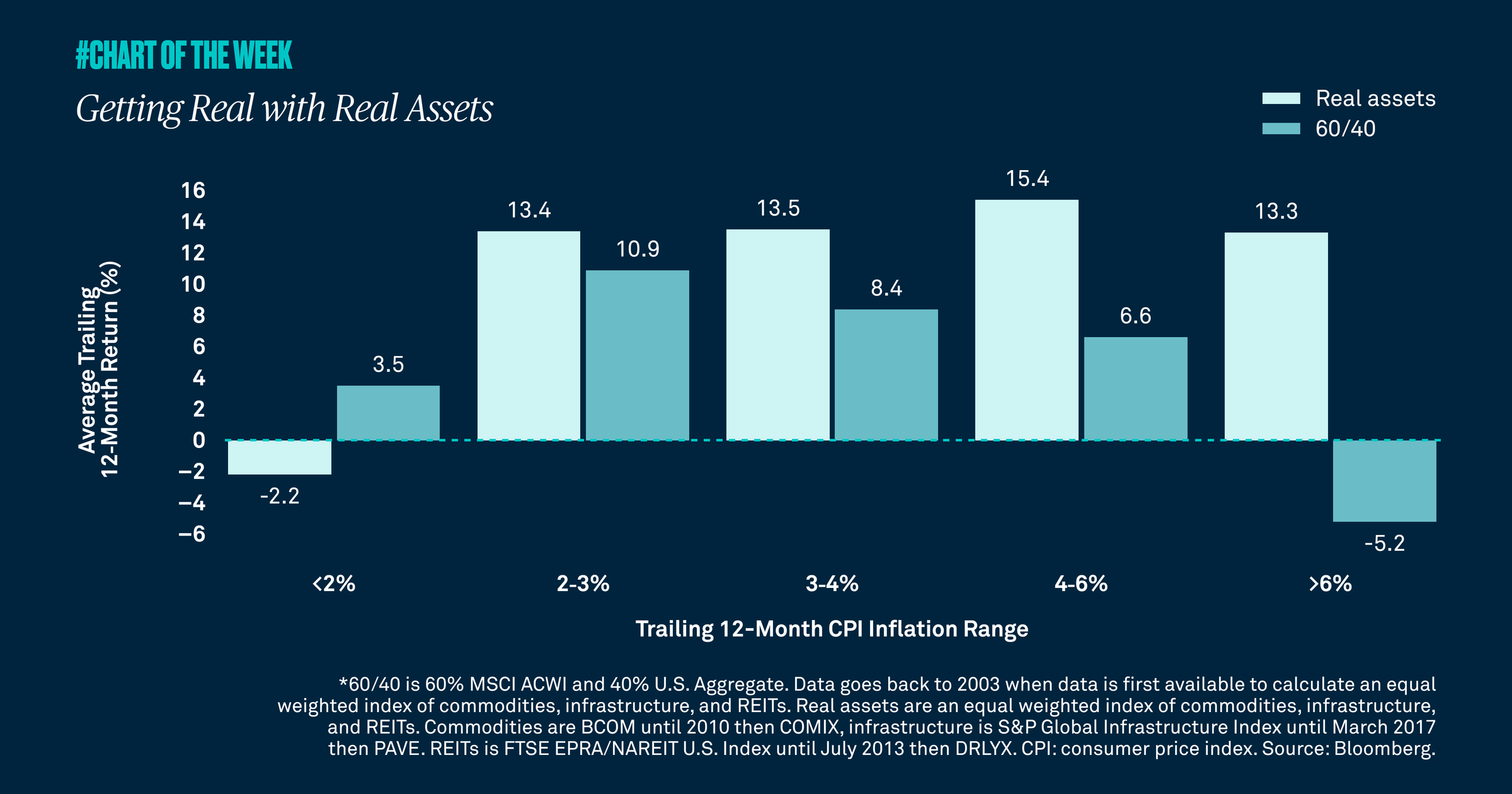
Before Covid, consumer inflation averaged about 2%, in line with the Federal Reserve’s target. Today, inflation appears to be operating in a new regime closer to 3%. It remains sticky, and we do not expect a near-term return to prior levels. In our view, the sharp rise in longer-dated global bond yields to multi-year highs suggests markets are also pricing in persistently higher inflation.
Against this backdrop, real assets — particularly commodities, infrastructure and REITs — remain well positioned. Historically, these areas have performed well during periods of elevated inflation. We also see further upside from a durable capital expenditure and manufacturing cycle, supported by aging infrastructure replacement, onshoring across industries, higher defense spending and continued artificial intelligence-related investment. Commodities and infrastructure should be key beneficiaries of these trends.
Real estate investment trusts (REITs) are also attractive now. They add exposure to income-producing real estate, where rents and property values can rise with inflation, complementing the inflation sensitivity of commodities and infrastructure.
Taken together, we believe that an allocation to real assets with exposure to commodities, infrastructure and REITs can help protect against inflation while enhancing returns and improving diversification. As a result, we have increased our exposure to the asset class.