Please ensure Javascript is enabled for purposes of website accessibility Dollar Strength: What Does It Mean for Markets?
at
de
institutional
institutional
false
true
Gathering data
Disclaimer Not Available

Dollar strength: what does it mean for markets?

Dollar strength: what does it mean for markets?

Geopolitical tensions have lifted oil prices, sent U.S. stocks slightly lower and driven flows into the safety of the U.S. dollar, which has strengthened versus peers. While a weaker dollar previously supported international equity outperformance, dollar stabilization now suggests that tailwind is fading, underscoring the importance of diversification across regions and asset classes.
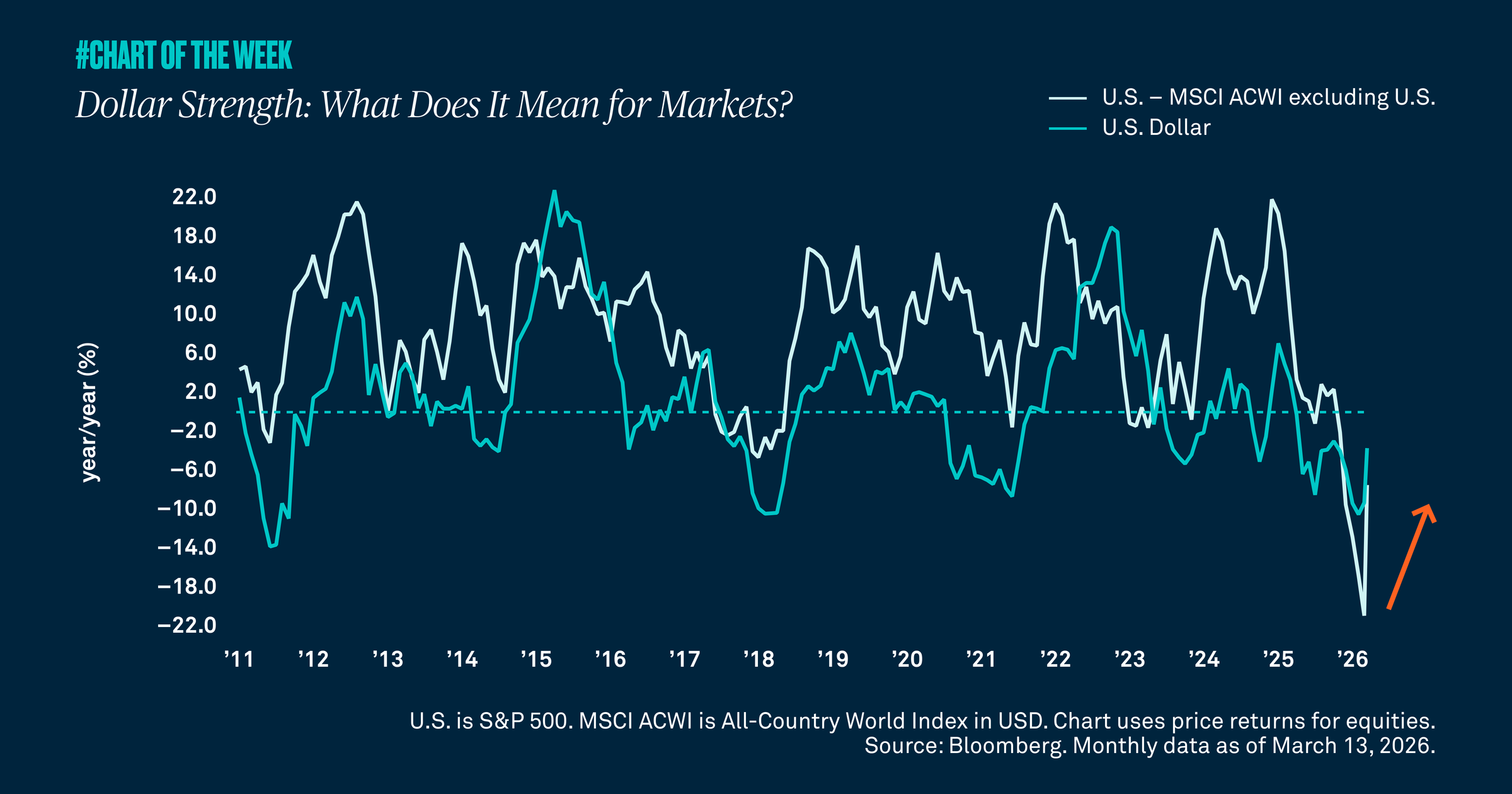

The conflict in the Middle East has seen oil prices rise, equities fall slightly, and investors flock to safe haven assets. In times of turmoil, investors often seek the stability of the U.S. dollar (USD) because of its reserve currency status and liquidity, as well as the perceived credit strength of the U.S. This episode of geopolitical uncertainty is proving to be no different with the USD gaining strength relative to global peers.  

Historically, the performance gap between U.S. equities and the rest of the world has hinged on the relative strength of the USD. While a weaker USD makes U.S. exports more competitive, this has often coincided with the outperformance of major non-U.S. indices on a relative basis. That pattern has been evident over the last year, with international equity benchmarks outperforming the S&P 500.

In our view, signs of USD stabilization suggest the tailwind from dollar weakness to non‑U.S. outperformance has likely peaked. The USD is near its highest level since May 2025, and the combination of sticky inflation, U.S. energy independence and resilient growth could limit further dollar softness and challenge the recent leadership of international markets. Diversifying across geographies and asset classes remains prudent to capture potential upside amid today’s varied global conditions.
VERWANDTE THEMEN
What happens on bad days?
Chart of the Week | Makroökonomisch

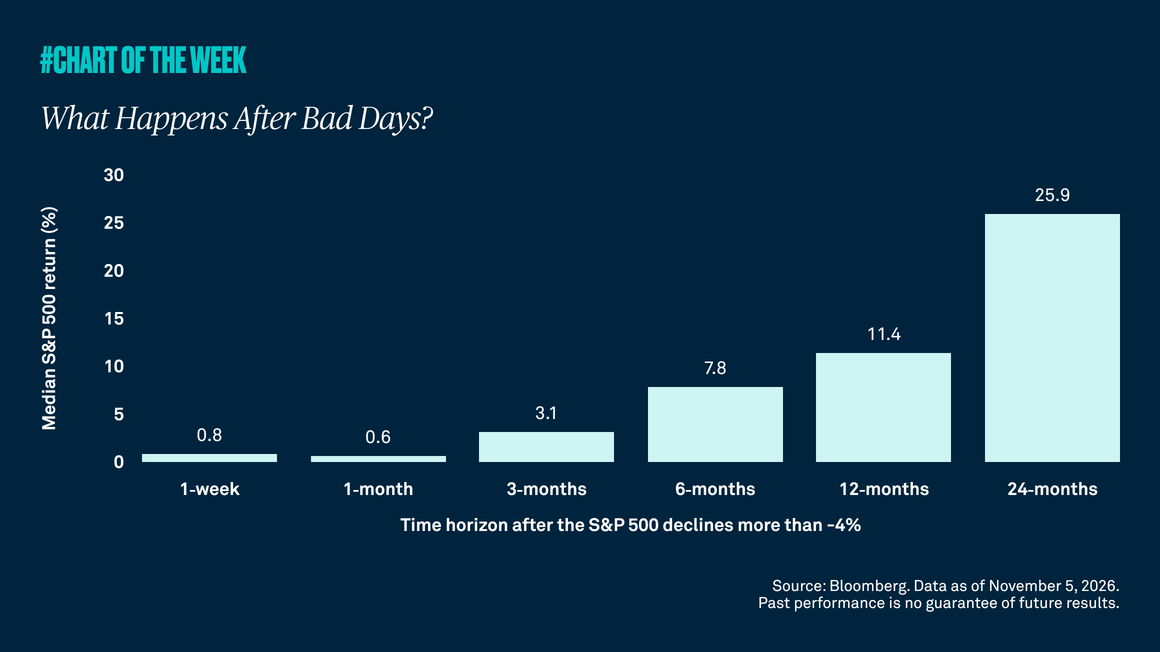
The recent one-day equity selloff reflected weaker sentiment amid election uncertainty and concerns that slower artificial intelligence spending could weigh on growth and earnings. Still, pullbacks of this magnitude have often been followed by solid returns, and we remain constructive given the economy’s resilience and AI’s long-term potential.

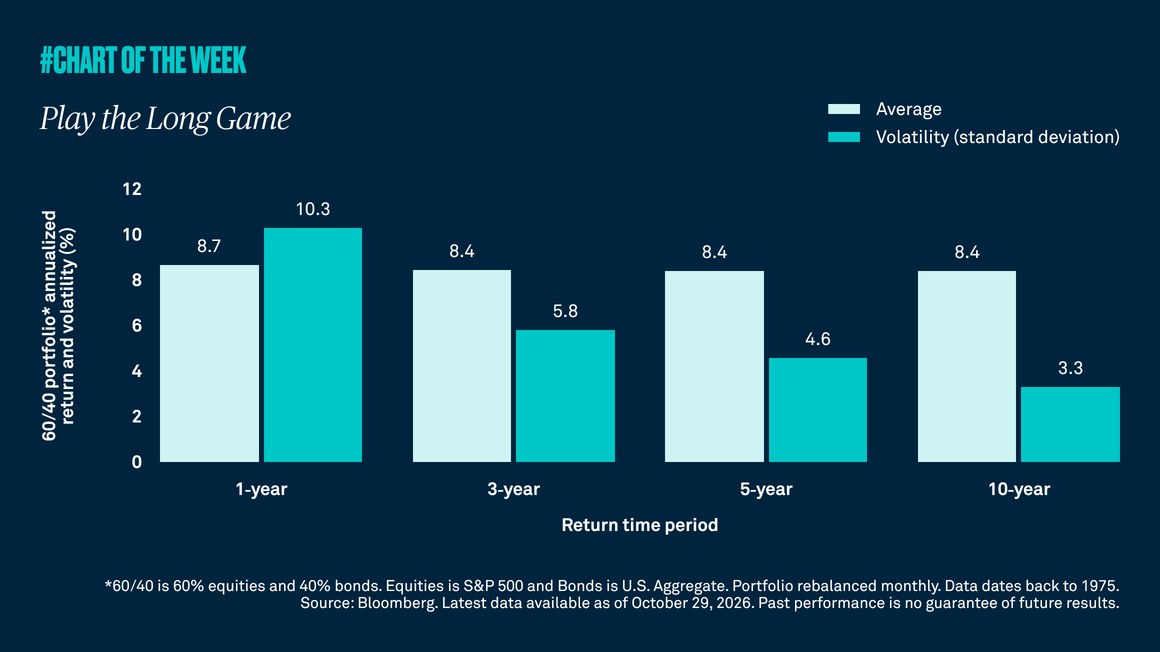
Play the long game
Chart of the Week | Makroökonomisch

When it comes to investing, time matters. While headlines and short-term perspectives can lead investors to try and time the market, investors have historically been rewarded by playing the long game. Rather than overreacting to market noise, investing over longer time periods can help smooth the ride without sacrificing returns. The lesson: stay diversified and invested for the long term.

Contained contagion?
Chart of the Week | Makroökonomisch

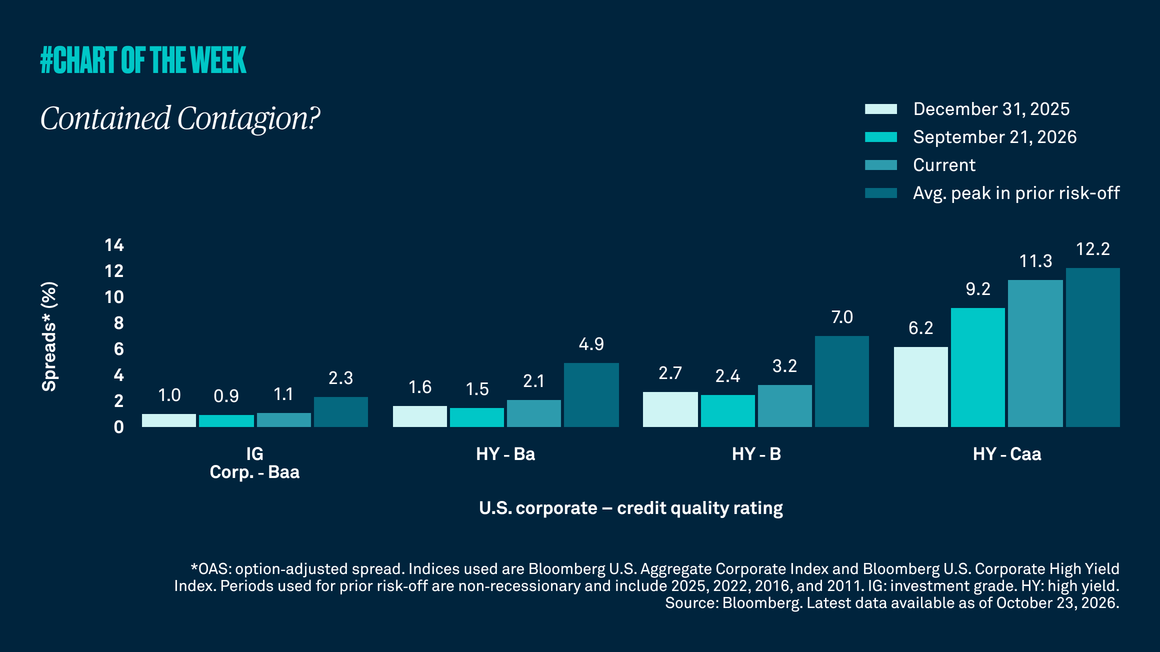
U.S. high yield credit spreads have widened year to date, reflecting greater investor caution about perceived default risk. The move also raises concerns about possible credit contagion. However, because spread widening has been concentrated in the lowest-quality issuers rather than higher-quality issuers, we don’t anticipate broader market stress.

Can the bull run in corporate margins continue?
Chart of the Week | Makroökonomisch

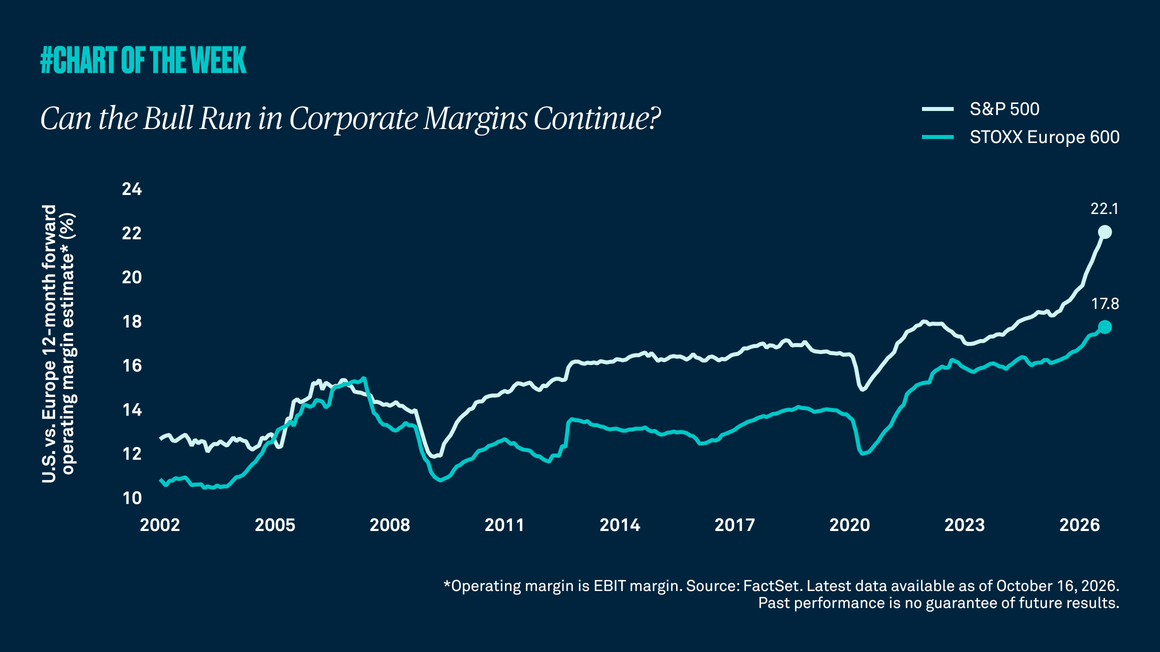
Higher inflation and elevated interest rates typically weigh on corporate profitability, yet corporate margins continue to climb to record highs. While that strength is evident both in the U.S. and abroad, U.S. outperformance versus Europe is now the widest on record. Stronger margins have helped contribute to better-than-expected earnings and reinforce U.S. equity leadership. The question now is whether that strength can persist?

Gathering data
Disclaimer Not Available

Dies ist eine Marketingkommunikation