Please ensure Javascript is enabled for purposes of website accessibility Resilience Is a Historical Trend
nl
en
institutional
institutional
false
true
Gathering data
Disclaimer Not Available

Resilience is a historical trend

Resilience is a historical trend

The S&P 500’s history shows that despite recessions, wars, inflation, and corrections, the market’s long-term trajectory has remained upward. As the U.S. marks 250 years of resilience, the lesson for investors is clear: wealth is built through patience, discipline and staying invested.
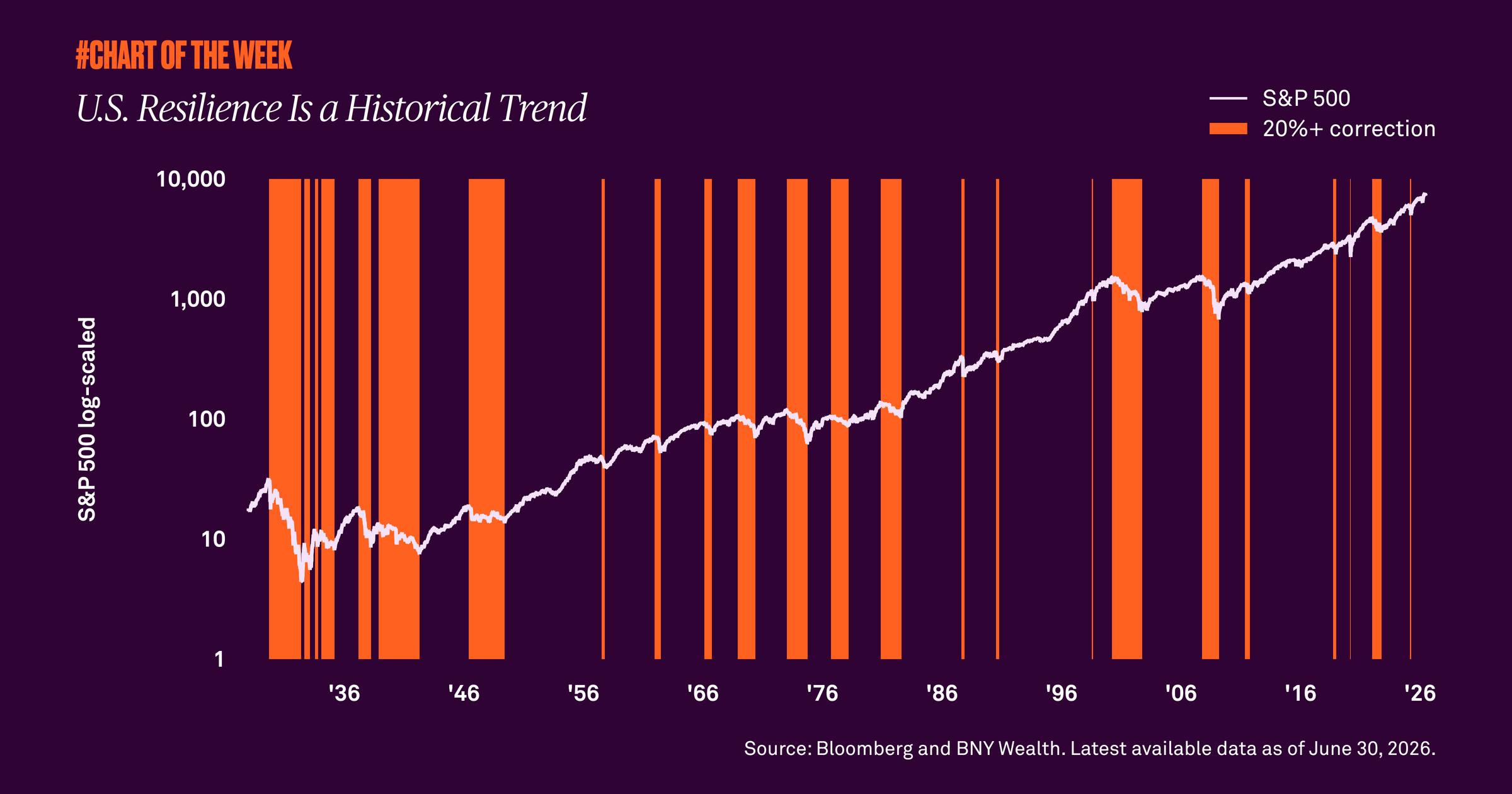

The S&P 500, in its current form, was introduced in 1957, building on Standard & Poor’s earlier 90-stock index, launched in 1926. Over the decades, it has endured recessions, wars, inflation, political division, corrections and bubbles — yet its long-term trajectory has remained upward. Its history is defined not by continuous gains, but by resilience: the capacity to absorb shocks and recover over time.

That lesson feels especially relevant as the U.S. marks its 250th anniversary. Like the market, the country’s history has never been smooth or free of conflict. Yet the broader American story is also one of endurance and long-term progress.

For investors, the message is simple: wealth building is a long-term mindset. Setbacks are inevitable, but history suggests that staying patient, disciplined and invested matters far more than trying to time every rise and fall of the market.
RELATED CONTENT
Resilient rotation
Chart of the Week | Macroeconomic

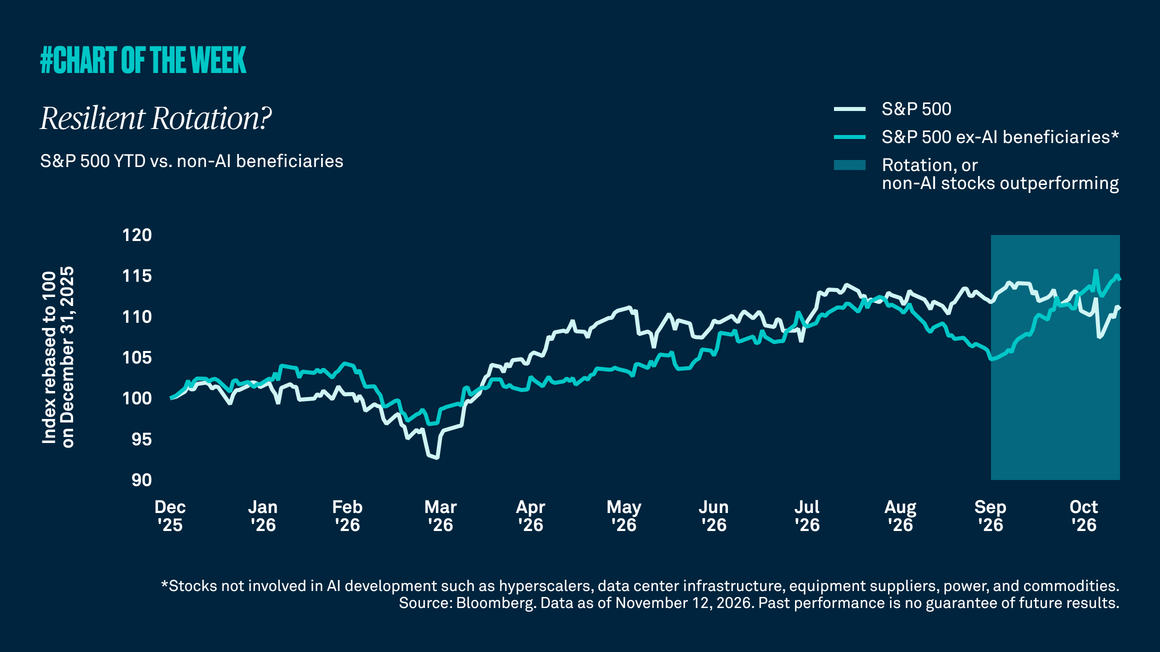
Market leadership has shifted as investors are rotating away from AI and technology shares, with non-AI beneficiaries outperforming the broader index year to date. While recent volatility has weighed on AI-related stocks, healthier breadth and resilient earnings expectations support a constructive outlook on equities overall.

What happens on bad days?
Chart of the Week | Macroeconomic

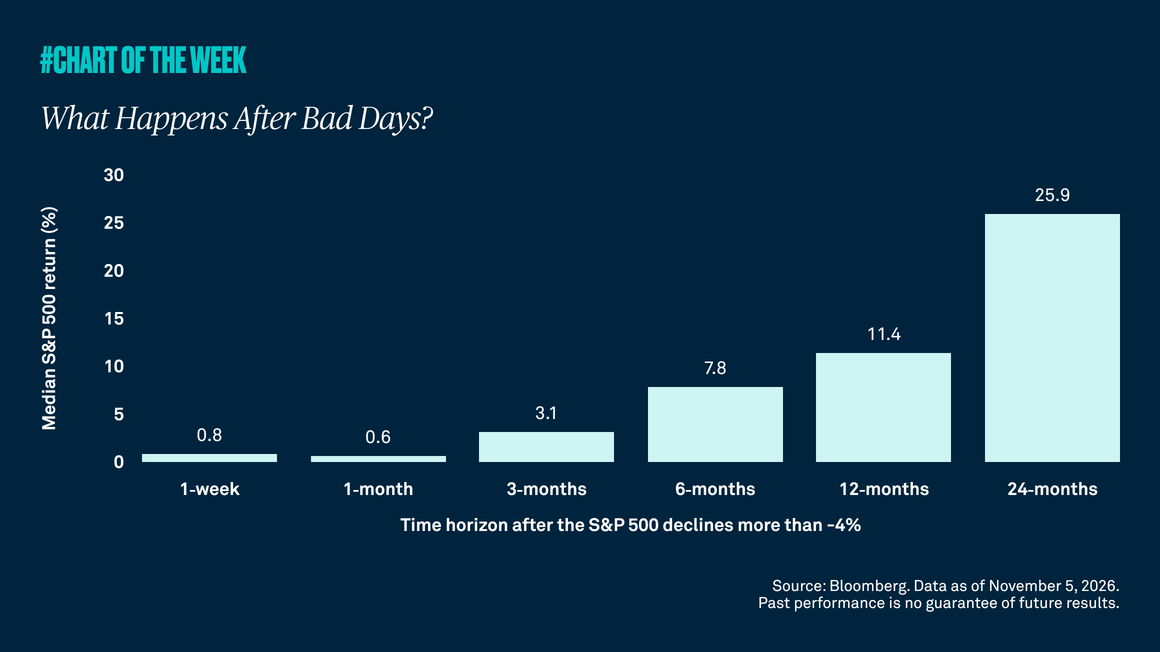
The recent one-day equity selloff reflected weaker sentiment amid election uncertainty and concerns that slower artificial intelligence spending could weigh on growth and earnings. Still, pullbacks of this magnitude have often been followed by solid returns, and we remain constructive given the economy’s resilience and AI’s long-term potential.

Play the long game
Chart of the Week | Macroeconomic

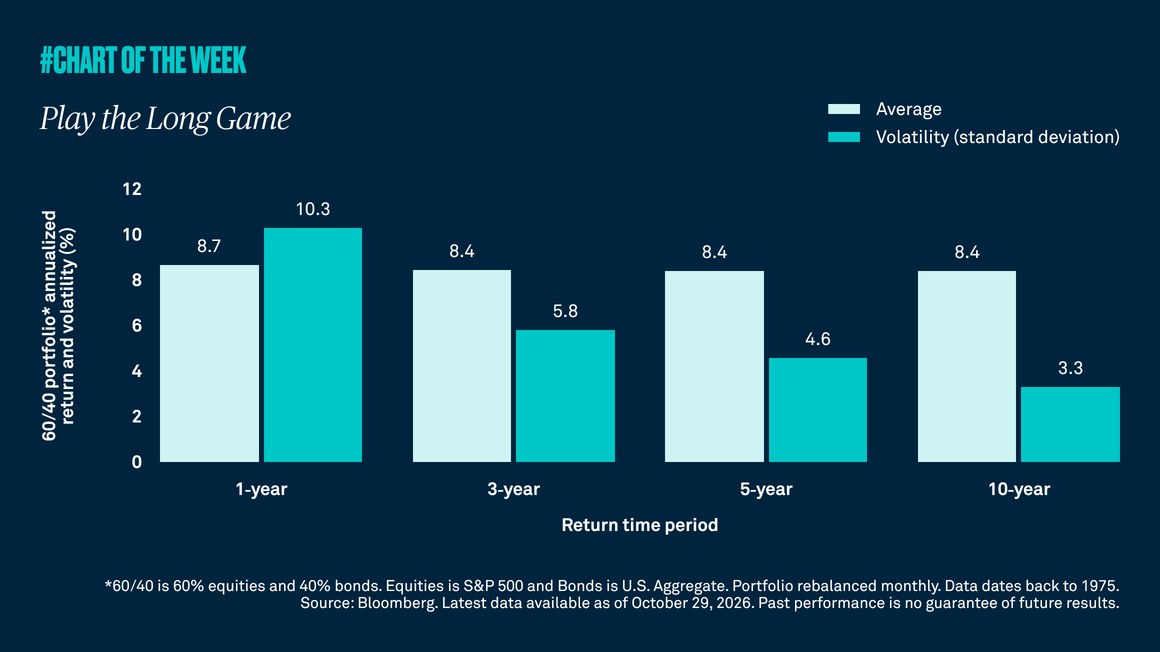
When it comes to investing, time matters. While headlines and short-term perspectives can lead investors to try and time the market, investors have historically been rewarded by playing the long game. Rather than overreacting to market noise, investing over longer time periods can help smooth the ride without sacrificing returns. The lesson: stay diversified and invested for the long term.

Contained contagion?
Chart of the Week | Macroeconomic

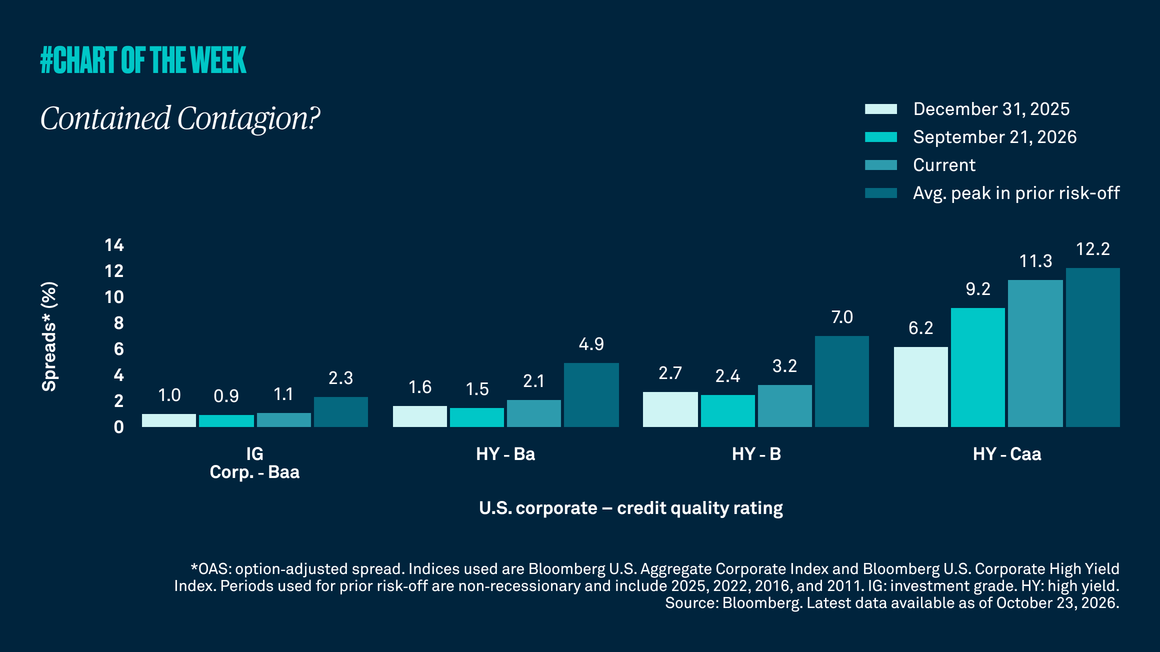
U.S. high yield credit spreads have widened year to date, reflecting greater investor caution about perceived default risk. The move also raises concerns about possible credit contagion. However, because spread widening has been concentrated in the lowest-quality issuers rather than higher-quality issuers, we don’t anticipate broader market stress.

Gathering data
Disclaimer Not Available

This is a marketing communication