Please ensure Javascript is enabled for purposes of website accessibility Higher Inflation, Contained Expectations
master-copy
fr
actualites-et-analyses
false
true

Higher inflation, contained expectations

Higher inflation, contained expectations

Inflation has jumped since the Strait of Hormuz closed, squeezing consumers through higher gas and utility bills and pressuring businesses with higher freight and operating costs. Yet, longer-term inflation expectations remain contained, suggesting this looks more like a temporary energy shock than a lasting inflation upswing.
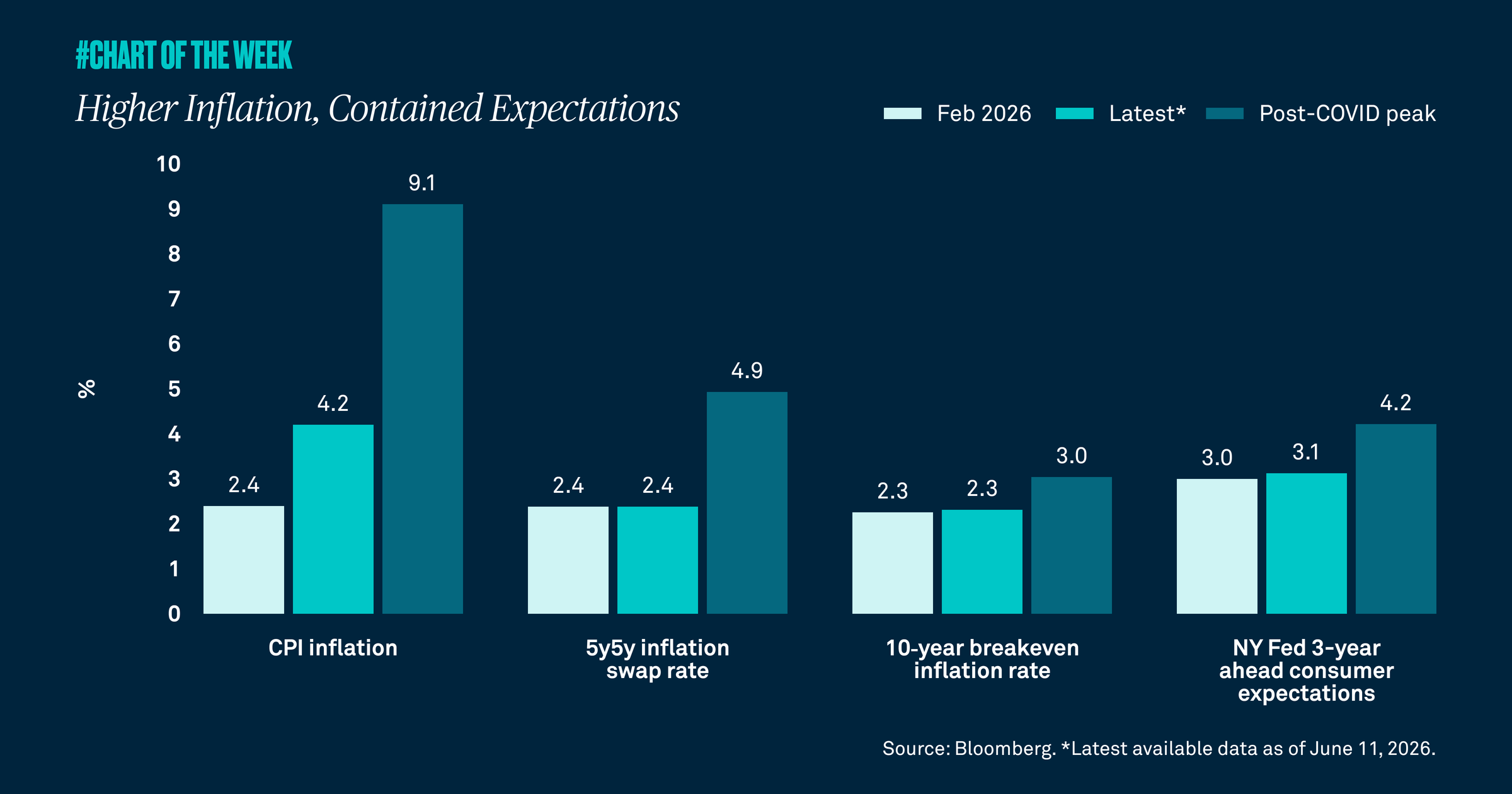

Inflation has risen since the start of the Iran conflict and the closure of the Strait of Hormuz, driven largely by higher energy costs. Consumers are feeling it through higher gasoline and utility bills, while business owners are facing higher freight, utility and operating costs.

Since February, annual inflation has increased to 4.2% from 2.4%. Yet, longer-term inflation expectations have stayed well anchored, suggesting households and markets still view this as an energy-driven shock rather than the start of a lasting inflation upswing. We share this view, and believe Middle East tensions should ease sooner rather than later given the pending peace deal, which will allow energy prices to normalize over time. Still, we could see higher inflation prints over the next several months, which, combined with a resilient economy, should keep the Federal Reserve on hold.

While near-term volatility is possible, we remain constructive on U.S. equities, supported by resilient earnings, solid capital spending and a stabilizing labor market over the long term. 
AUTRES ARTICLES ASSOCIÉS
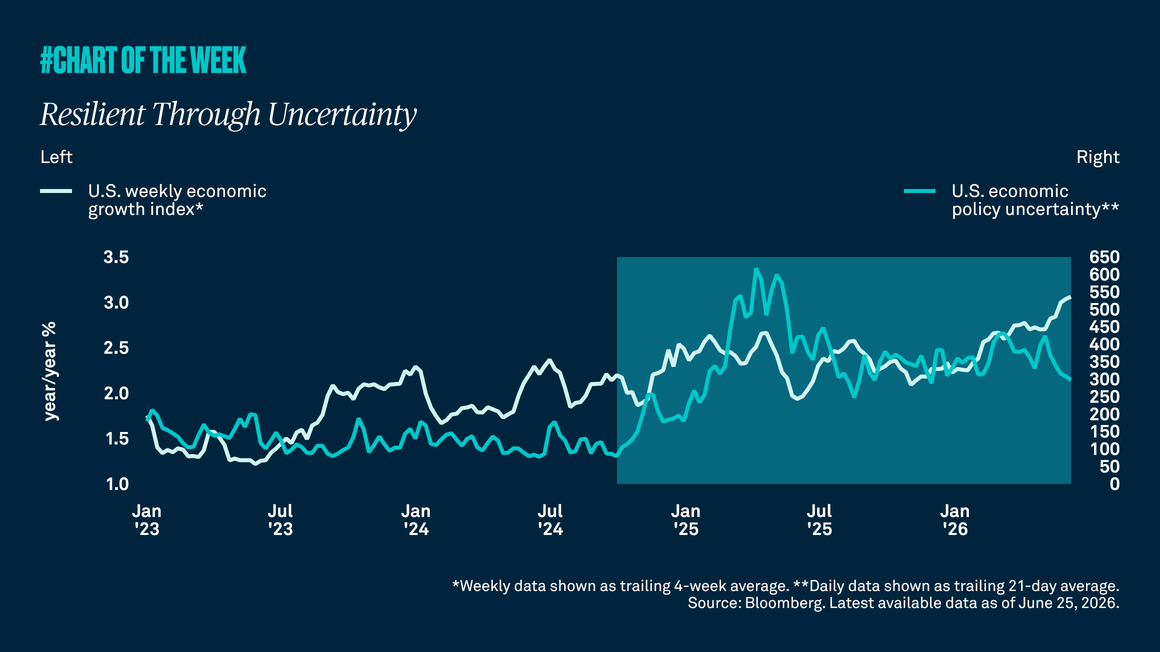
Resilient through uncertainty
Chart of the Week | Macroéconomique

U.S. policy uncertainty has remained elevated and consumer sentiment has weakened. Even so, the economy has stayed resilient, and because growth has held up better than sentiment and headlines suggest, we continue to forecast 2% U.S. growth in 2026, in line with trend.

Getting real in retail
Chart of the Week | Macroéconomique

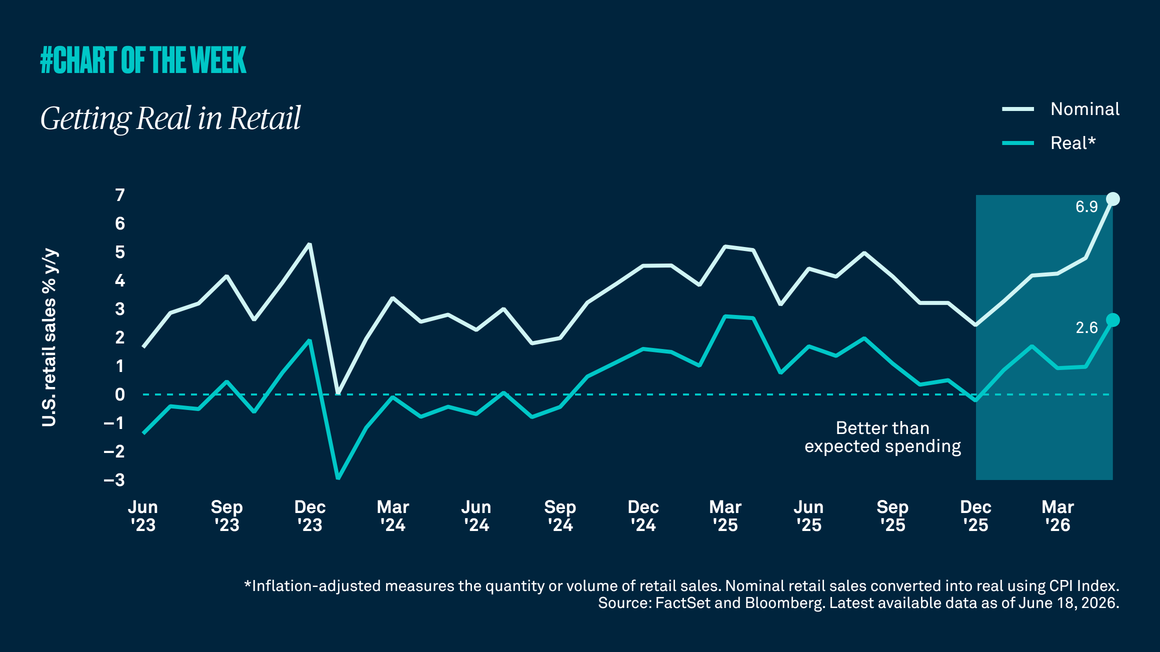
Despite persistent concerns that sticky inflation would erode purchasing power and drag consumer spending lower, the May retail sales data tells a different story. Spending is up not just in dollar terms, but in quantity, highlighting continued consumer resilience.

Steady hiring, fewer layoffs
Chart of the Week | Macroéconomique

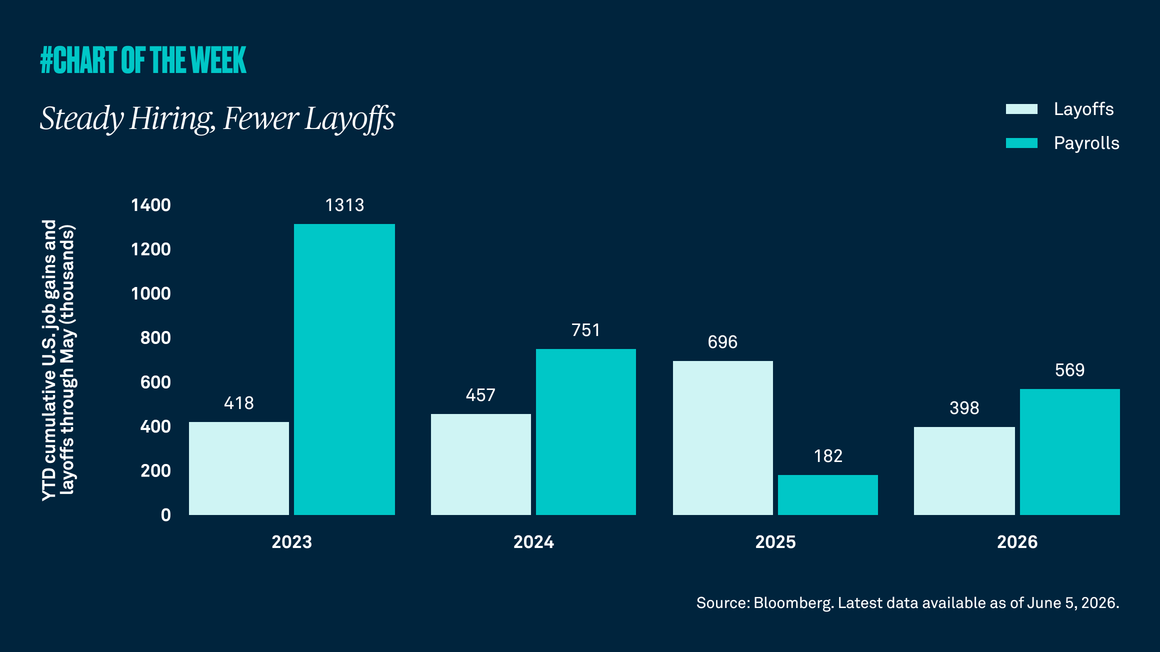
May’s jobs report showed a labor market that is improving, with payroll growth exceeding expectations and layoffs down sharply from last year. Steady hiring and fewer layoffs should continue to support consumer spending and U.S. economic growth.

A broader foundation for earnings growth
Chart of the Week | Macroéconomique

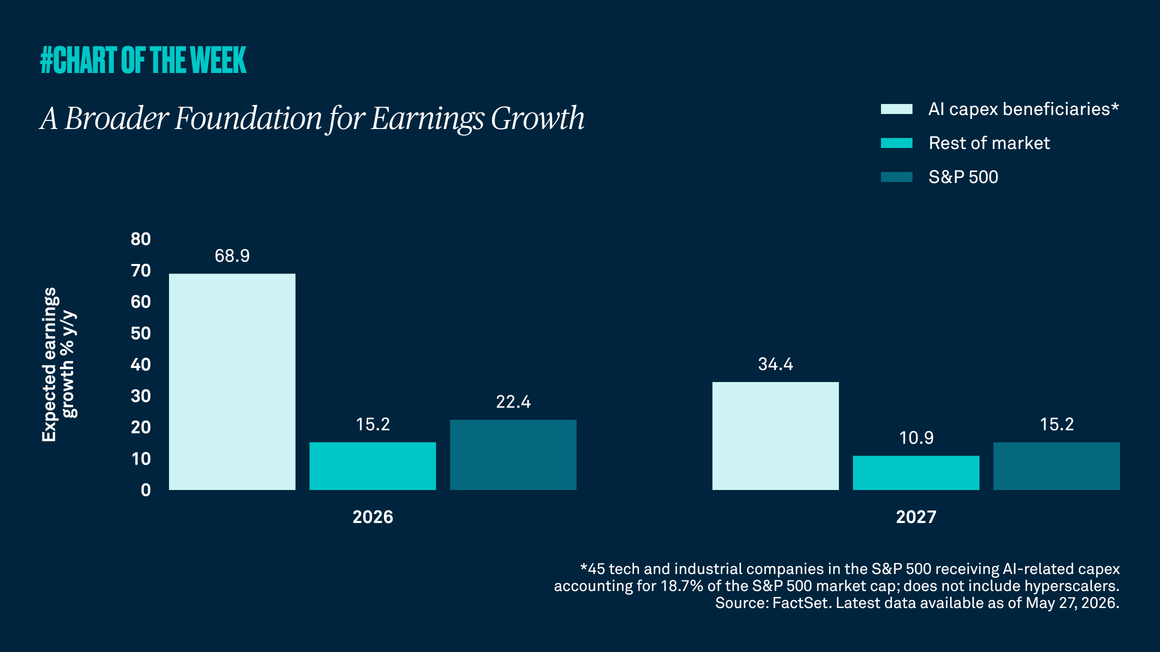
Although companies benefiting most directly from AI-related capital spending are the main drivers of higher earnings, strength is no longer confined to that group. Earnings across the broader market remain solid and are expected to grow more than 10% this year and next, suggesting the risk of concentrated market leadership may not be founded.

Gathering data
Disclaimer Not Available