Please ensure Javascript is enabled for purposes of website accessibility The BNY Strategic Bond Fund: 5 years of active fixed income
master-copy
en
news-and-insights
news-and-insights
false
true

The BNY Strategic Bond Fund: 5 years of active fixed income

The BNY Strategic Bond Fund: 5 years of active fixed income

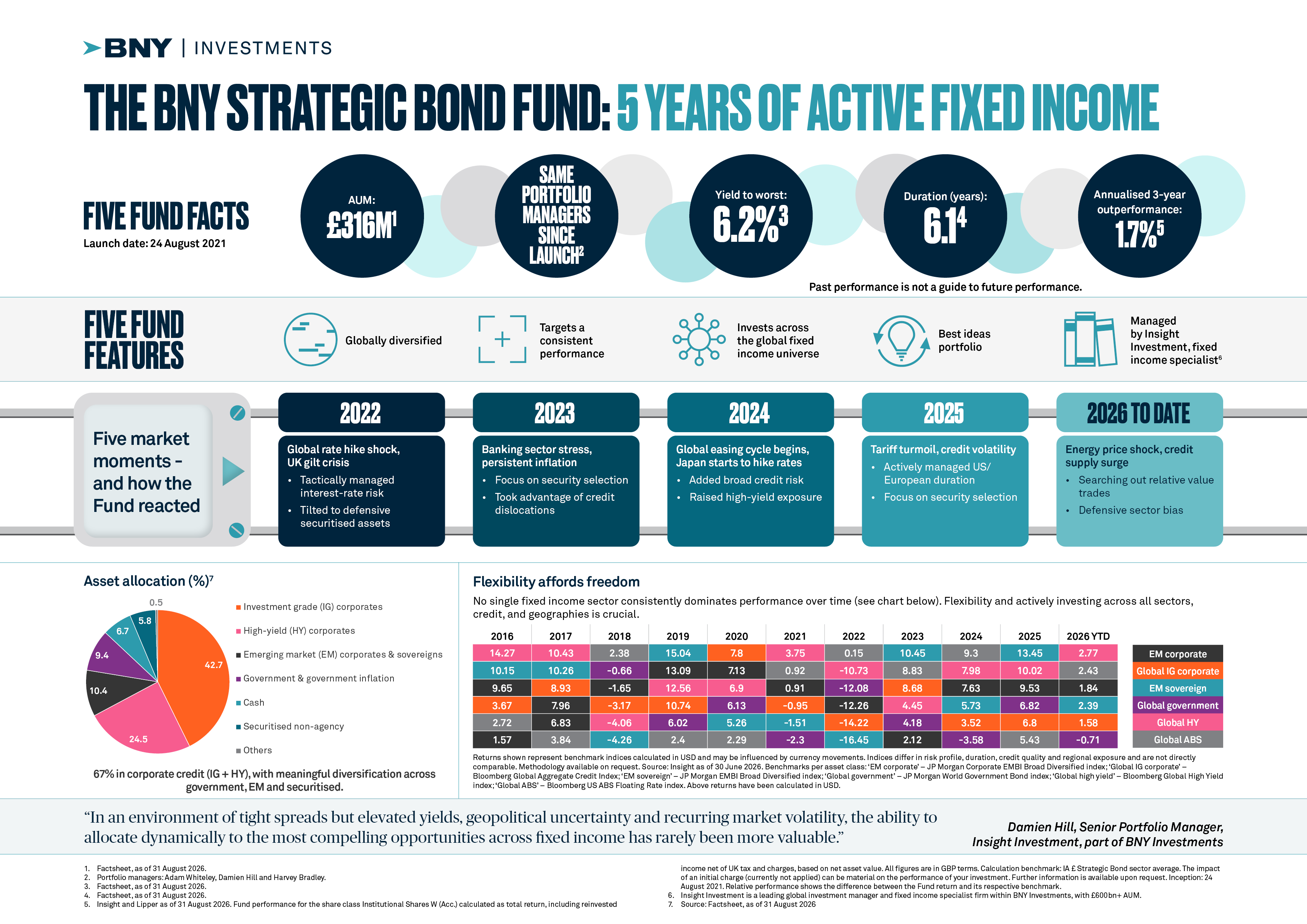
As the BNY Strategic Bond Fund marks its fifth anniversary, we reflect on a period of significant change across global fixed income markets.

From sharp rate rises and inflation shocks to renewed volatility and shifting credit opportunities, the past five years have underscored how quickly fixed income market leadership can change.

This infographic explores some of the defining moments over that period and highlights why flexibility across sectors, regions and credit quality remains an important consideration in an evolving investment landscape.


2042902 Exp: 31 March 2027

RELATED CONTENT
What does resilience look like today?
Article | Fixed Income

Today’s fixed income world rewards investment managers who are willing to accommodate changes in the market backdrop and outlook in real time.

The strategic advantage: building resilience with active fixed income
Article | Fixed Income

Higher inflation, rising interest rates and greater uncertainty have made investing more challenging. For bond investors, simply owning bonds may no longer be enough to successfully diversify risk.

Q3 2026 global update: what's moving beneath the surface
Article | Equities

On the face of it, Q3 2026 looked uneventful — market returns were relatively muted, and the headlines stayed fixed on bond yields, interest rates, and energy prices. But as Walter Scott's latest global update explains, there was plenty of movement beneath the surface.

Higher yields, but lower sensitivity
Chart of the Week | Macroeconomic

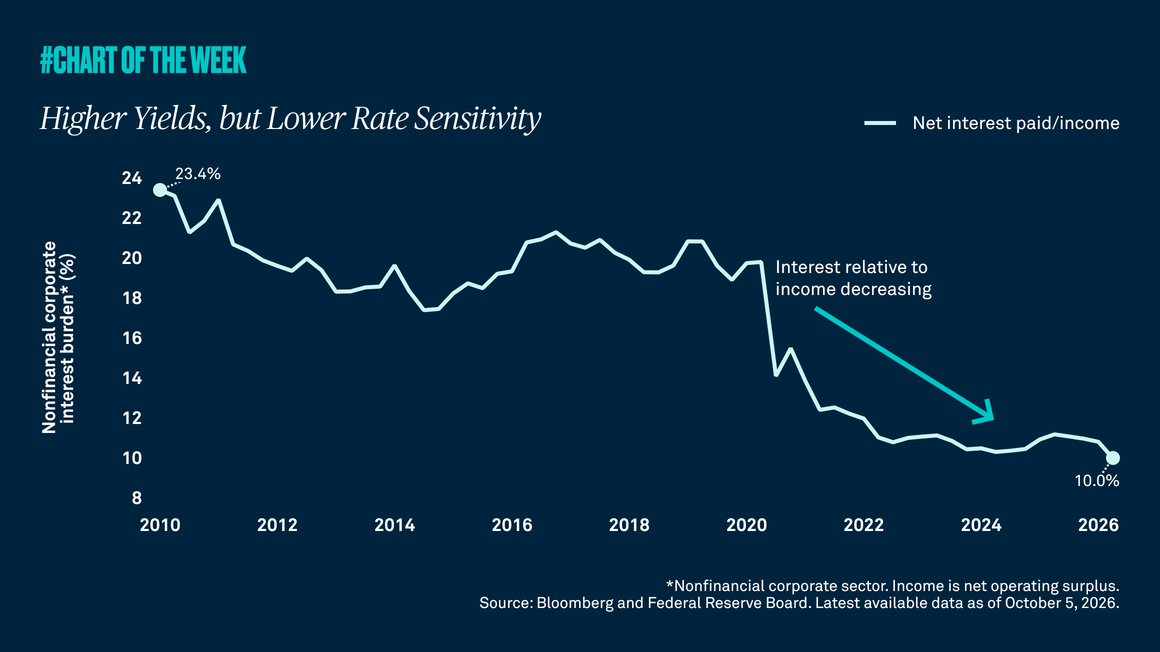
Higher interest rates have become a frequently cited risk to corporate earnings and the economy. The conventional thinking is straightforward: when borrowing costs rise, companies face higher interest expenses, profits come under pressure, and economic growth slows. While there is truth to that relationship, the current cycle may differ from investors’ expectations.

Gathering data
Disclaimer Not Available