Please ensure Javascript is enabled for purposes of website accessibility Play the long game
master-copy
en
news-and-insights
news-and-insights
false
true

Play the long game

Play the long game

When it comes to investing, time matters. While headlines and short-term perspectives can lead investors to try and time the market, investors have historically been rewarded by playing the long game. Rather than overreacting to market noise, investing over longer time periods can help smooth the ride without sacrificing returns. The lesson: stay diversified and invested for the long term.
 

Investors have had plenty to worry about: from elevated interest rates, higher gas and food prices, growing skepticism about the return on AI investment and the potential changes in the makeup of Congress. While these short-term headlines may persist, it is important to remember that it’s fundamentals - such as earnings - that drive market over the long term. With resilient economic activity and expectations for continued earnings growth, our forward outlook remains constructive.  

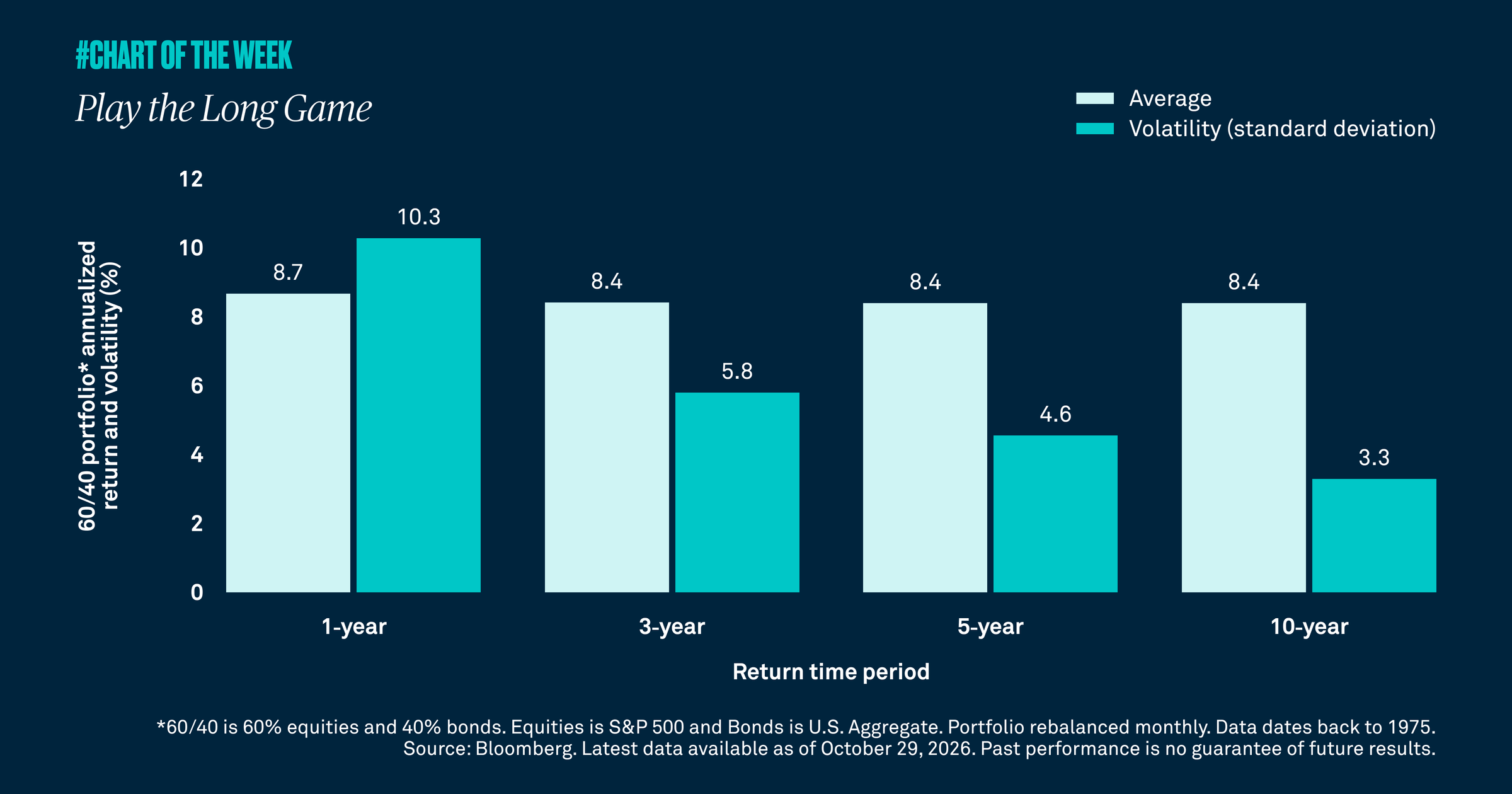
That said, investors should not let short-term noise drive moves in and out of the market, as this can lead to underperformance. Investors with short holding periods may experience greater volatility of returns, while those who invest over the long term have historically earned similar returns but with less volatility.

For example, going back to 1975, the average one-year return on a portfolio composed of 60% equities and 40% bonds (represented by the S&P 500 and the U.S. Aggregate, respectively), rebalanced monthly, was 8.7%, with volatility of 10.3%. Over longer periods, however, the volatility of returns narrows. Over three years, volatility is roughly cut in half, and it declines even further over a 10-year period.

In other words, while short-term headlines may tempt investors to time the market, longer holding periods have historically produced similar returns with less ups and downs. For investors looking to build wealth, the better course is to play the long game by remaining disciplined, diversified and invested.
RELATED CONTENT
Resilient rotation
Chart of the Week | Macroeconomic

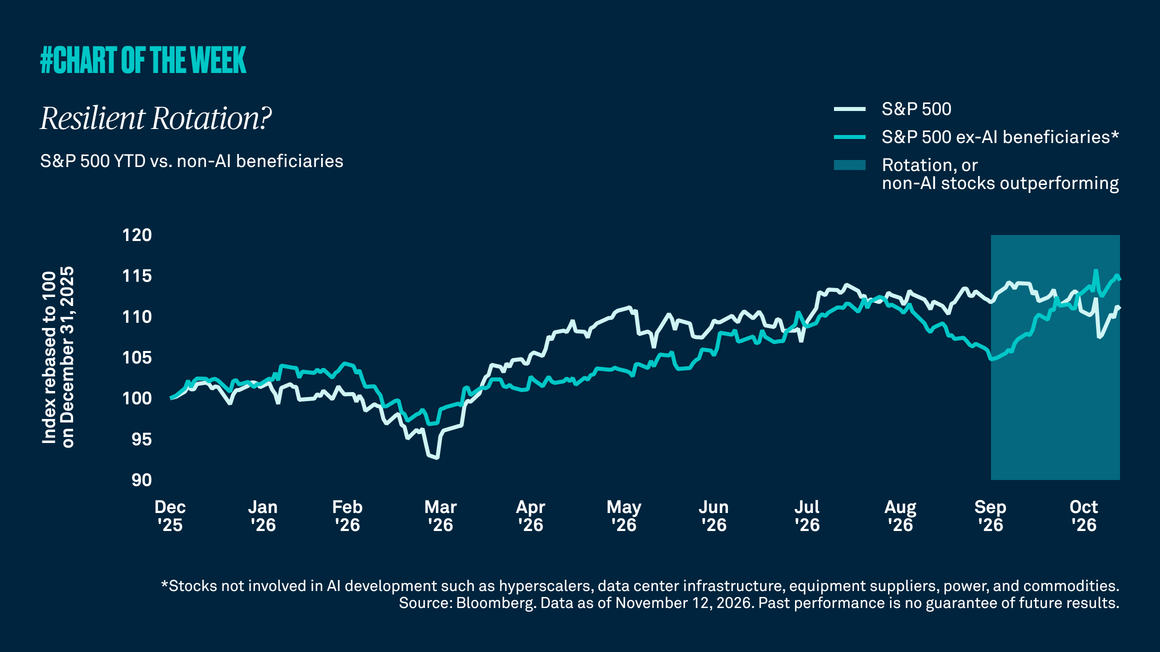
Market leadership has shifted as investors are rotating away from AI and technology shares, with non-AI beneficiaries outperforming the broader index year to date. While recent volatility has weighed on AI-related stocks, healthier breadth and resilient earnings expectations support a constructive outlook on equities overall.

What happens on bad days?
Chart of the Week | Macroeconomic

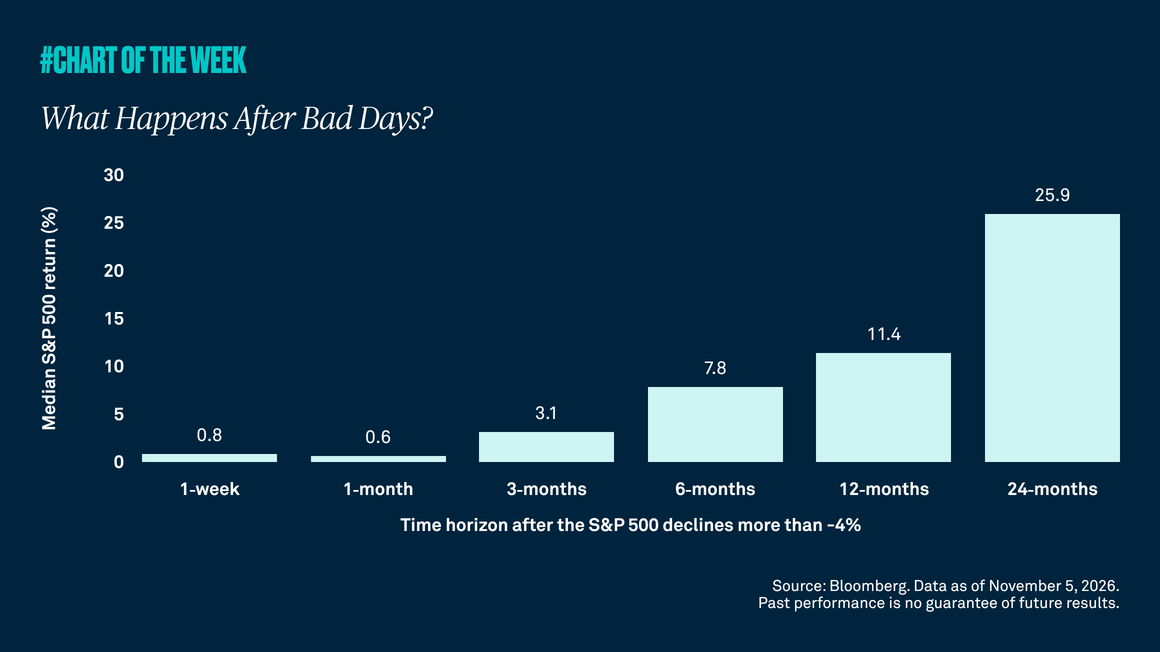
The recent one-day equity selloff reflected weaker sentiment amid election uncertainty and concerns that slower artificial intelligence spending could weigh on growth and earnings. Still, pullbacks of this magnitude have often been followed by solid returns, and we remain constructive given the economy’s resilience and AI’s long-term potential.

Contained contagion?
Chart of the Week | Macroeconomic

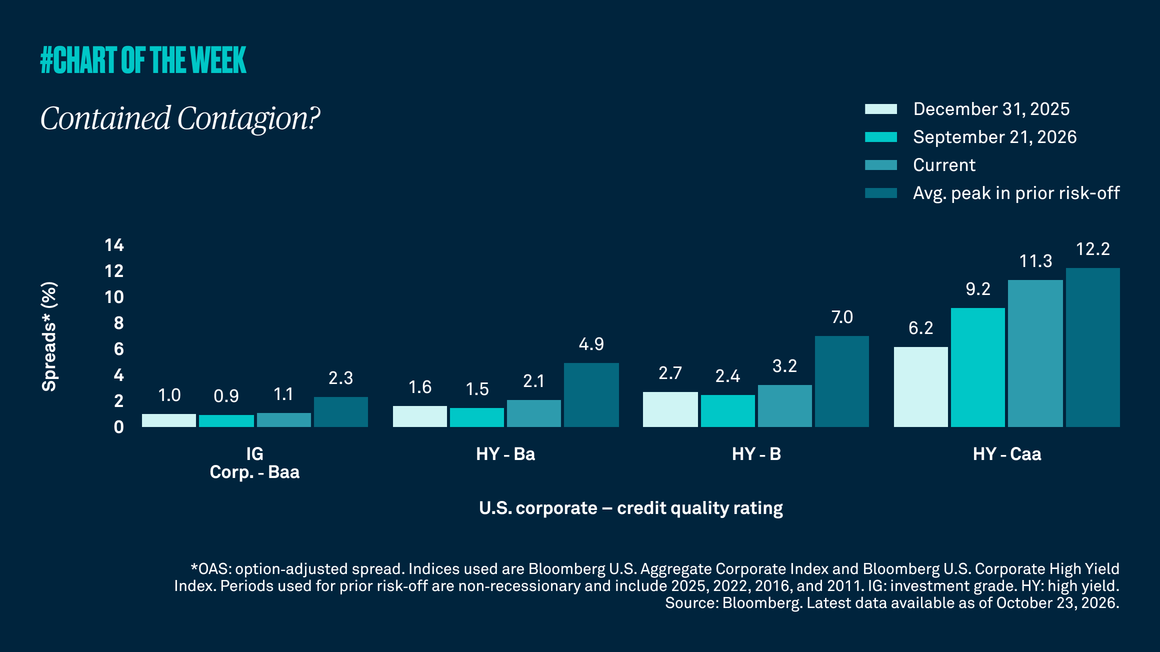
U.S. high yield credit spreads have widened year to date, reflecting greater investor caution about perceived default risk. The move also raises concerns about possible credit contagion. However, because spread widening has been concentrated in the lowest-quality issuers rather than higher-quality issuers, we don’t anticipate broader market stress.

Can the bull run in corporate margins continue?
Chart of the Week | Macroeconomic

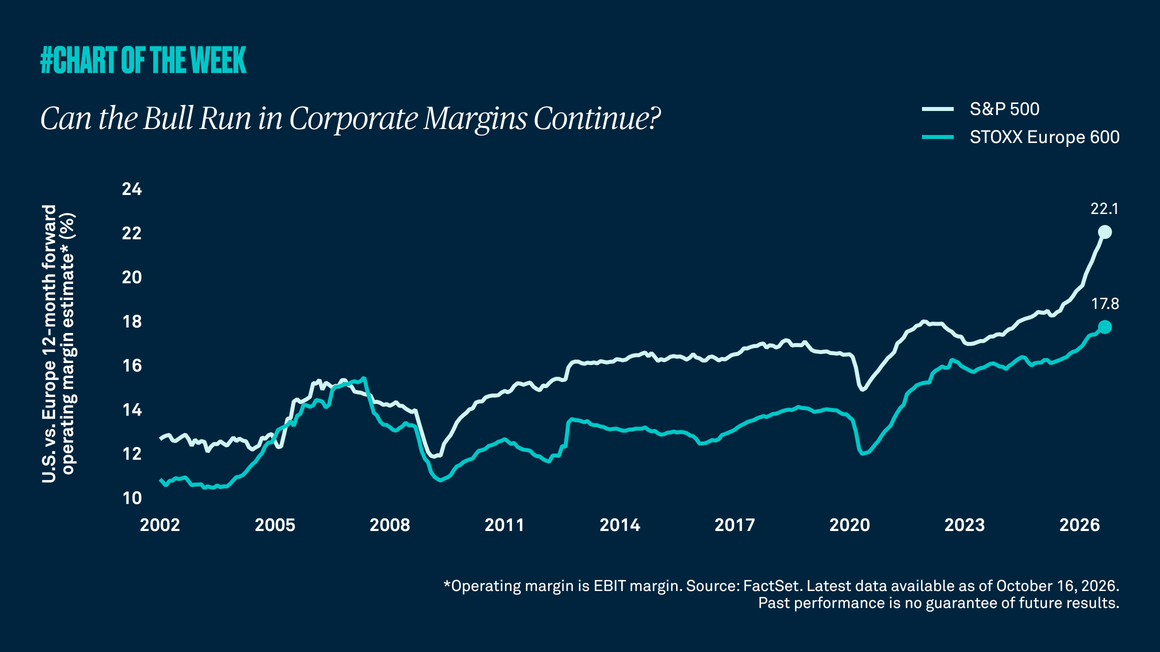
Higher inflation and elevated interest rates typically weigh on corporate profitability, yet corporate margins continue to climb to record highs. While that strength is evident both in the U.S. and abroad, U.S. outperformance versus Europe is now the widest on record. Stronger margins have helped contribute to better-than-expected earnings and reinforce U.S. equity leadership. The question now is whether that strength can persist?

Gathering data
Disclaimer Not Available