Please ensure Javascript is enabled for purposes of website accessibility Comparing concentration risk around the globe - MASTER-COPY - BNY Investments
master-copy
en
news-and-insights
news-and-insights
false
true

Comparing concentration risk around the globe

comparing-concentration-risk-around-the-globe

While some fear the S&P 500 is too concentrated in its top 10 stocks, our analysis tells us something different. 


The top ten companies in the S&P 500 – largely technology names – comprise a third of the index’s market capitalization – near the highest in history. While these stocks have driven a period of strong outperformance relative to other regional equity indices, some investors worry that this concentration can lead to lower returns if these stocks’ profitability were to slow

However, when comparing the weight of the top 10 U.S. stocks to equity concentrations abroad, concentration becomes less worrisome. The top 10 stocks of Germany, Brazil, France, South Korea and China, respectively, constitute 50% or more of each country’s equity index. The concentration of the top 10 stocks in the S&P 500 of 34.4% appears less of a concern in comparison. In addition, the concentration in other regions like Japan and Emerging Markets is only marginally lower at 27-28%.

Like most metrics used to assess the qualities and appeal of an individual stock, index metrics such as concentration are most meaningful when considered relative to their peers. In our view, the lower concentration of S&P 500 stocks makes U.S. equities attractive relative to their foreign counterparts, supporting our preference for U.S. large cap stocks.
 

RELATED CONTENT
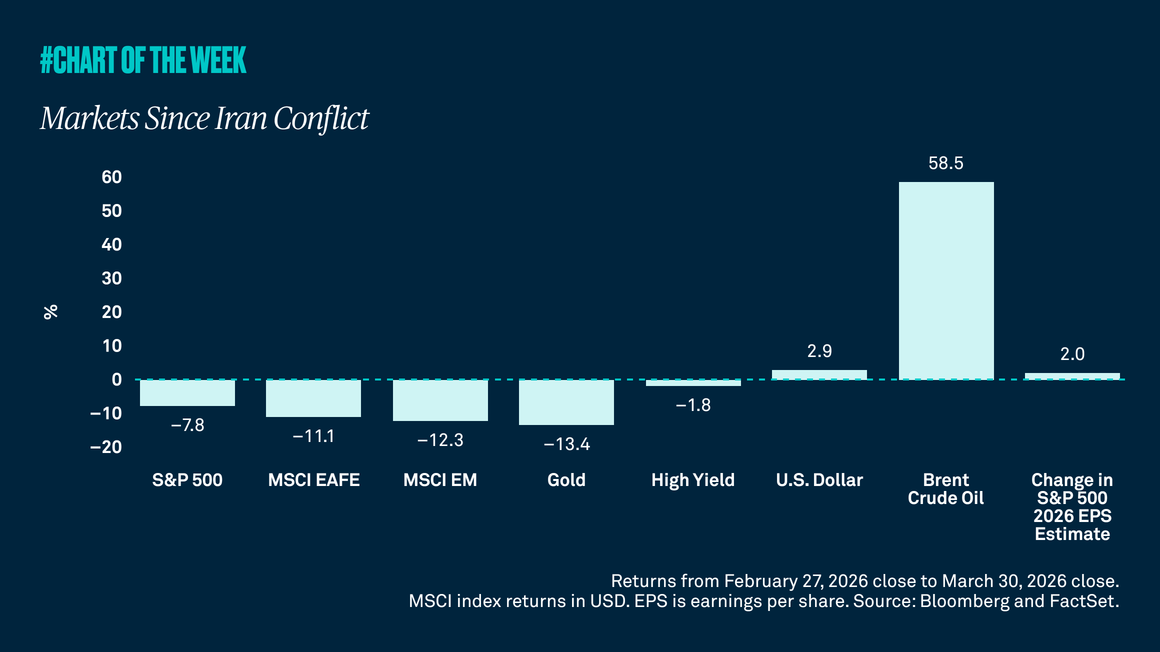
cotw-30-03-2026-thumbnail-580x326px
Chart of the week | Macroeconomic

Markets are reacting to the Middle East conflict with sharp moves across asset classes, signaling broad risk repricing and shifting safe haven behavior. While volatility is elevated, fundamentals like earnings growth continue to support our constructive outlook.

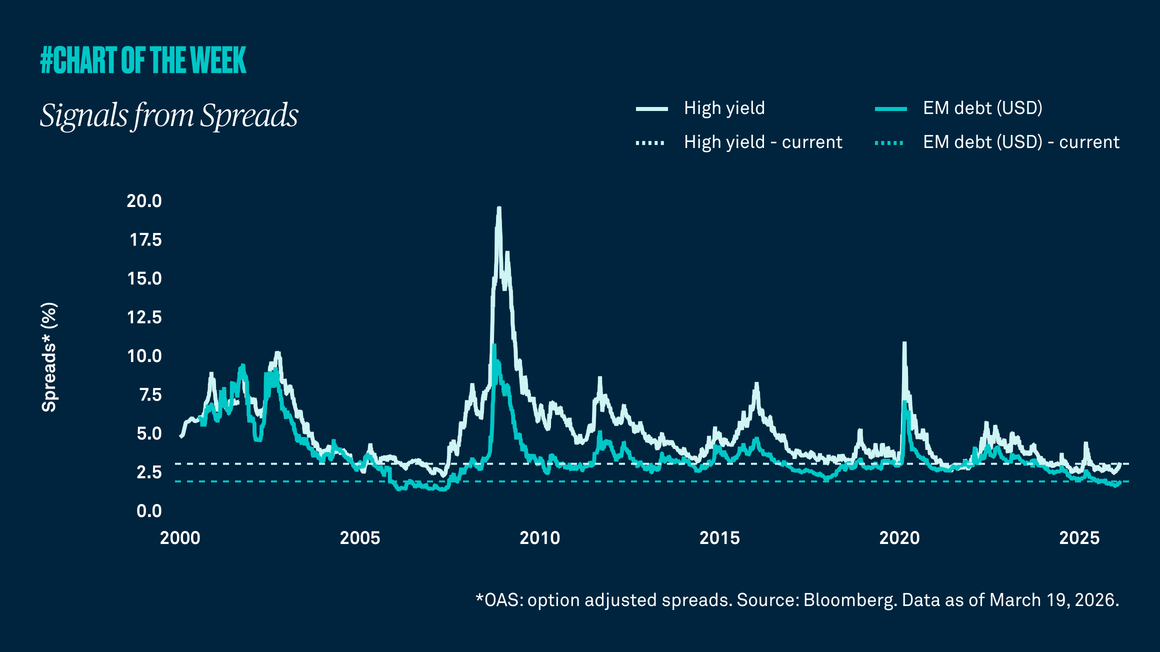
Signals from spreads
Chart of the week | Macroeconomic

Credit spreads have risen yet remain historically low, reinforcing our view that the oil shock is likely temporary — not a driver of long-term growth concerns.

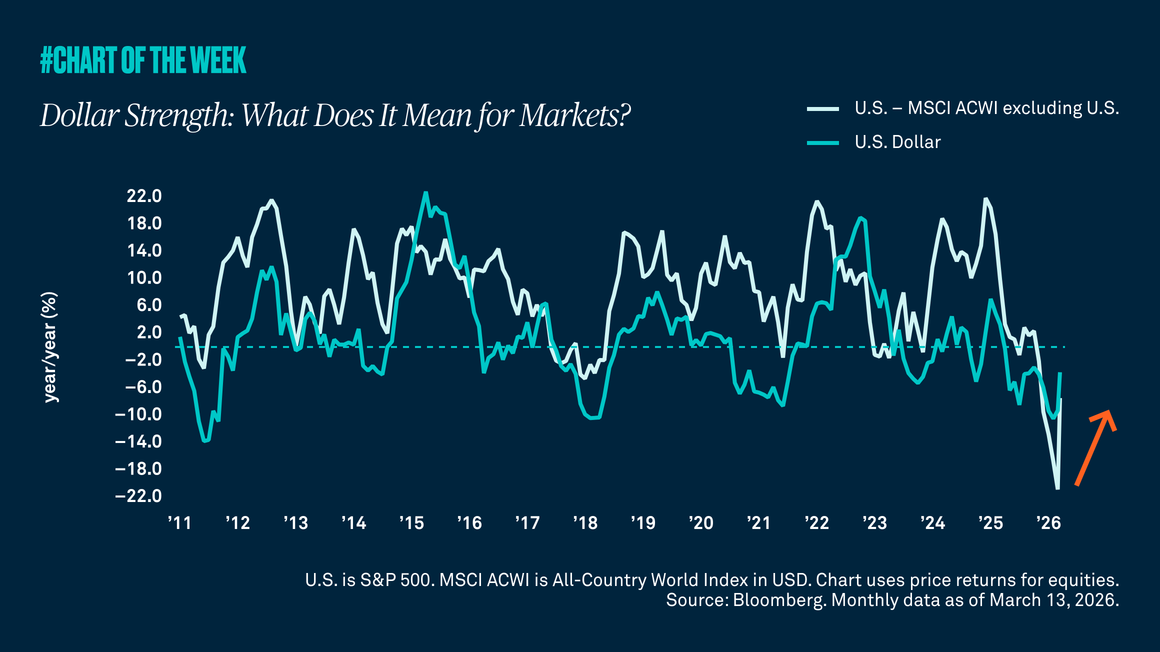
Dollar strength: what does it mean for markets?
Chart of the week | Macroeconomic

Geopolitical tensions have lifted oil prices, sent U.S. stocks slightly lower and driven flows into the safety of the U.S. dollar, which has strengthened versus peers. While a weaker dollar previously supported international equity outperformance, dollar stabilization now suggests that tailwind is fading, underscoring the importance of diversification across regions and asset classes.

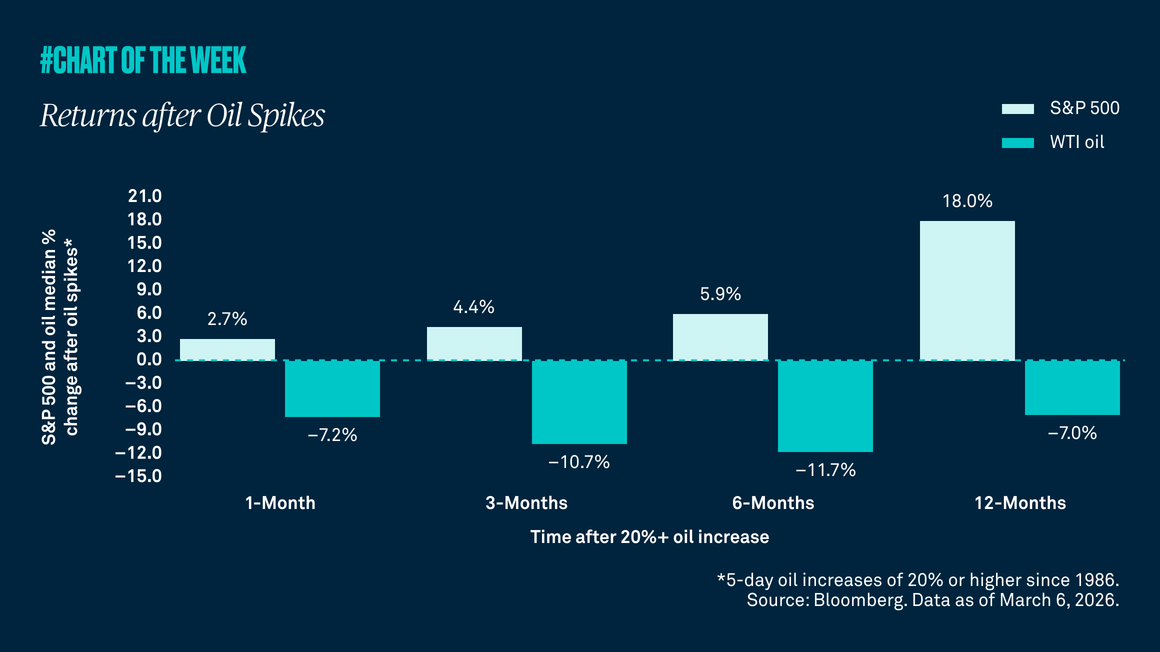
Returns after oil spikes
Chart of the week | Macroeconomic

The Strait of Hormuz, which moves about 20% of global oil, has seen many ships that normally travel through it curtail their activity. Consequently, WTI oil was up over 36% in the five days after the oil supply shock began. Yet equities barely budged, signaling a temporary supply shock, not a larger crisis. Historically, after similar price spikes equities tend to move higher while oil prices decline — further evidence for avoiding emotion-driven investing.

Gathering data
Disclaimer Not Available