Please ensure Javascript is enabled for purposes of website accessibility Higher yields, but Lower Sensitivity
lu
en
intermediary
intermediary
false
true
Gathering data
Disclaimer Not Available

Higher yields, but lower sensitivity

Higher yields, but lower sensitivity

Higher interest rates have become a frequently cited risk to corporate earnings and the economy. The conventional thinking is straightforward: when borrowing costs rise, companies face higher interest expenses, profits come under pressure, and economic growth slows. While there is truth to that relationship, the current cycle may differ from investors’ expectations.
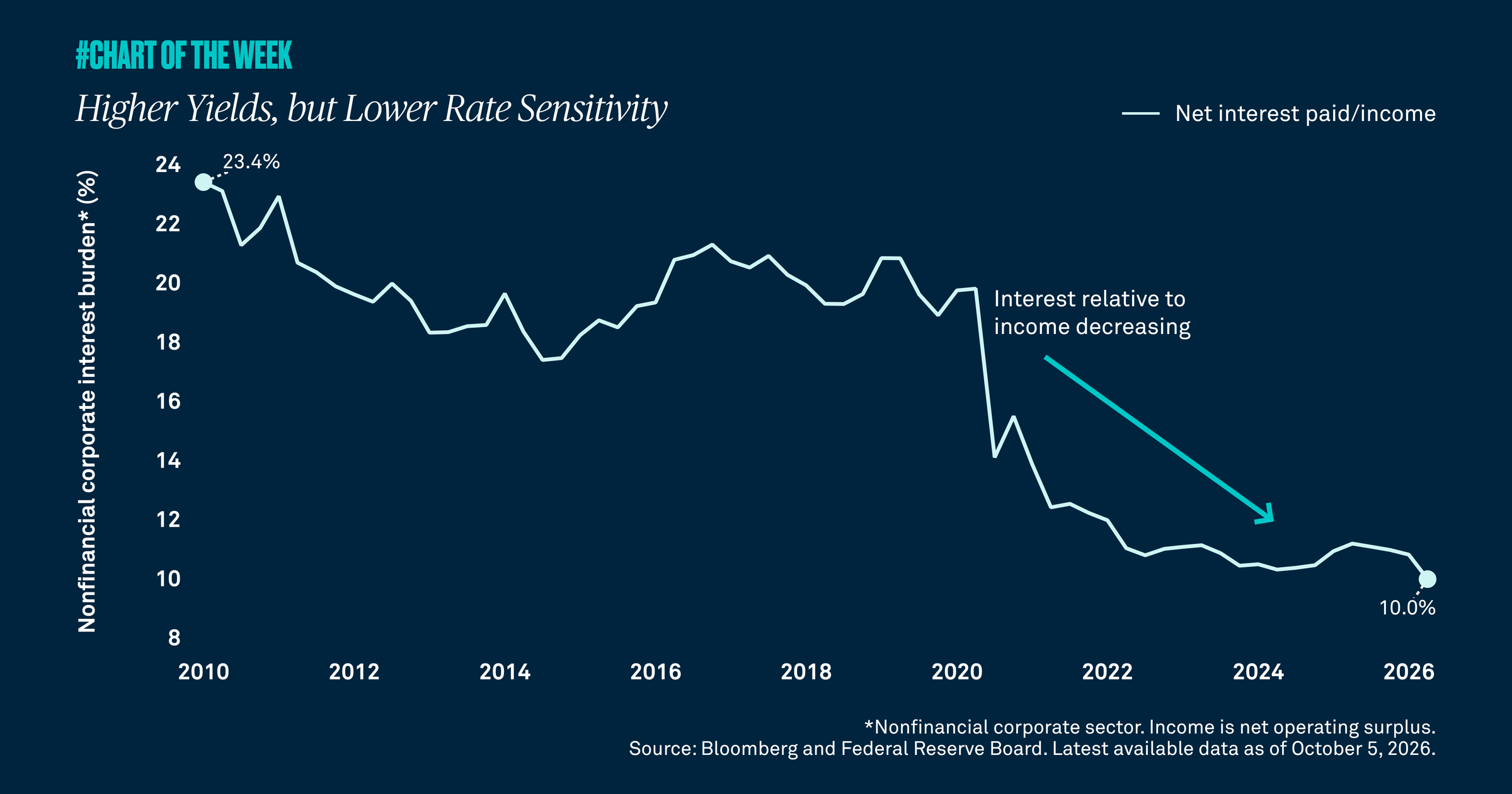
 

The recent rise in interest rates has raised concerns that higher borrowing costs could weigh on corporate profits and ultimately slow economic activity. However, our analysis suggests that the U.S. corporate sector appears less sensitive to higher interest rates than it was in prior decades. Specifically, net interest paid as a share of income has fallen from roughly 23% in 2010 to about 10% today — nearly a historic low.

Much of this improvement reflects stronger corporate balance sheets. Many companies refinanced debt at low rates, extended maturities and locked in favorable financing over the past decade. As a result, higher rates have not translated into a proportionate increase in the overall interest burden.

While higher rates may slow economic activity, they do not necessarily imply a recession or sharp drag on earnings. Combined with generally healthy household balance sheets, a lower corporate interest burden suggests the economy may be more resilient than many expect. This backdrop helps explain why consensus expectations continue to call for above-average earnings growth in 2027. While volatility may remain elevated and growth could moderate from recent trends, the fundamental picture suggests that both businesses and consumers are better positioned to navigate a higher-rate environment than in previous economic cycles.
RELATED CONTENT
Is AI productivity hiding in the data?
Chart of the Week | Macroeconomic

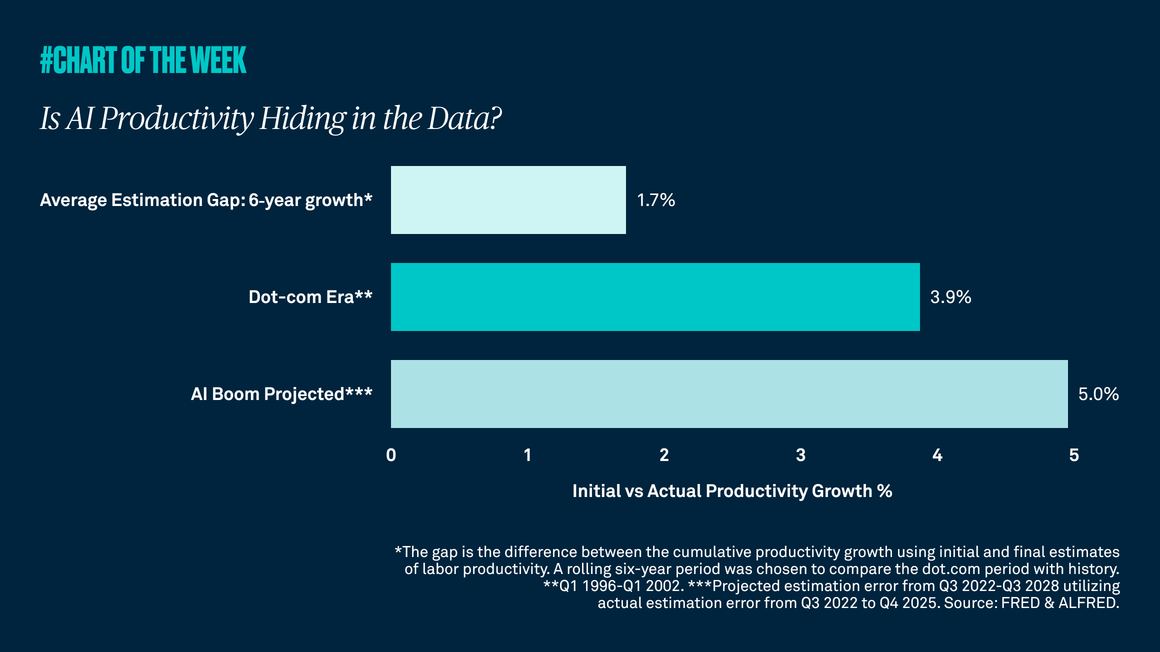
Both the dot-com era and the rise of artificial intelligence suggest that early productivity data can understate the actual economic impact of transformative technologies. In the case of the internet, later revisions to productivity gains surpassed early estimates. The same may prove true for AI, implying stronger support for growth.

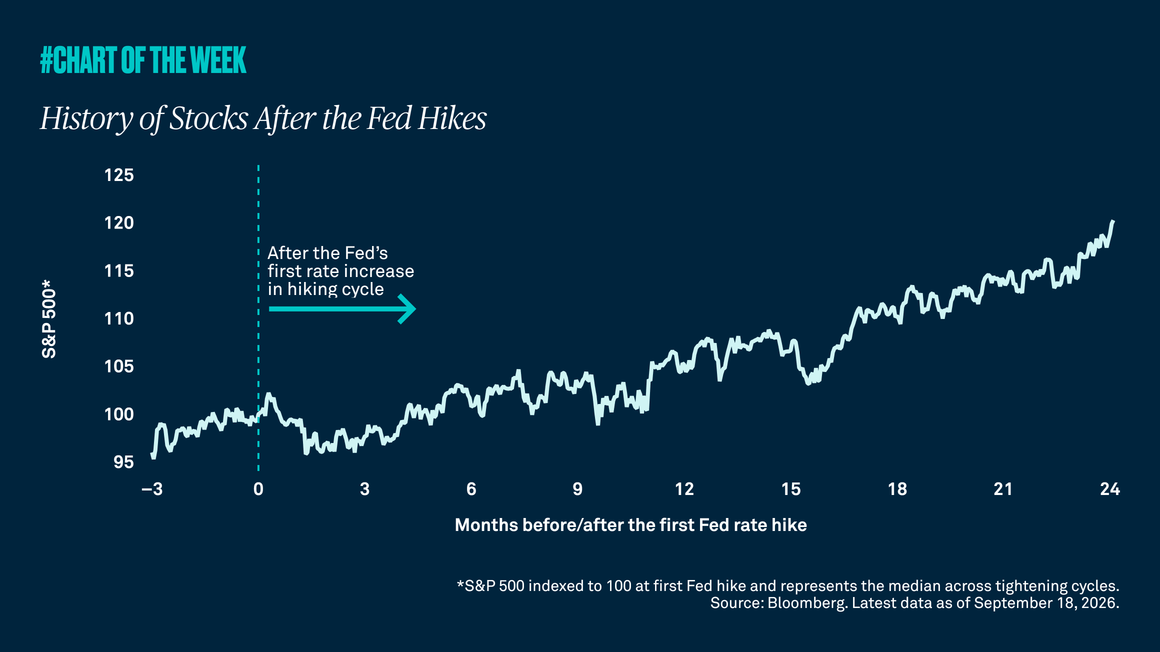
History of stocks after the fed hikes
Chart of the Week | Macroeconomic

Sticky inflation and resilient growth have revived monetary tightening, increasing the risk of higher-for-longer rates and near-term volatility. We continue to believe economic resilience and strong corporate profits should continue to provide a favorable backdrop for stocks, and would use periods of market weakness to add selectively to equities. Additionally, owning real assets can help hedge against inflation.

Inflation is a global problem
Chart of the Week | Macroeconomic

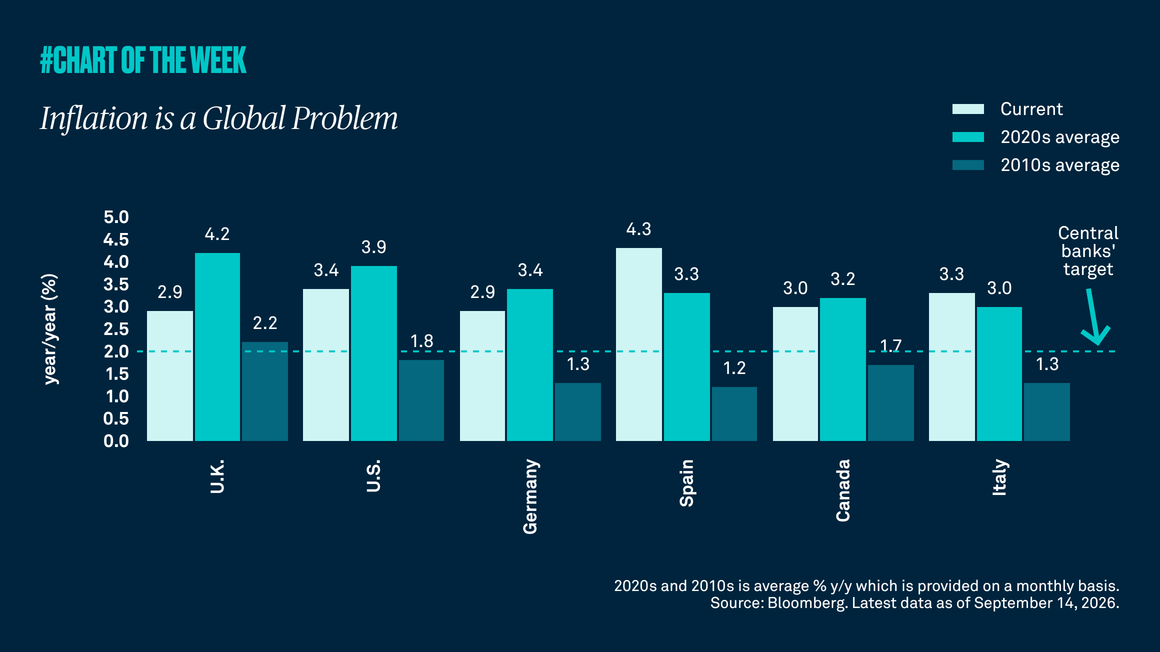
Resilient economic growth, sticky inflation driven by higher energy prices and continued geopolitical uncertainty are complicating the path back to central-bank price targets. We believe policymakers are likely to adopt a tightening bias but remain data dependent.

A good outlook for global earnings
Chart of the Week | Macroeconomic

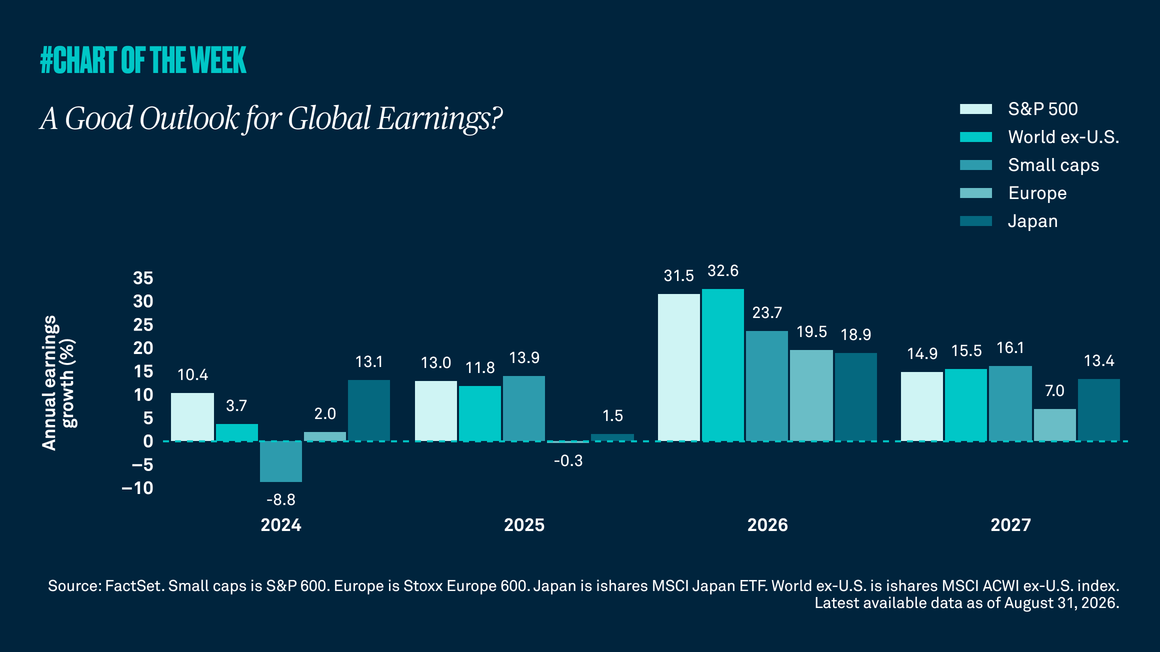
Global earnings growth has been strong this year, led by the U.S. and reinforced by improving profit growth across Europe, Japan and other major markets. While volatility may rise in the near term, above-average earnings and broader global participation remain supportive of global equities.

Gathering data
Disclaimer Not Available

This is a marketing communication