CCC Stress Isn’t Contagious Yet
Special Report

David Tam
Time to Read: 4 minutes
Earlier this week, we argued that while investment-grade (IG) has held in well, stress is starting to manifest in HY and particularly in CCC. This note digs further into the woes of CCC credit and evaluates the contagion risk and possible channels.
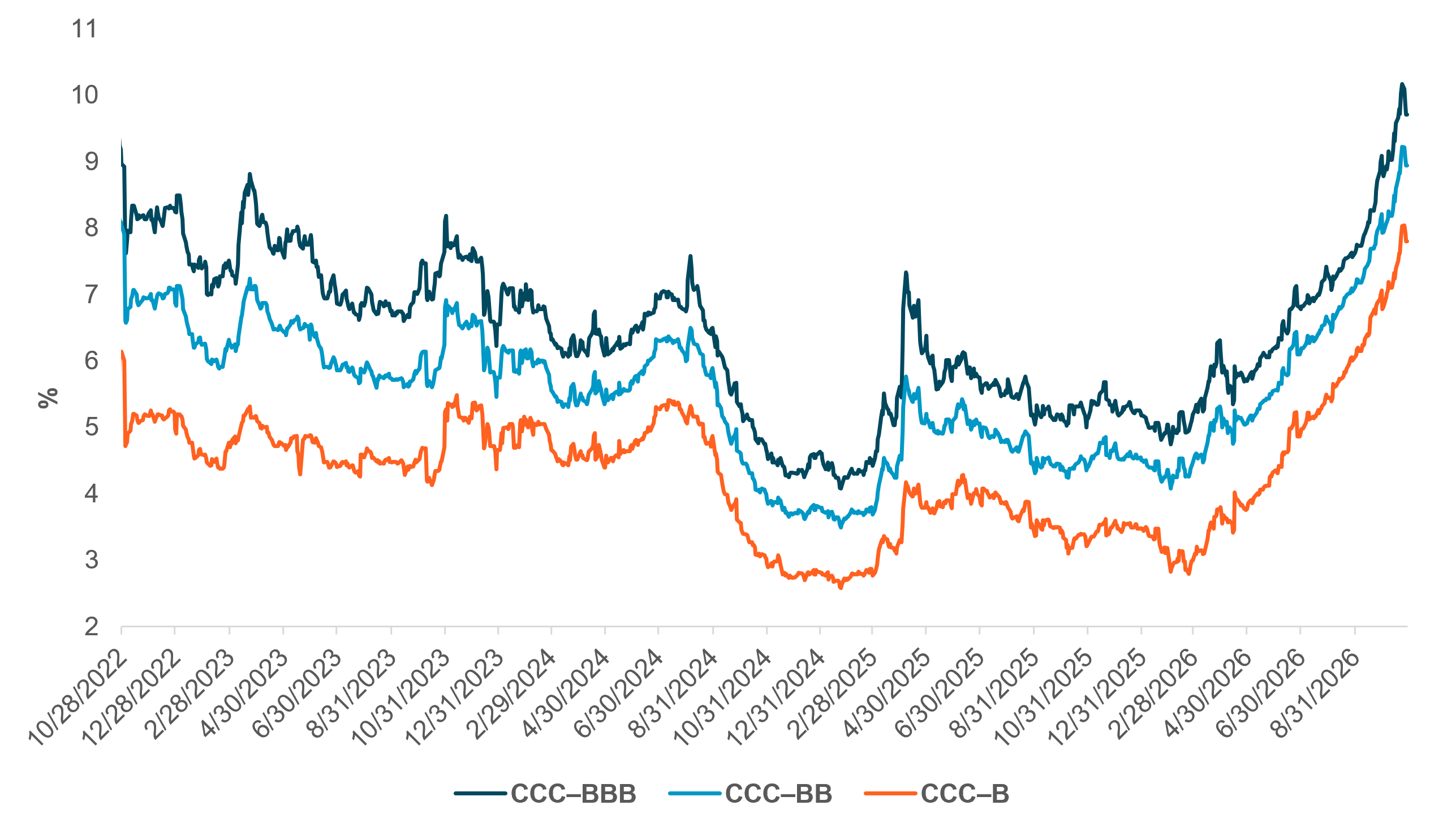
EXHIBIT 1: CCC OPTION-ADJUSTED SPREAD (OAS) HAS DIVERGED FROM OTHER HY AND BBB OAS
Source: Bloomberg, BNY Markets
It’s no longer just noise. CCC credit has moved materially wider relative to BBB, BB and B (Exhibit 1). Given the resilience of other HY credit, it’s fair to think that this is more than a general risk-off move and is instead a specific repricing of lower-quality credit risk.
Markets may be pricing in default risk. Investors are beginning to distinguish between issuers that can refinance and those that may struggle. CCC issuers, by their nature, sit closest to the margin when it comes to interest coverage, refinancing flexibility and business resilience to begin with. That markets are pricing CCC differently from BB or B-rated credit tells us two things:
Why CCC is vulnerable now
Refinancing is the immediate concern. The ability of CCC firms to refinance is the most immediate and salient concern. CCC firms are the first to feel the burden of elevated all-in yields as they typically have shorter maturity walls, less flexibility to term out their debt, and weaker market access.
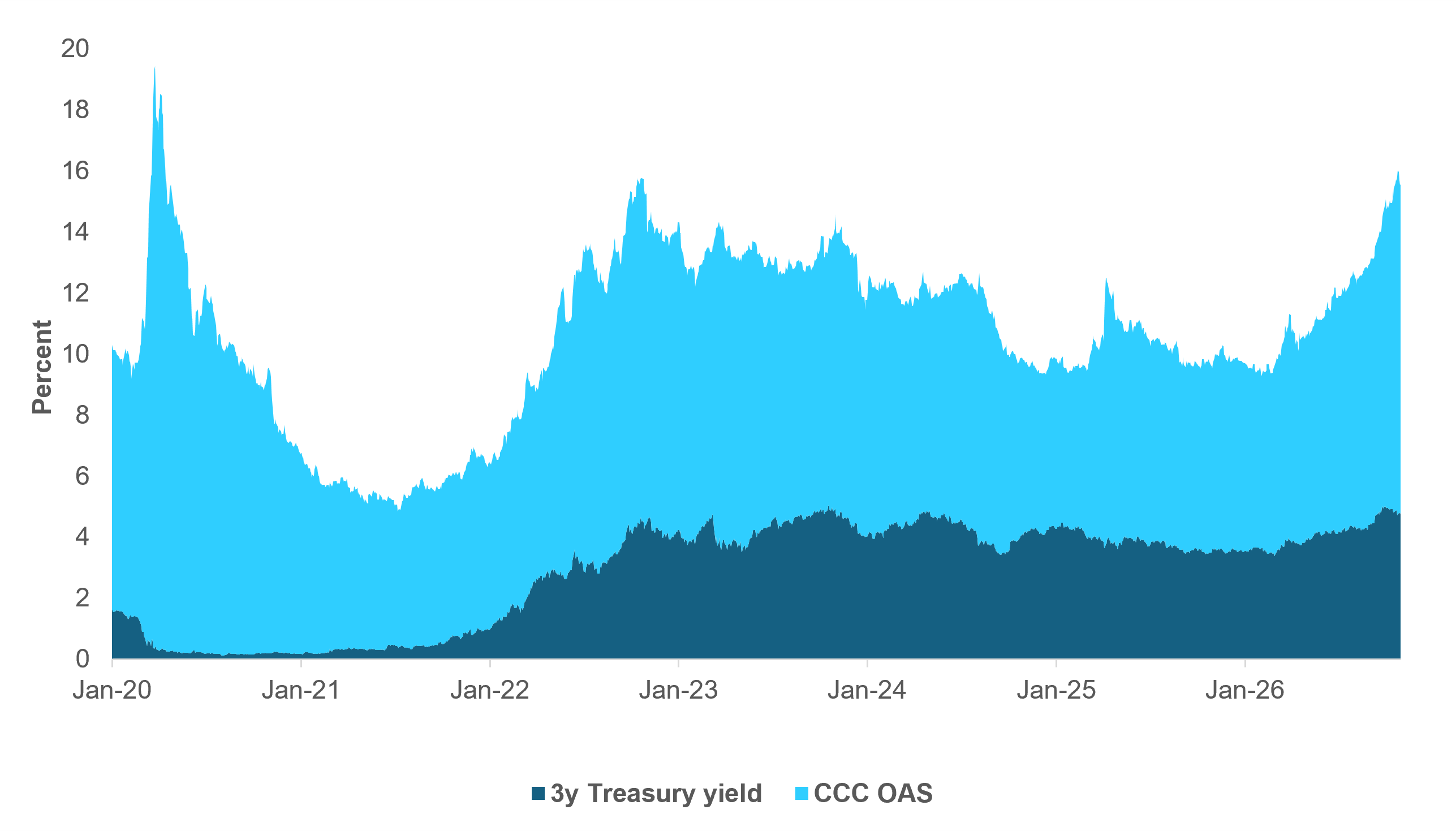
EXHIBIT 2: CCC ALL-IN YIELDS REACH POST-COVID HIGHS
Source: Bloomberg, BNY Markets
Higher yields mean higher costs. The all-in yields that have proven to be so appealing to investors can prove equally costly for CCC-rated issuers (Exhibit 2). With the average maturity of CCC-rated credit typically quite short – roughly three to four years – we use the sum of 3y Treasury yields and CCC OAS as a rough approximation of all-in funding costs for CCC issuers.
All-in yields are a double whammy. The rise in benchmark Treasury yields coupled with widening spreads has led this measure of all-in funding costs to reach the highest levels since April 2020, after COVID-induced credit concerns led the CCC OAS component to widen to over 19%. Our proxy for all-in yields touched 16% earlier this week. Even though benchmark Treasury yields have stabilized and declined meaningfully over the past month, the spread widening itself can make refinancing costs prohibitive.
Business fundamentals have been challenged. The preexisting position of many CCCs leaves little margin for error. CCCs have thinner interest coverage and higher leverage than many higher-rated competitors. Their business models are often more cyclical, and they have less cash flow durability in a downturn.
Fewer strategic financing alternatives exist. Finally, their access to alternative financing options or ability to term out their debt is more limited. While bank revolvers are possible, they are often heavily conditional on collateral and covenant compliance and can be quickly withdrawn in a stress scenario. And while direct lending remains an option, private credit underwriting may also have tightened, with some lenders showing greater selectivity. With so little room for error, even modest operating challenges can quickly become a material solvency risk for this cohort.
Higher spreads alone aren’t a death sentence. While spread widening signals that the market is starting to become concerned, and can ultimately lead to realized defaults, widening alone doesn’t necessarily mean that defaults are imminent. Not every widening becomes a default cycle.
Leverage needn’t be fatal. The default outlook depends on these firms’ access to capital markets, not just their leverage. Some companies can be highly leveraged while still financeable; others are effectively shut out of the market. Default risk spikes when new issue concessions start to become too costly and when alternative financing options dry up.
Contagion is the real concern. While higher all-in yields and refinancing access are a concern, these firms’ greater vulnerability to both is why they were rated CCC to begin with. The key question is whether CCC stress will remain idiosyncratic or begin to spill over into broader HY risk sentiment.
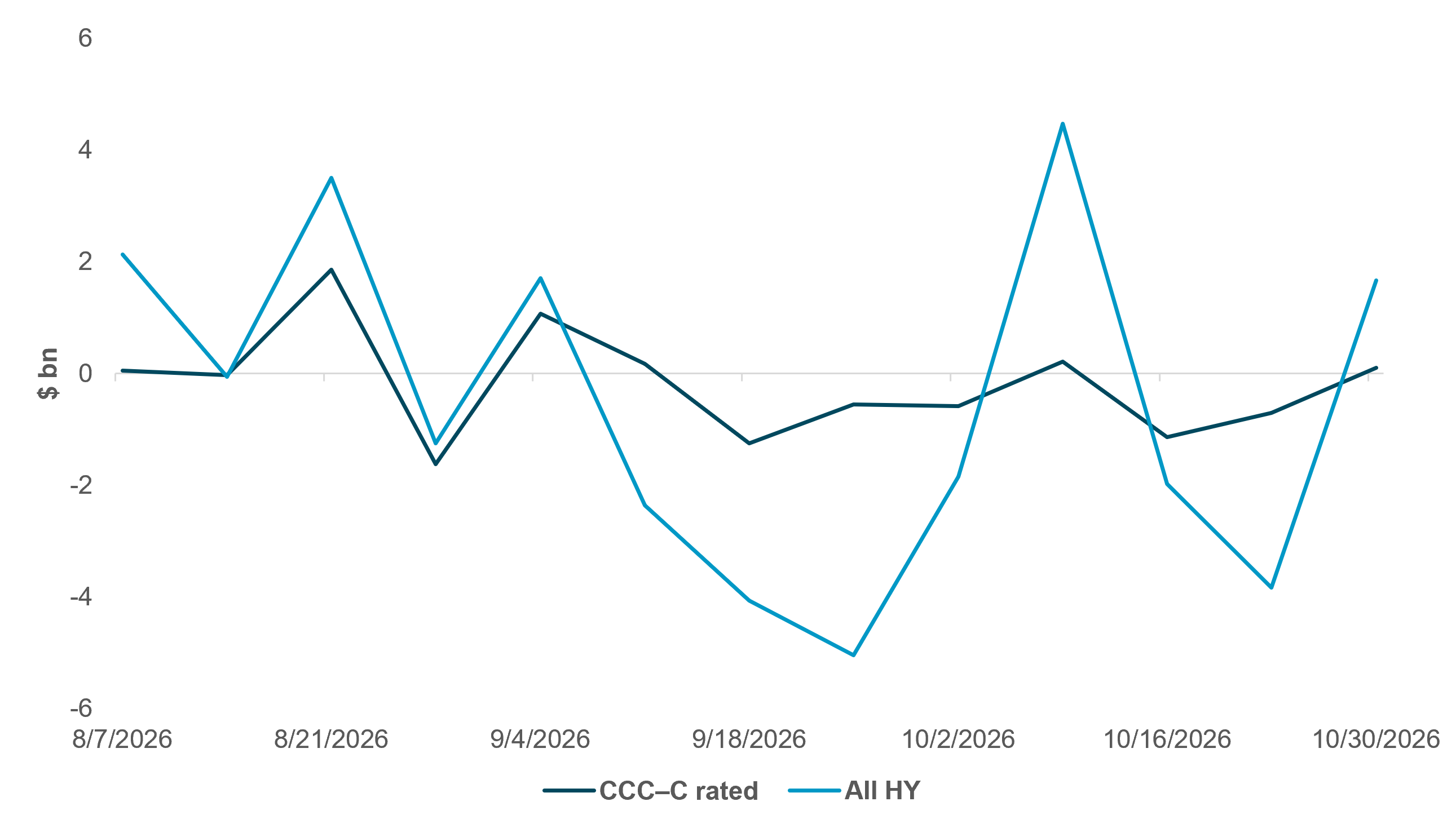
EXHIBIT 3: WEEKLY CHANGE IN CCC-C-RATED AND ALL HY CREDIT HOLDINGS
Source: Bloomberg, BNY Markets
Flows would reveal sentiment contagion. If persistent CCC weakness begins to more fundamentally undermine investor confidence in the HY sector, it could drive outflows from broad HY funds or ETFs. Exhibit 3 shows the weekly change in holdings for investors in iFlow for all HY credit and more narrowly for CCC-C-rated credit over the past three months. While the two are generally correlated, HY tends to see larger magnitude flows, unsurprising given the larger universe. Investors should be heartened that outflows from HY or, more narrowly, CCC-C-rated paper haven’t persisted in recent weeks.
Outflows can be self-reinforcing. Were we to start seeing broad HY fund outflows, it would begin to pressure higher-quality HY names, not just the CCCs. This could also become self-reinforcing, with investors indiscriminately reducing HY exposure as HY sells off. It wouldn’t matter if the original impetus for outflows were defaults concentrated only in the lower-rated segments.
Stress could spread through fundamentals. While stress is concentrated in CCC right now, sector-specific stress might also spread along supply chains, business ecosystems, or as a result of underlying macro exposures. Cyclical pressures like a growth disappointment, energy shock or a surprisingly hawkish rate regime – to name three risks at the top of investors’ minds – might start to pressure higher-rated issuers.
The macro backdrop remains strong. To be clear, these risks are contained to a greater or lesser extent at present. We feel, in fact, that macro conditions are very constructive. Furthermore, given that BB and B spreads have remained well contained, we believe the market agrees with our view. That said, emerging stress in one of these channels could lead to unexpected pressure for higher-rated firms.
Relative spread performance and contagion: Continue to track the CCC OAS relative to BBB, BB, and B (Exhibit 1). A narrowing in the spread between CCC and these higher-rated issuers could signal that stress in the CCC segment is alleviating – or that contagion is starting to spread to these higher-rated issuers depending on what the driver of the narrowing is.
Refinancing conditions: Monitor all-in yields for CCC issuers either via a crude generalized version, as in Exhibit 2, or via issuer-specific financing rates. Both benchmark Treasury yields and credit spreads matter. Signs that deals are being pulled, postponed or priced at steep concessions would reinforce the idea that the market is beginning to shut weaker issuers out.
Flows and sentiment: Track weekly flows into broad HY funds, ETFs and lower-rated credit cohorts (Exhibit 3). As long as outflows remain modest and contained, the case for broader contagion is limited. But if headline CCC weakness begins to trigger persistent outflows from broad HY products, that would be the key warning sign that investor sentiment is spilling over into higher-quality paper.