October FOMC preview
iFlow > Short Thoughts
Published on Tuesdays, Short Thoughts offers perspectives on US funding markets, short-term Treasuries, bank reserves and deposits, and the Federal Reserve's policy and facilities.
iFlow > Short Thoughts
Published on Tuesdays, Short Thoughts offers perspectives on US funding markets, short-term Treasuries, bank reserves and deposits, and the Federal Reserve's policy and facilities.

John Velis
Time to Read: 3 minutes
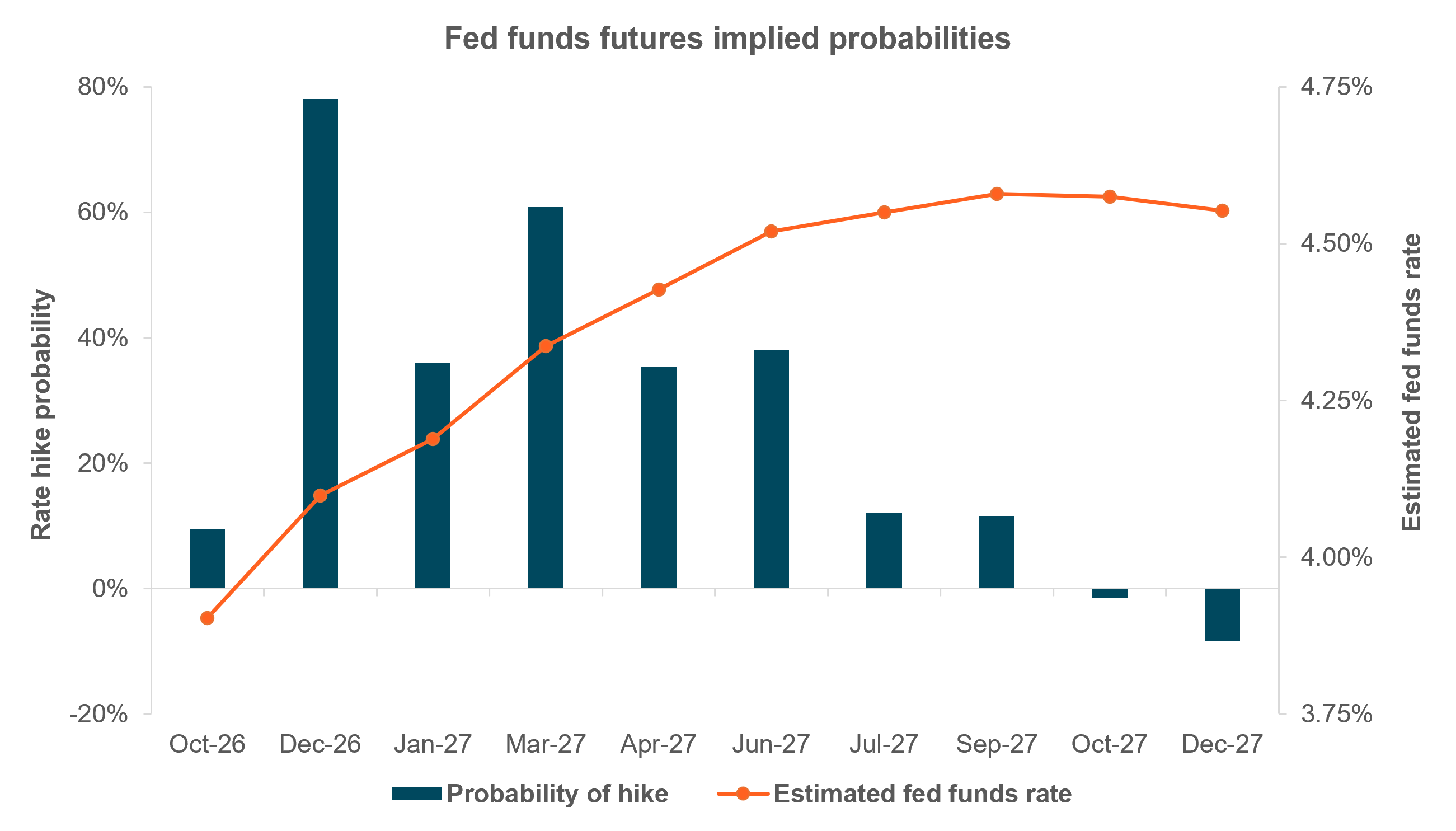
EXHIBIT #1: HIKES SEEN TO TOP OUT BY NEXT FALL
Source: BNY Markets, Bloomberg
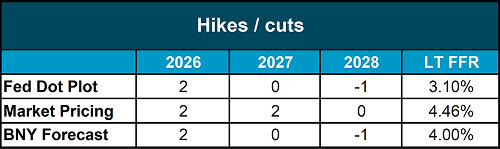
In line with the market, we don’t foresee a rate hike at the October FOMC tomorrow and prefer to place our expectations for further tightening on the December meeting. Based on Fed commentary and a steady, if sticky, inflation outlook, we don’t think the weight of the Committee will fall on the hawkish side. Exhibit 1 shows the individual market-implied probabilities for the next ten meetings, alongside the expected fed funds rate over that time. Rates aren’t expected to rise at a steady, meeting-by-meeting pace and are actually expected to top out at just above 4.5%, indicating around three more hikes by this time next year.
That said, we do expect at least one dissent, if not more, in favor of raising rates. If we’re right, and there is an objection (or two), we would expect the market to interpret Wednesday’s decision hawkishly, solidifying the expectation of a hike at the end of the year. Even though some dissent wouldn’t surprise us (indeed, it would surprise us if the vote were unanimous), we do think it would reflect a split between Committee doves and hawks, something already evidenced by Fedspeak this cycle.
At the press conference, we don’t see any preview of what we expect to be a December hike, given Chair Kevin Warsh’s disinclination to provide guidance on future policy moves. Nevertheless, we think that market expectations for a December hike will be solidified.
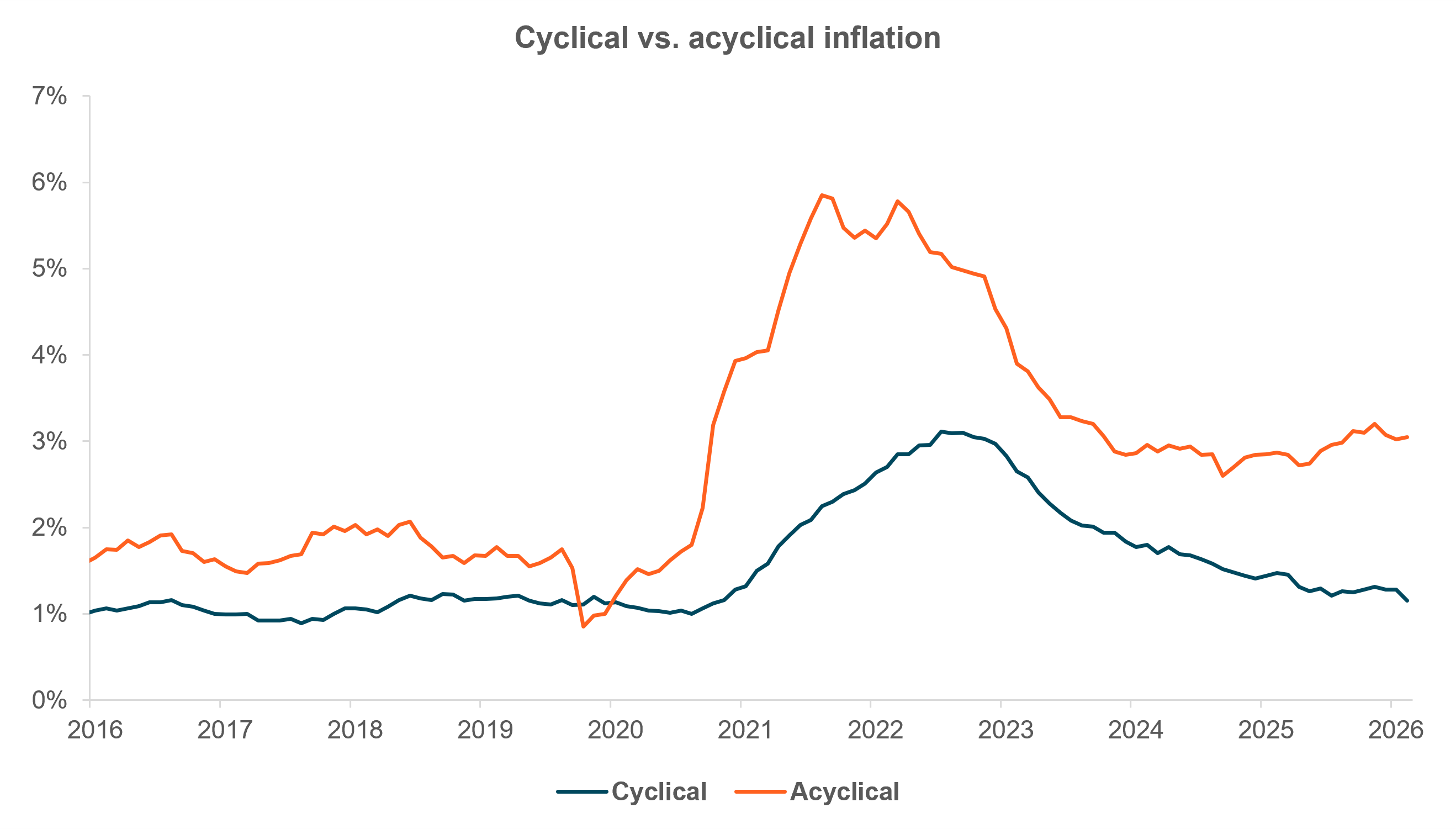
EXHIBIT #2: INFLATION ISN’T CYCLICAL
Source: BNY Markets, Federal Reserve Bank of San Francisco
We may be more sanguine about the inflation outlook than others on the Street, mainly because we believe that the lion’s share of it is supply-driven and therefore not likely to be influenced by monetary policy – at least in the short term. Exhibit 2 shows that, according to data produced by the San Francisco Fed, so-called “acyclical” inflation is rising in significant excess of “cyclical” inflation. In other words, monetary policy acts by cooling demand, bringing prices down with it. But if price increases are occurring for items that aren’t clearly related to the economic cycle, it’s not clear that higher rates will affect them.
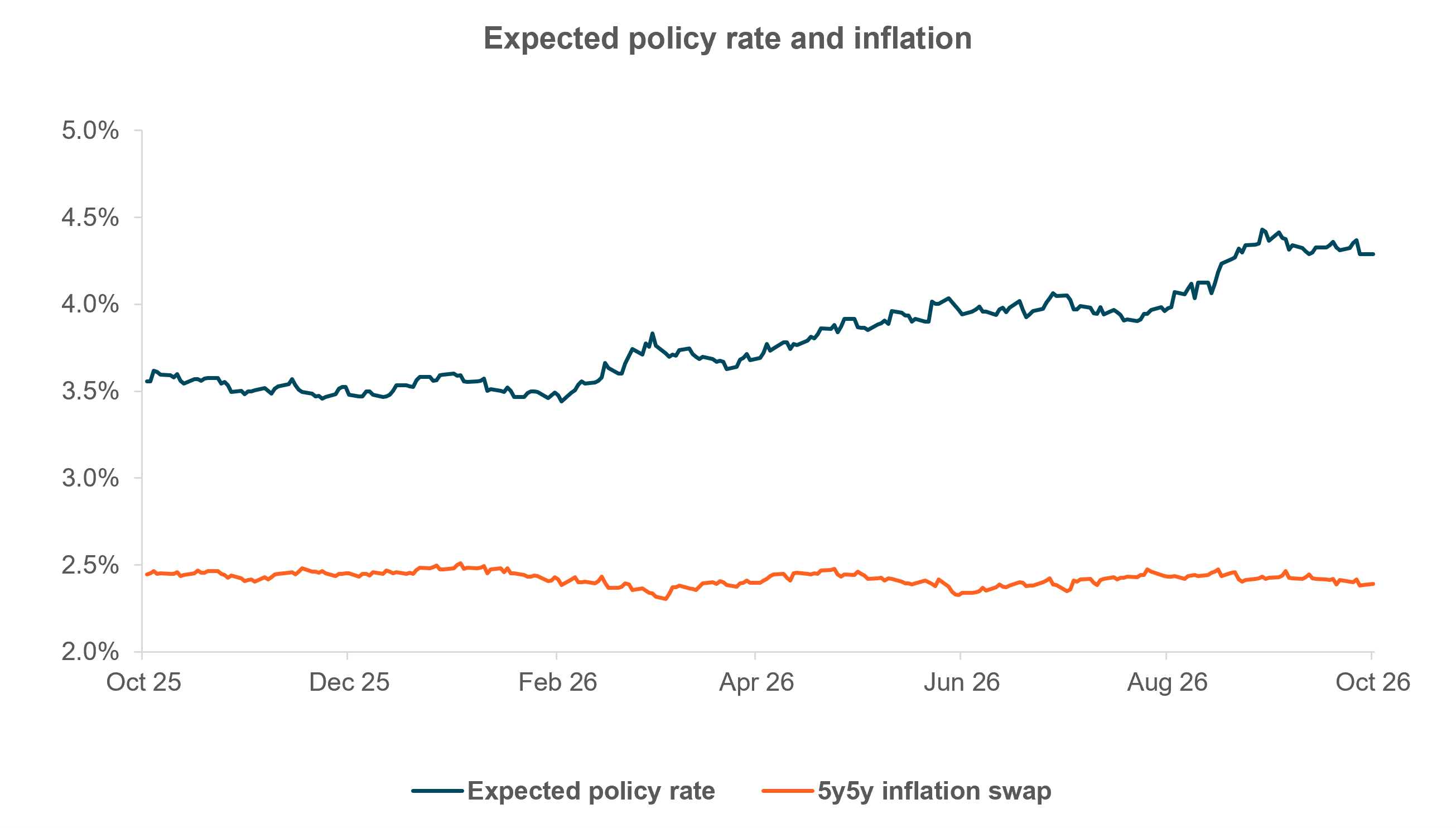
EXHIBIT #3: FED CREDIBILITY IN ACTION
Source: BNY Markets, Bloomberg, Federal Reserve Bank of New York
While we don’t expect a rate move this week, we wouldn’t be against a hike even though we’re not convinced of its urgency. However, we think maintaining credibility is paramount for the Fed, and as Warsh likes to remind us, the inflation target has been exceeded for well over 60 straight months. Examine Exhibit 3, which shows the 5y5y inflation swap, or the expected long-term inflation rate in five years’ time. This measure of long-term expected inflation has barely budged since before the start of the war with Iran. What has moved is the market-implied policy rate over the next decade. This estimate is calculated from the New York Fed’s term structure model of the yield curve. It suggests that instead of pricing rising inflation over the next decade, markets are expecting a credible Fed to raise rates instead, keeping a lid on inflation expectations. This is Fed credibility in action.
In Exhibit 1, we see that the market is expecting around 70bp in additional policy tightening, implying nearly 100bp for the entire cycle. That would make it a shallow cycle – previous tightening moves in recent decades have been more in the 200bp range. Yet we’re not convinced the Fed can deliver the 100bp that’s been priced in since the beginning of the tightening cycle, and we’re not sure it would be needed if inflation doesn’t broaden out to cyclical items.