Funding markets set to tighten in Q4
iFlow > Short Thoughts
Published on Tuesdays, Short Thoughts offers perspectives on US funding markets, short-term Treasuries, bank reserves and deposits, and the Federal Reserve's policy and facilities.
iFlow > Short Thoughts
Published on Tuesdays, Short Thoughts offers perspectives on US funding markets, short-term Treasuries, bank reserves and deposits, and the Federal Reserve's policy and facilities.

John Velis
Time to Read: 3 minutes
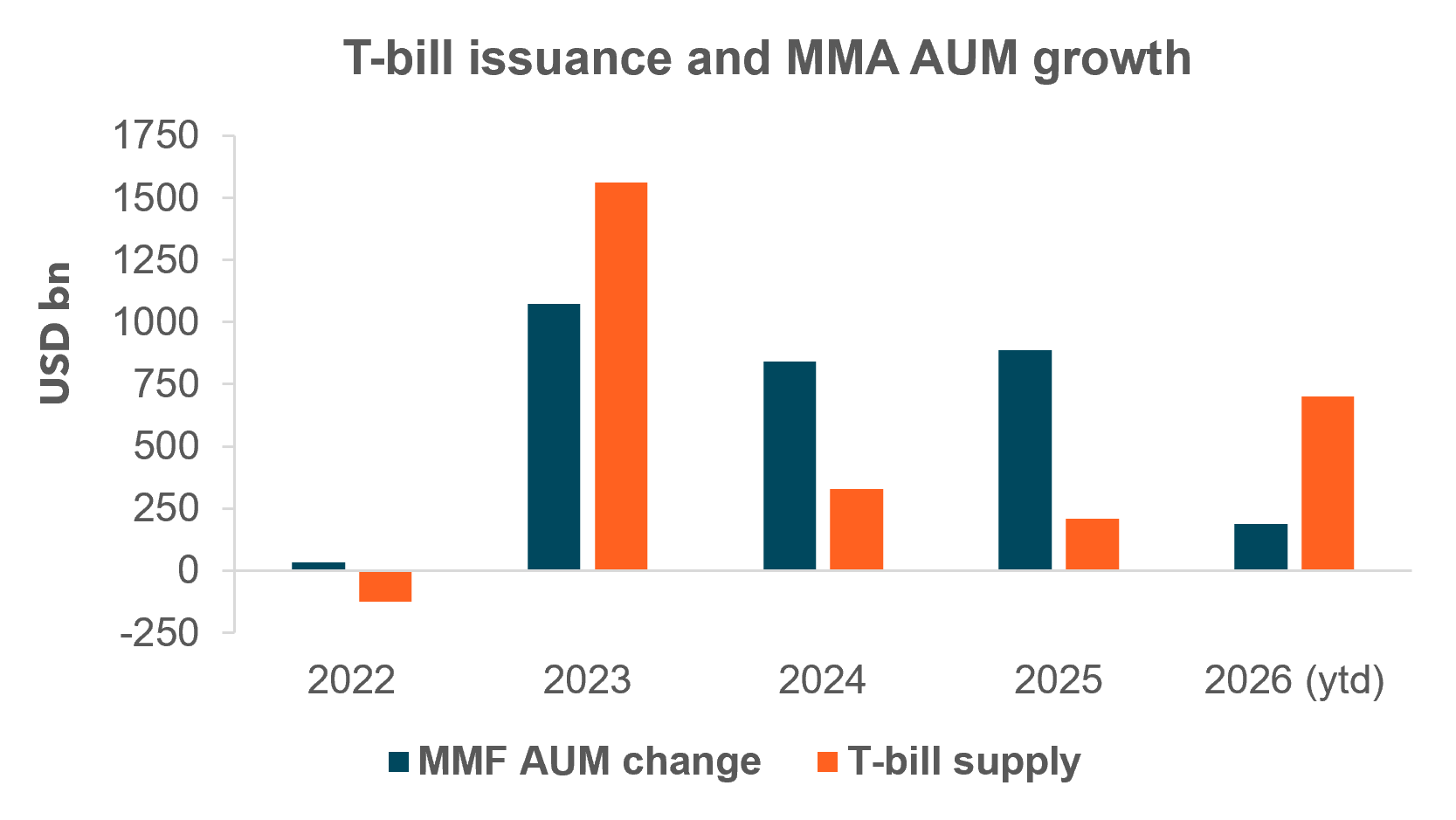
EXHIBIT #1: MMF AUM GROWTH SLOWS WHILE BILL SUPPLY GROWTH PICKS UP
Source: BNY Markets, Federal Reserve Bank of New York, U.S. Treasury Department
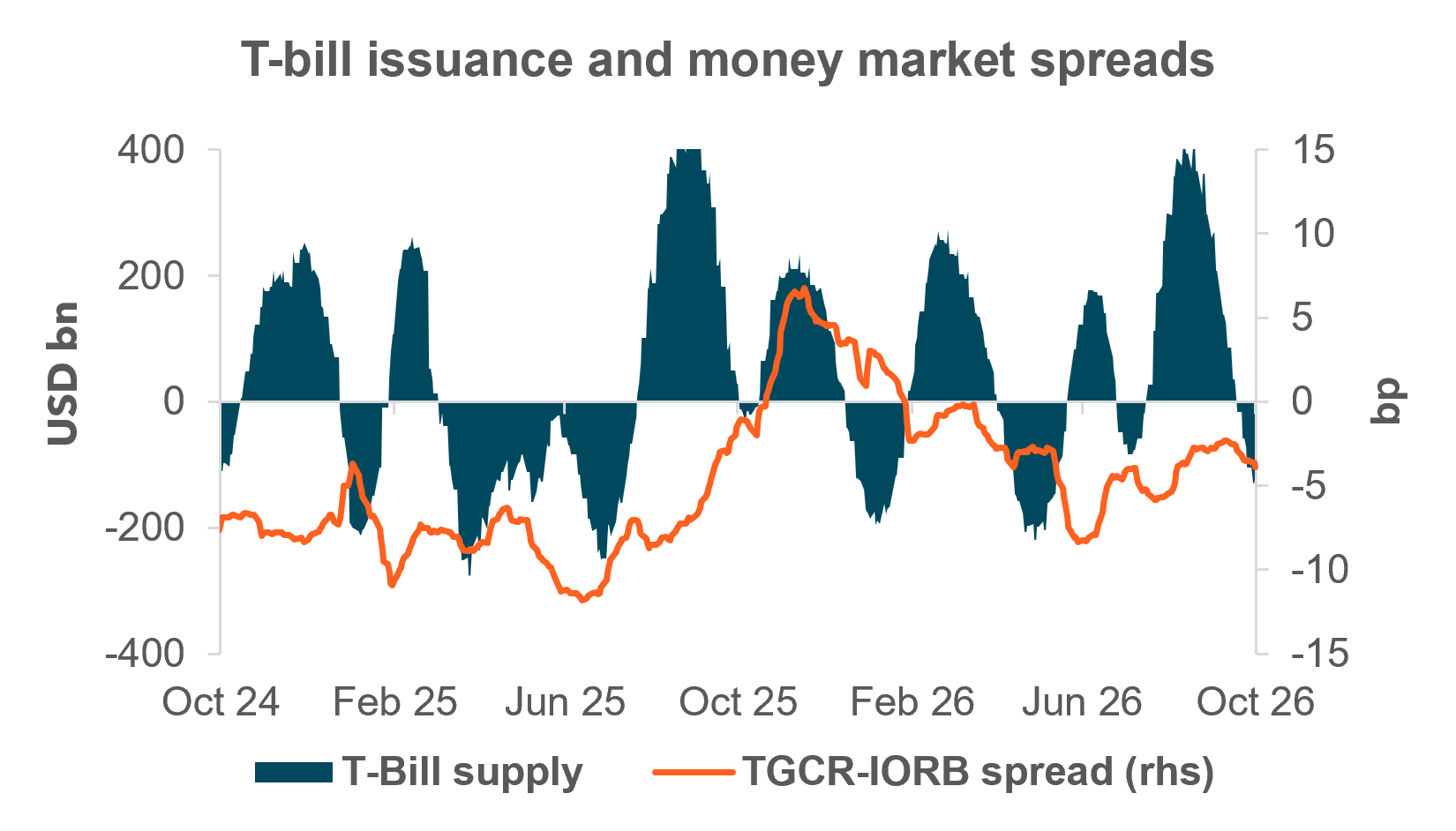
EXHIBIT #2: BILL ISSUANCE TO RESUME THIS QUARTER, FUNDING SPREADS MAY FOLLOW
Source: BNY Markets, Bloomberg, U.S. Treasury Department
As we enter Q4, we expect funding market conditions to tighten somewhat, with an additional $400–$600bn in bill supply coming through and money market fund (MMF) assets growing much more slowly in 2026 than they have in previous years. It’s true that funding markets have displayed generally benign behavior for most of the year, even as T-bill issuance has grown by over $700bn year to date. Exhibit 1 shows that with the exception of 2023, MMF AUM growth has generally outpaced bill supply. That year, the reverse repo facility (RRP) saw significant outflows – nearly $1.5tn, which helped reallocate MMF cash from that facility into the bills market.
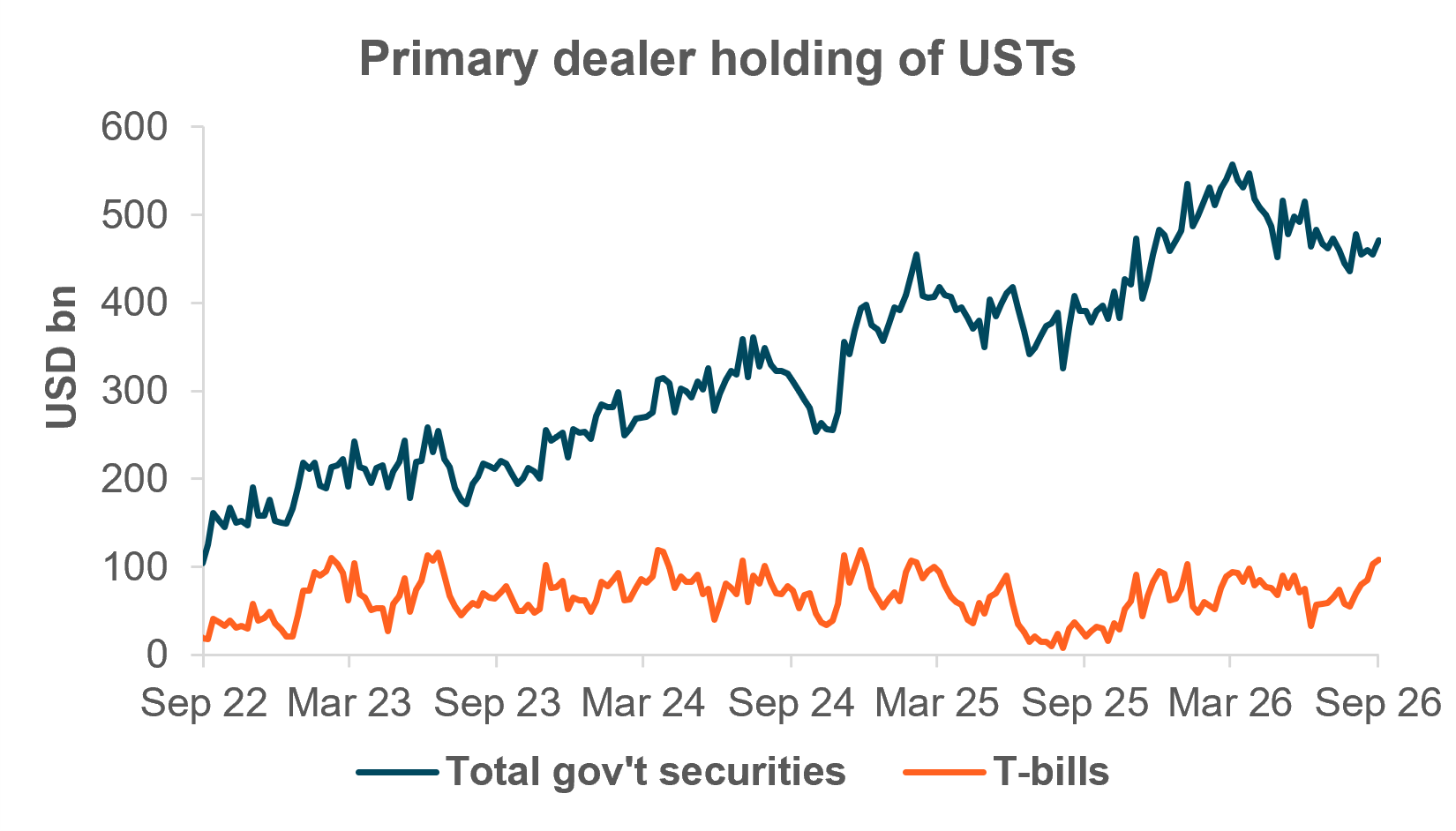
EXHIBIT #3: PRIMARY DEALER T-BILL HOLDINGS AT TOP OF POST-COVID RANGE
Source: BNY Markets, Federal Reserve Bank of New York
The Federal Reserve introduced reserve management purchases (RMPs) in early December 2025, and the total amount of funds supplied since then exceeds $200bn. MMF assets have grown by around $188bn year to date, and primary dealers have added more than $150bn to their T-bill holdings since the beginning of the year (Exhibit 3). The rest of the T-bill supply seems to be well absorbed by other participants so far. Dealers have been holding onto bills, even as their overall holdings of Treasurys of all maturities have receded somewhat this year. Dealer bill holdings have increased noticeably and are near the top of their post-COVID range. This means less supply into repo and, on the margin, tighter conditions.
As discussed last week, RMPs have paused for now, with the last two months seeing no take-up. The Treasury General Account (TGA) has fluctuated between $800bn and $1tn for most of the year, oscillating around the Treasury Department’s target of $850bn for year-end. TGA growth reduces reserves in the system, tightening funding conditions, all other things being equal. Assuming the TGA doesn’t shrink and MMF AUM doesn’t pick up, we think there’s a good chance the Fed will have to restart RMPs in the coming months, as conditions would otherwise tighten.
With the FOMC tightening policy, MMFs have been coming further in along the bills curve. MMFs’ weighted average maturities (WAMs) have fallen from around the mid-40s to the mid-30s since midyear, implying less willingness to buy longer-dated bills, leaving more of the longer-dated securities to other investors, demand from which is constrained.
Fed Chair Kevin Warsh has been clear about his wish to shrink the central bank’s balance sheet, although the task force he established to examine this issue hasn’t reported out yet and is unlikely to do so until the end of the year. We could very well find ourselves this quarter in the seemingly ironic position of discussing balance sheet shrinkage while simultaneously increasing the supply of reserves to keep funding markets sufficiently liquid.
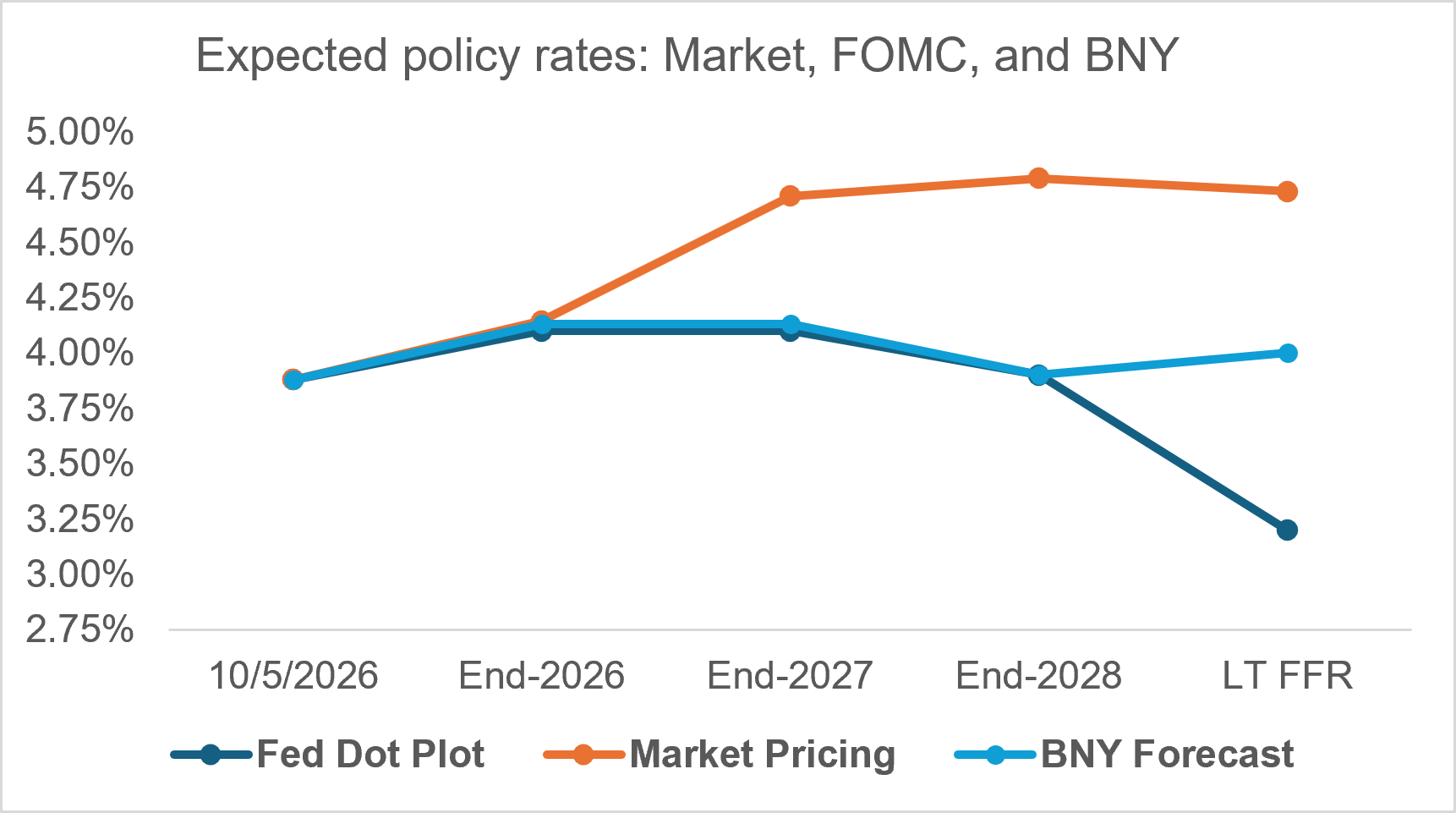
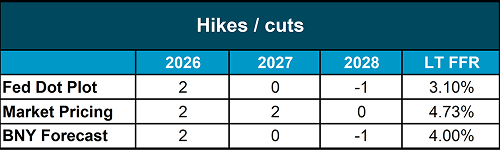
Turning to monetary policy, last week we witnessed a bit of a pivot in the market’s expectations for an October hike. Key labor market indicators, including the September nonfarm payrolls (NFPs), were lackluster. We don’t think the weaker-than-expected jobs report signals a significant labor market slowdown, nor were we concerned about the report. Rather, we find ourselves in a world in which labor data will remain moderate at best. The “breakeven” rate of job creation – the quantity of new positions that must be filled to keep the unemployment rate steady – is undoubtedly lower than in prior years, given the economy’s smaller labor pool. To us, the labor report was more representative of ongoing job market equilibrium. The personal consumption expenditures (PCE) inflation data, which benefited from some methodological revisions, also came in better than expected last week.
In addition to the benign data, two key Fed governors, Michelle Bowman and Michael Barr, along with New York Fed President John Williams, poured some cool, if not cold, water on the idea of an October hike in speeches last week. Combined with the slightly softer economic data, market probabilities for the next meeting are below 25%. That doesn’t mean that the December hike odds have shortened significantly, but we now expect the second hike of this cycle at the end of the year. Into 2027, the outlook gets murkier, not least because the ongoing Middle East conflict has proven itself impossible to handicap – and with it, oil prices and the supply-side effect they have on the inflation outlook.