Energy makes its mark
iFlow > Investor Trends
Investor Trends provides a deep dive into patterns and behaviors in equity, bond and currency markets around the globe, underpinned with deeper macro insights.
iFlow > Investor Trends
Investor Trends provides a deep dive into patterns and behaviors in equity, bond and currency markets around the globe, underpinned with deeper macro insights.

Geoff Yu
Time to Read: 4 minutes
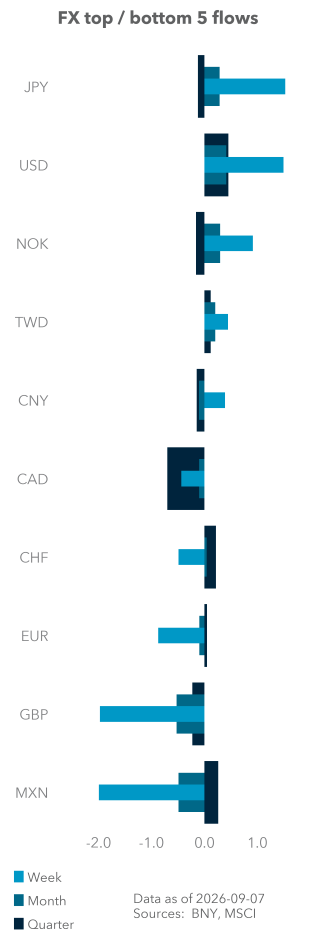
Higher energy prices are creating selective opportunities rather than a broad energy trade. NOK and CAD flows have improved, but gains look tactical; institutional demand still supports energy equities despite retail profit-taking, while European duration remains more exposed than U.S. Treasurys to higher inflation premia.
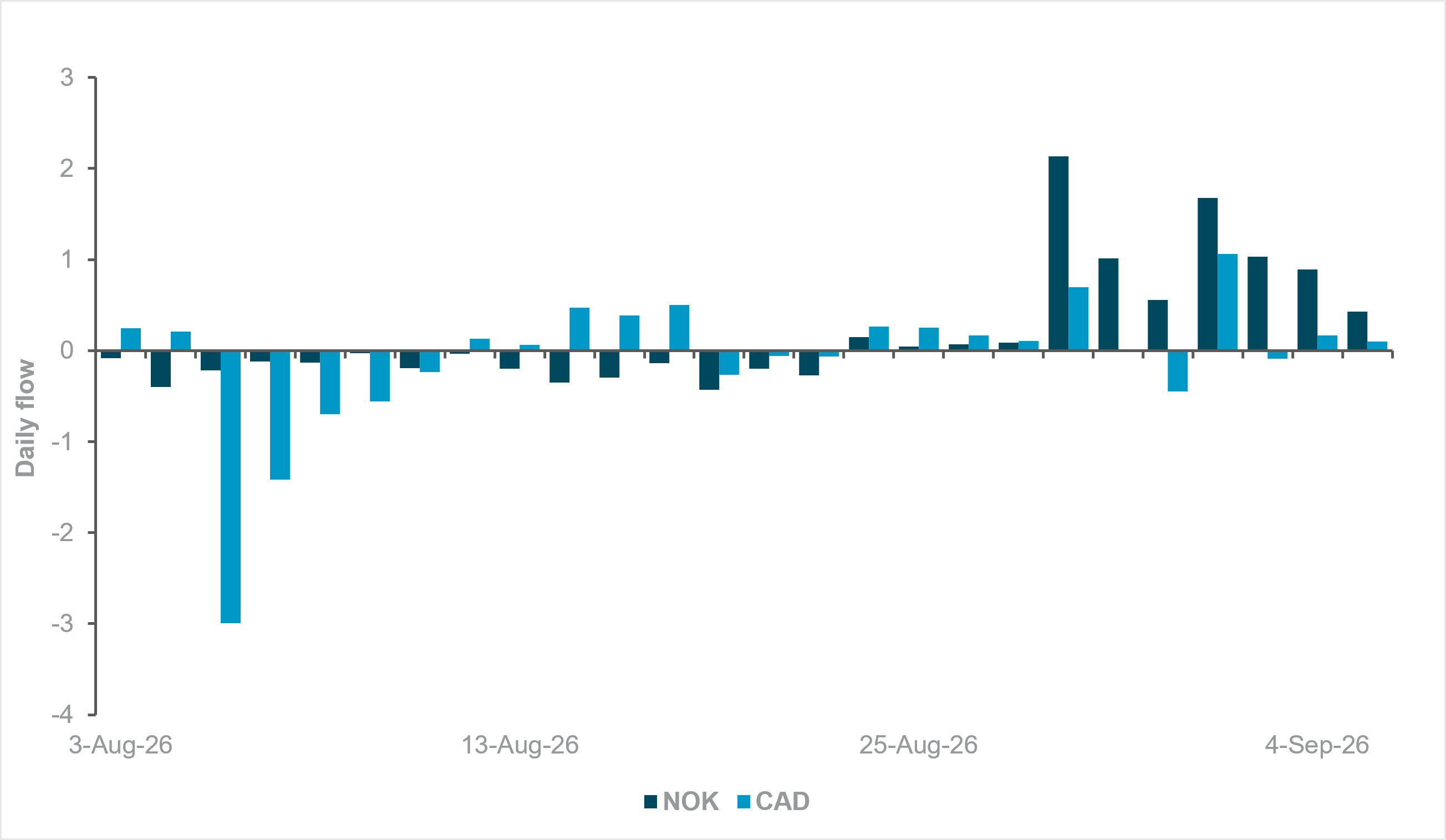
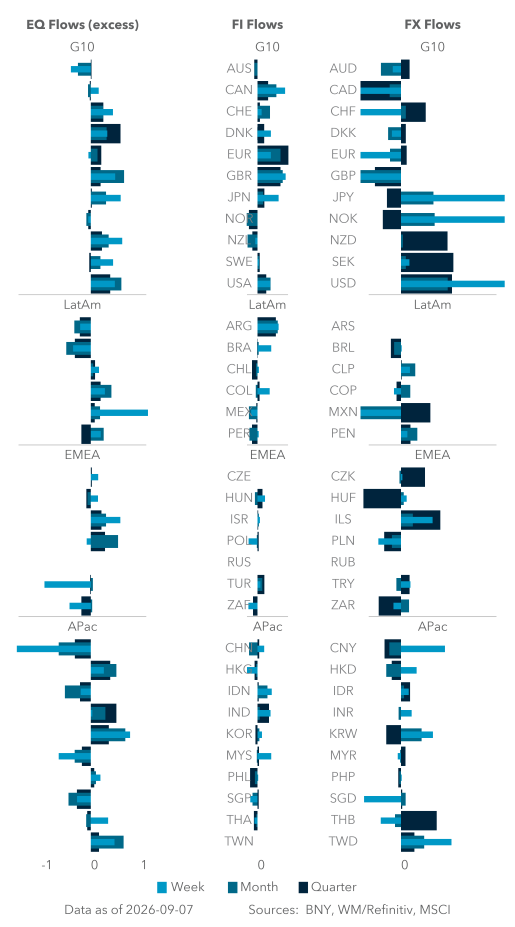
EXHIBIT #1: NOK AND CAD FLOW PICK UP STRONGLY AS BRENT APPROACHES $100/BBL
Source: BNY
Our take
As Brent crude looks set to move decisively through $100/bbl, and natural gas prices are already hitting multi-year highs, energy names are starting to respond. Our data show that NOK and CAD flow interest have clearly shifted. Of the two, we are more cautious on NOK. The currency remains the most consistently held G10 currency, so the bar is always higher for additional purchases, especially if there is a lack of central bank support on the policy side. Furthermore, Norges Bank has shifted back toward FX purchases with the closing of the financing gap for the non-oil deficit, which represents an additional headwind for NOK performance.
In contrast, CAD is more a matter of improvement and resilience. The current trade dispute with the U.S., by Prime Minister Mark Carney’s own admission, “won’t be easy.” The current energy price environment is also so volatile that the business investment into the sector, which tends to drive CAD performance rather than oil receipts alone, may not be as forthcoming. However, the Bank of Canada has clearly shifted toward inflation vigilance amid associated supply pressures, providing an opportunity to close outstanding hedges against the currency. On rates and revenue, it is a “less bad” story rather than outright positive.
Forward look
Oil prices remain driven by external circumstances far beyond the control of Norway and Canada. Even if oil prices remain elevated, policy caution is needed. Revenues will rise, but the global supply crunch will weaken external demand, even before considering trade matters in Canada’s case. Having a terms-of-trade boost in global stagflation, rather than inflation, is not optimal. Stronger receipts should be seen as a cushion for structural reform, though from experience, such opportunities are rarely seized. The flow is there for NOK and CAD, but we see tactical gains only unless there’s a clear case for a more aggressive monetary policy approach.
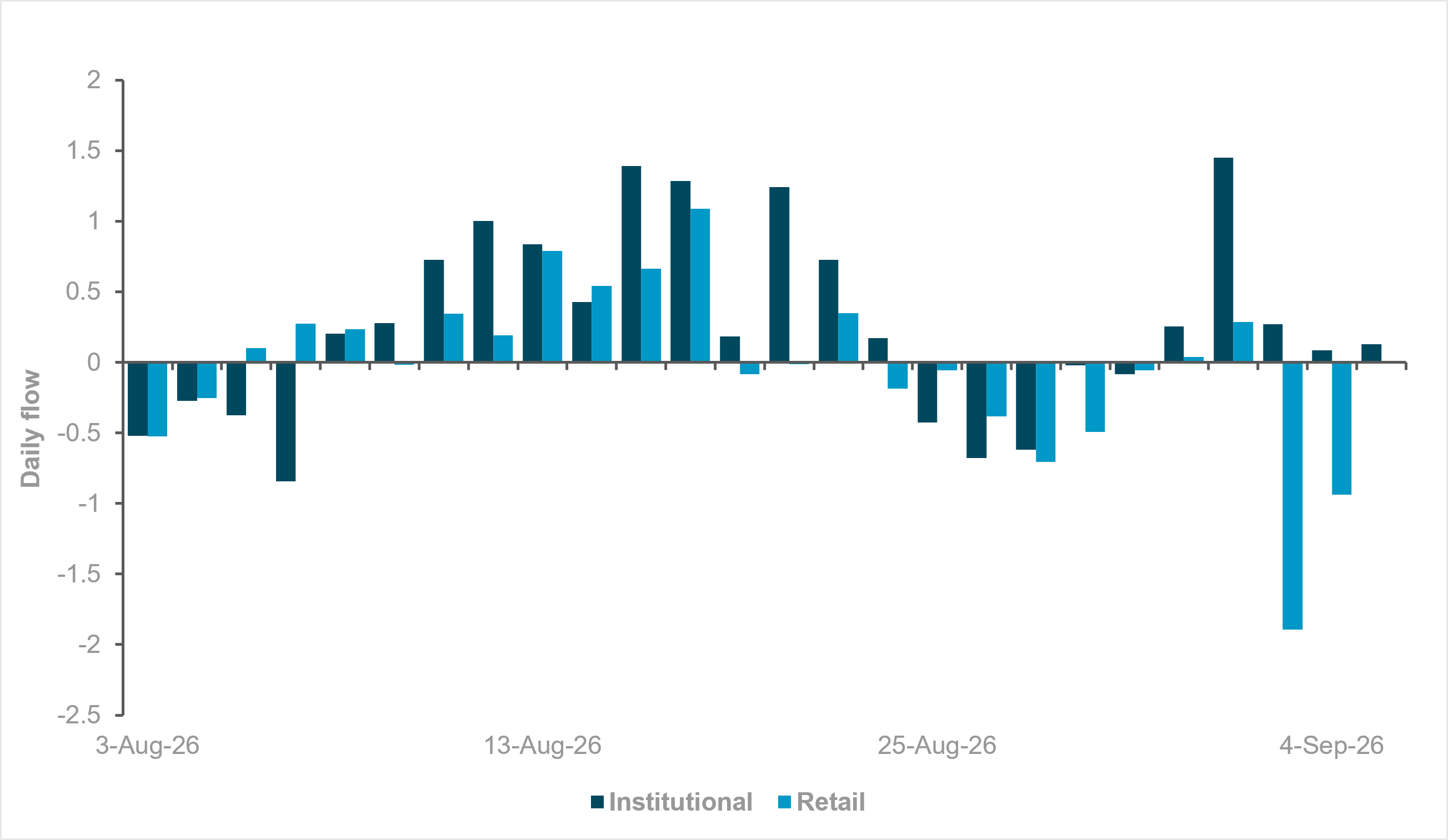
EXHIBIT #2: RETAIL FLOWS PROFIT ON OIL EXPOSURES, INSTITUTIONAL NAMES STILL ADDING
Source: BNY; flows into developed market energy stocks (GICS L2)
Our take
A renewed earnings lift in energy equities is no surprise. During the initial phase of the U.S.-Iran conflict in Q2, energy equities were among the strongest performers in both flow and holdings before the ceasefire took hold. Beyond the obvious earnings benefit, the sector was also used as a hedge against the Q1 “dollar debasement” trade, which increased demand for real-asset exposure globally. Similar concerns around U.S. real rates have resurfaced since the July FOMC meeting and clearly contributed to the surge in energy flows during the first half of August, before some profit-taking emerged.
Retail is now diverging. The biggest surprise in recent flows is the split between retail and institutional demand. Over the past week, developed-market energy stocks have seen their strongest inflows, while retail investors have been selling aggressively. This contrasts with August, when the two groups were broadly aligned. The cleanest interpretation is that retail and institutional investors have different views on the durability of the current energy move and, by extension, on how quickly conflict-related supply disruptions will be resolved.
Forward look
We reserve judgment on retail for now, as the strong unwinding could also reverse very quickly if energy prices sustain their current trajectory. There are also key points of divergence in energy outlook between Europe and the U.S., especially for the former, where supply risks could prove far more damaging to the economy. In contrast, the U.S. does face price pressures from global circumstances, but the demand and growth narrative remains intact for now, pending calibration with the Fed’s outlook. Overall holdings in energy are currently manageable (down from nearly 30% above the one-year average in March to around 17% today), so institutional interest looks set to prevail.
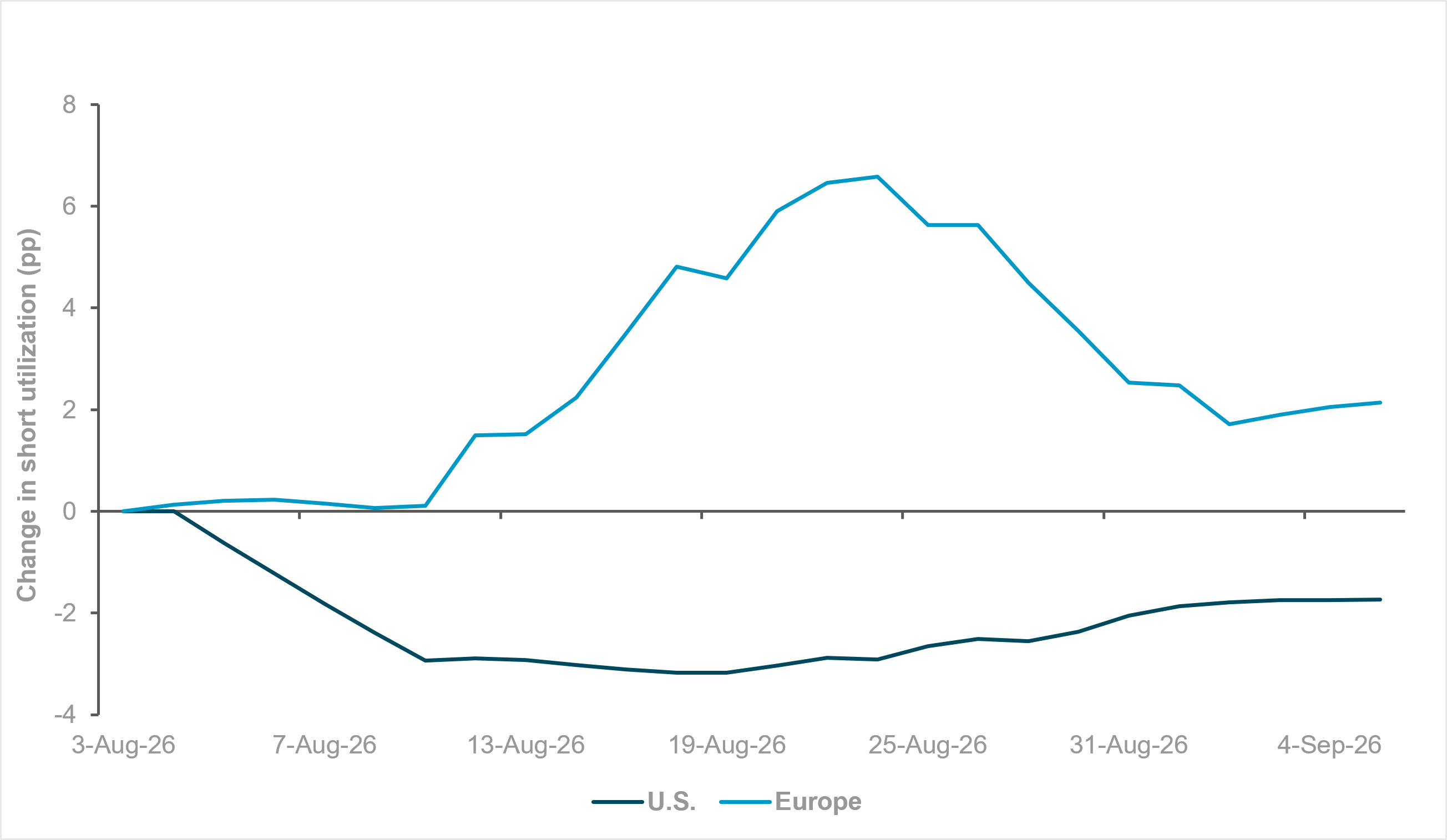
EXHIBIT #3: EUROPEAN DURATION FACTORING HIGHER INFLATION PREMIA
Source: BNY, 10y+ bonds only
Our take
The immediate impact from higher oil prices is reflected in inflation expectations and bond markets, which are already struggling with higher rates and fiscal dominance fears. The U.S. debt burdens and active intervention in the Treasury market are attracting attention, but our data suggest market’s actionable hedges are still more prevalent in Europe. Since the July FOMC, short utilization rates, which measure the fraction of bonds in the BNY lending program that have been sold short, have moved lower. Outright purchases remain strong to take advantage of high real rates. In contrast, through the second half of August, short utilization rates in European duration (Eurozone, U.K. and others) have strongly increased and remain above end-July levels despite some recent relief. The ECB may view this as a risk that inflation expectations remain unanchored, but the status of the U.S. as an energy-products exporter does mean the marginal impact of energy-driven inflation risk is softer.
Forward look
We now expect the Fed will raise rates two or three times over the next several months, but the ECB will likely execute “one more and done.” The Bank of England is unlikely to move at all. There are fundamental differences at present between how Europe and the U.S. view inflation risk in their respective economies, and this should also be reflected in bond market short utilization. The past few years have shown that Europe does face fundamental challenges with respect to energy resilience, which justifies higher sensitivity in bond premia. Barring a major de-anchoring of U.S. inflation expectations, we expect short utilization levels in the U.S. to remain low.
Prefer CAD over NOK, stay constructive on energy equities, and keep the inflation hedge in European duration. Avoid chasing FX upside without stronger central-bank support and expect U.S. duration to remain relatively better supported unless inflation expectations become materially unanchored.