AI or (productivity) bust for U.K.
Appearing every Wednesday, Investor Trends provides a deep dive into patterns and behaviors in equity, bond and currency markets around the globe, underpinned with deeper macro insights.
Appearing every Wednesday, Investor Trends provides a deep dive into patterns and behaviors in equity, bond and currency markets around the globe, underpinned with deeper macro insights.

Geoff Yu
Time to Read: 10 minutes
No surprises from Healey’s first budget. “Stability” is the theme for today’s budget, the first under Prime Minister Andy Burnham and Chancellor John Healey. The British government need only look across the Channel for a reminder of how bond yields can move should markets have second thoughts about debt sustainability. Bond markets remain febrile, and we expect very little relief until there are clear signs of supply pressures easing and central banks signaling an end to tightening. On the positive side, growth has been upgraded for the rest of 2026, and the Bank of England (BOE) isn’t aggressively pushing for hikes compared to global peers.
The long-term route runs through productivity. Governments generally agree that “growing out of debt” is preferable to aggressive spending cuts. Those cuts carry a negative multiplier and are politically challenging. Outside the U.S., realized and potential growth remain weak in the developed world. With little prospect of demographics providing a lift over the long term in Europe, higher productivity must do the heavy lifting if growth is to support long-term debt sustainability.
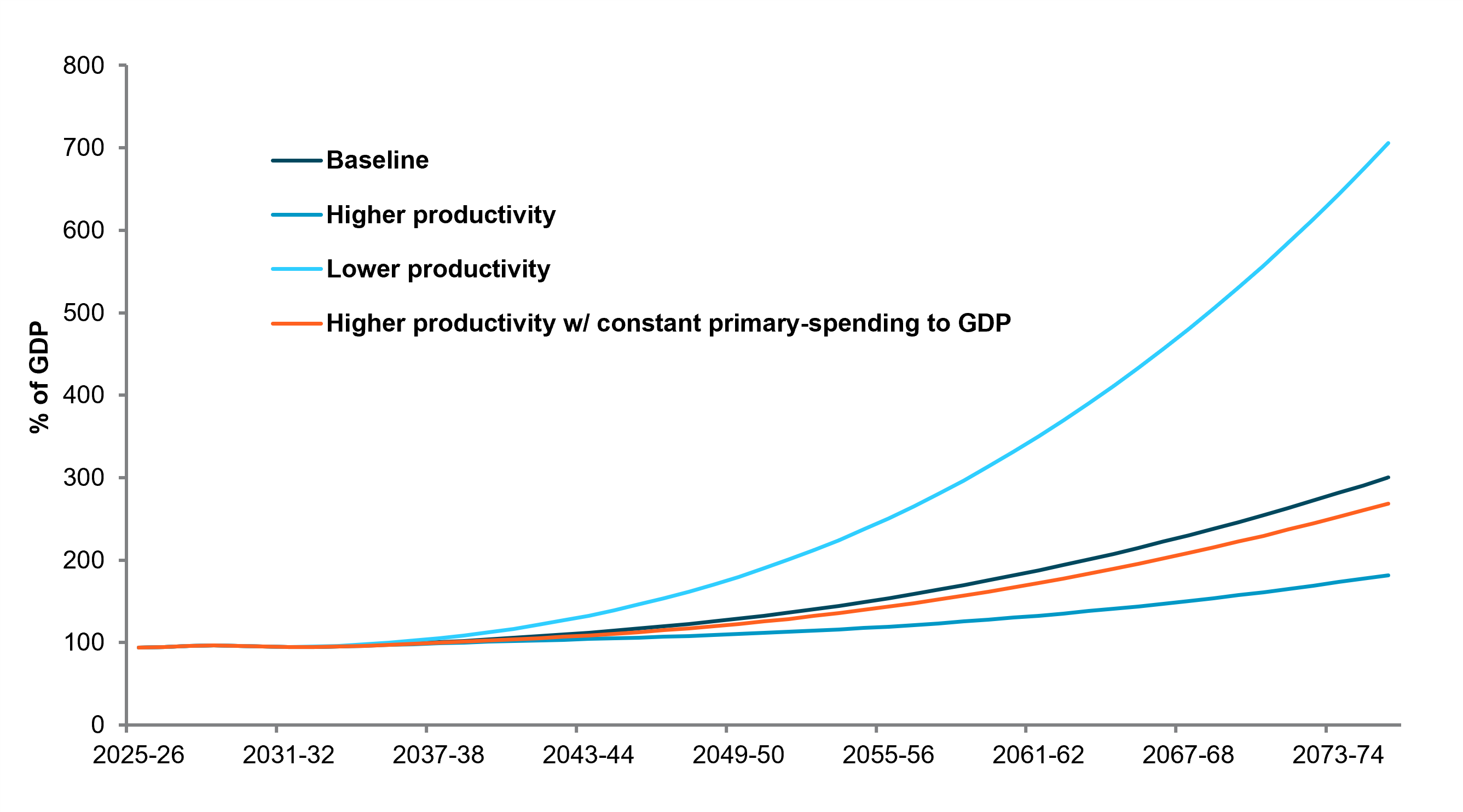
0.3pp makes a world of difference. The Office for Budget Responsibility’s (OBR) July 2026 long-term Fiscal risks and sustainability report (FSR) makes the case for a productivity push. A return to total factor productivity (TFP) growth of 1.3% per year – in line with the decades before the global financial crisis and just 0.3pp above baseline – would leave the U.K.’s debt-to-GDP ratio 120pp below the baseline projection after five decades. A modest annual gain adds up to a very different fiscal future. As the Draghi and Letta reports have highlighted, simple reforms and regulatory fixes can go a long way toward improving long-term productivity without large fiscal costs. After nearly two decades in the doldrums, we believe the U.K. is uniquely positioned to regain momentum through a productivity leap.
EXHIBIT #1: HIGHER PRODUCTIVITY CAN KEEP U.K. DEBT MANAGEABLE
OBR, July 2026 FSR; BNY.
AI is shifting assumptions. The OBR has already raised its baseline for productivity growth, using the most cautious assumptions. The July FSR raised the forecast for annual TFP growth over a 10y horizon to 1% from 0.8%, citing “a growing effect from AI” and a “fading” impact from Brexit. This caution reflects the OBR’s assessment of downside risks to government revenue and fiscal capacity if AI replaces labor on a large scale.
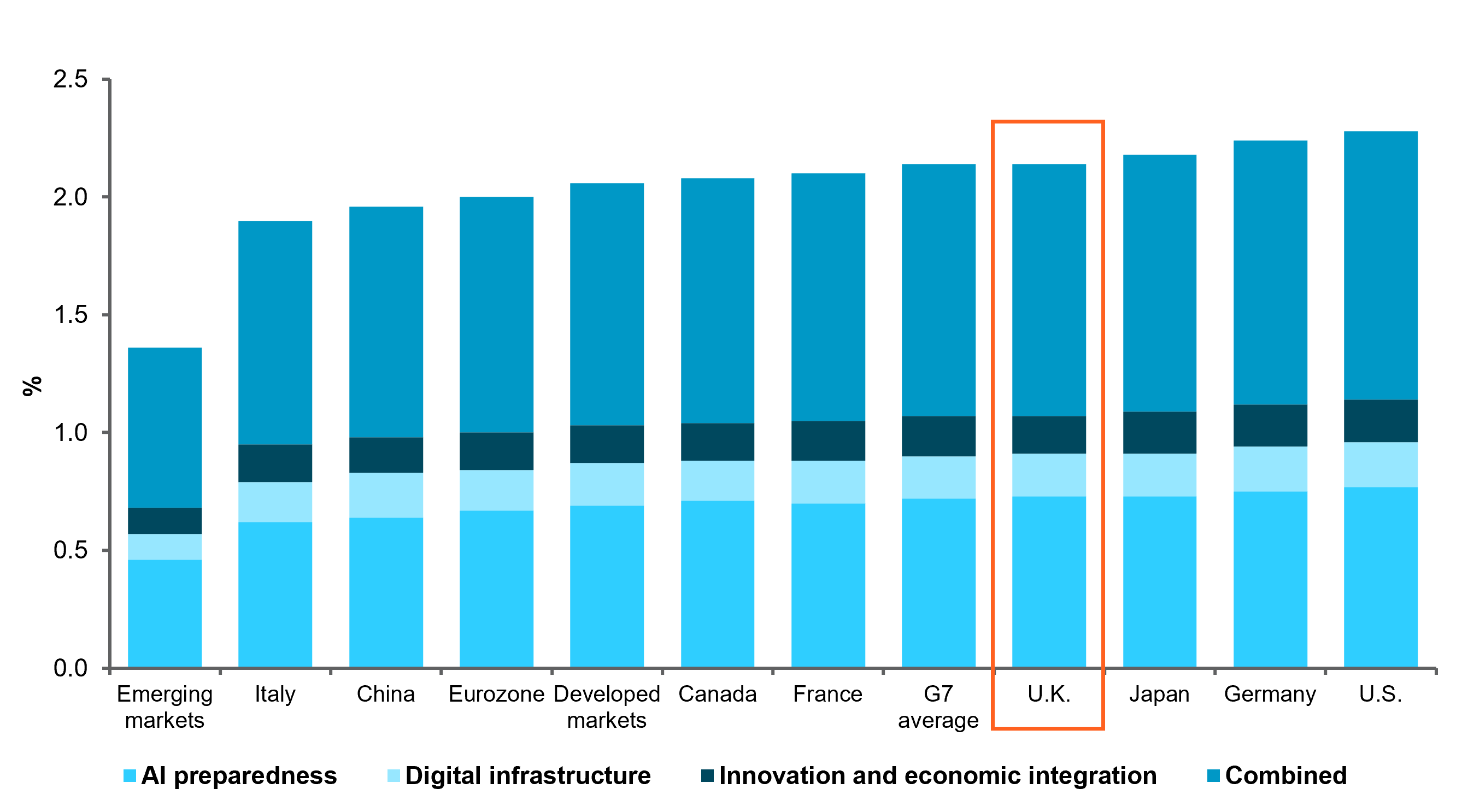
Upside risks to TFP as the U.K. is well prepared. Surprisingly, the recent International Monetary Fund (IMF) Fiscal Monitor listed the U.K. as one of the better fiscal performers in the developed world, anticipating a sharp reduction in the budget deficit from over 5% last year to just above 1% in 2031. The favorable comparisons don’t end there: by almost every measure relevant to an economy’s competitiveness in the AI age, the U.K. scores ahead of developed market and G7 averages. In AI preparedness, the U.K. ranks fourth among the world’s major economies. The country also scores highly in digital infrastructure, innovation and economic immigration. Taken together, these strengths position the U.K. economy to benefit substantially from AI-driven productivity gains and mitigate concerns about labor substitution.
EXHIBIT #2: THE U.K. IS COMPETITIVE IN AI READINESS AND INNOVATION
Source: IMF, BNY
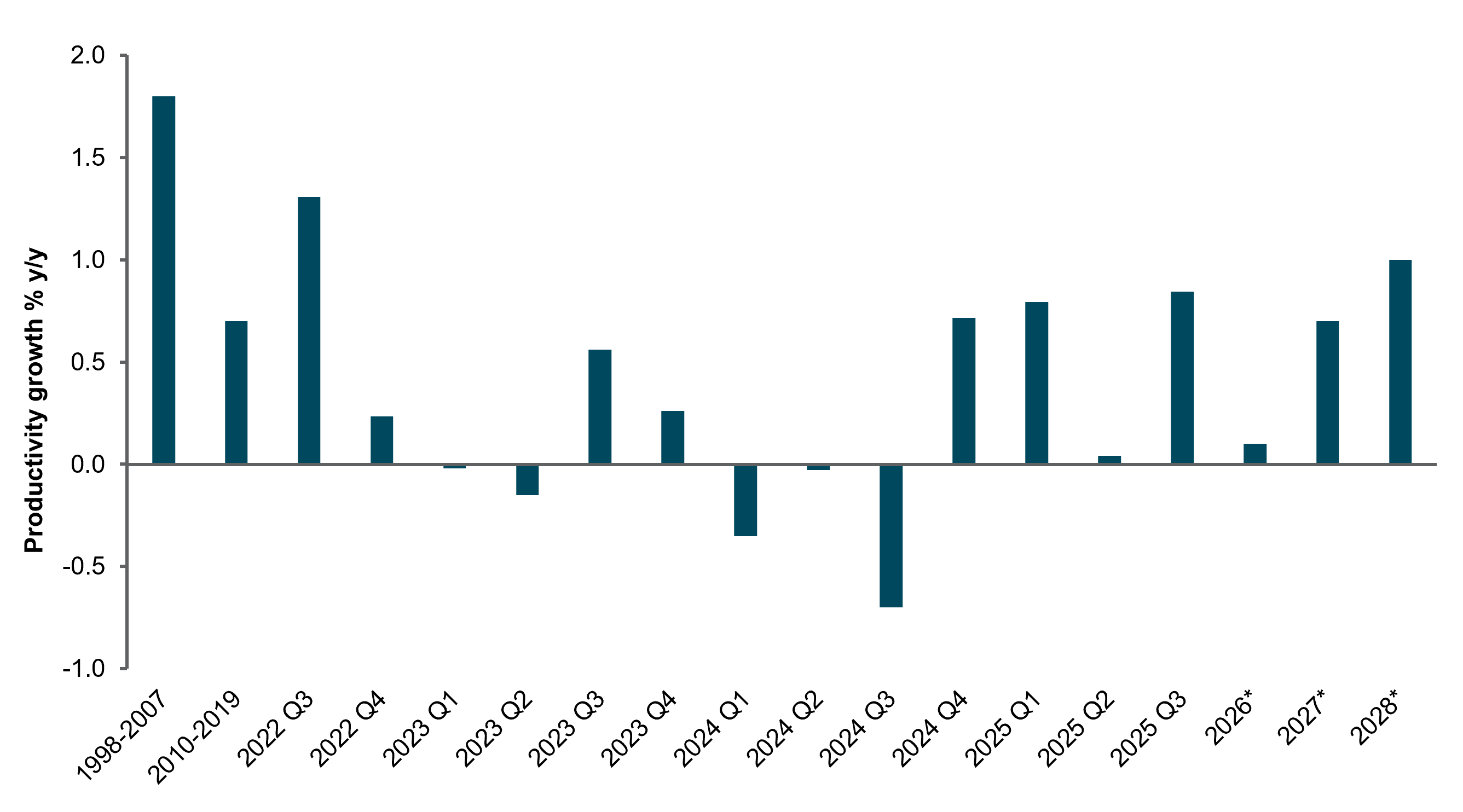
The improvement is already visible. U.K. productivity has always been difficult to measure, but the global financial crisis left a clear mark: based on BOE numbers, TFP growth between 2010 and 2019 was less than half the rate recorded in 1998–2007 (Exhibit 3). Excluding the pandemic years, the U.K. struggled alongside much of Europe, where supply challenges in labor and other raw inputs, coupled with excessive investment in low-productivity sectors such as public services and construction, also curtailed TFP. Since 2024, however, productivity has begun to regain momentum, coinciding with the growth in AI.
The consequences for monetary policy are clear. In our view, the BOE is fully embedding the impact of AI into monetary policy. Much has been made of Governor Andrew Bailey’s warnings about concentration risk in markets and financial stability risk – currently being amplified by stress in bond markets and high interest rates across maturities. Business survey findings also support the Monetary Policy Committee’s caution on rate hikes: the February Monetary Policy Report highlighted that the U.K. Decision Maker Panel Survey expected AI to “increase firms’ productivity by around 0.6% per year on average” over the next three years. The BOE noted that higher-than-expected productivity growth would put downward pressure on unit labor costs and support looser policy, all else being equal. The survey estimate has since risen to 0.9%; if the BOE follows through on its initial assumptions, current pricing for tighter policy is clearly excessive. The challenge is that “all else” isn’t equal: the global energy and supply environment is very different from February.
EXHIBIT #3: THE IMPROVEMENT IS NOW VISIBLE IN PRODUCTIVITY NUMBERS
Source: Bank of England, various inflation and monetary policy reports; *represents estimates
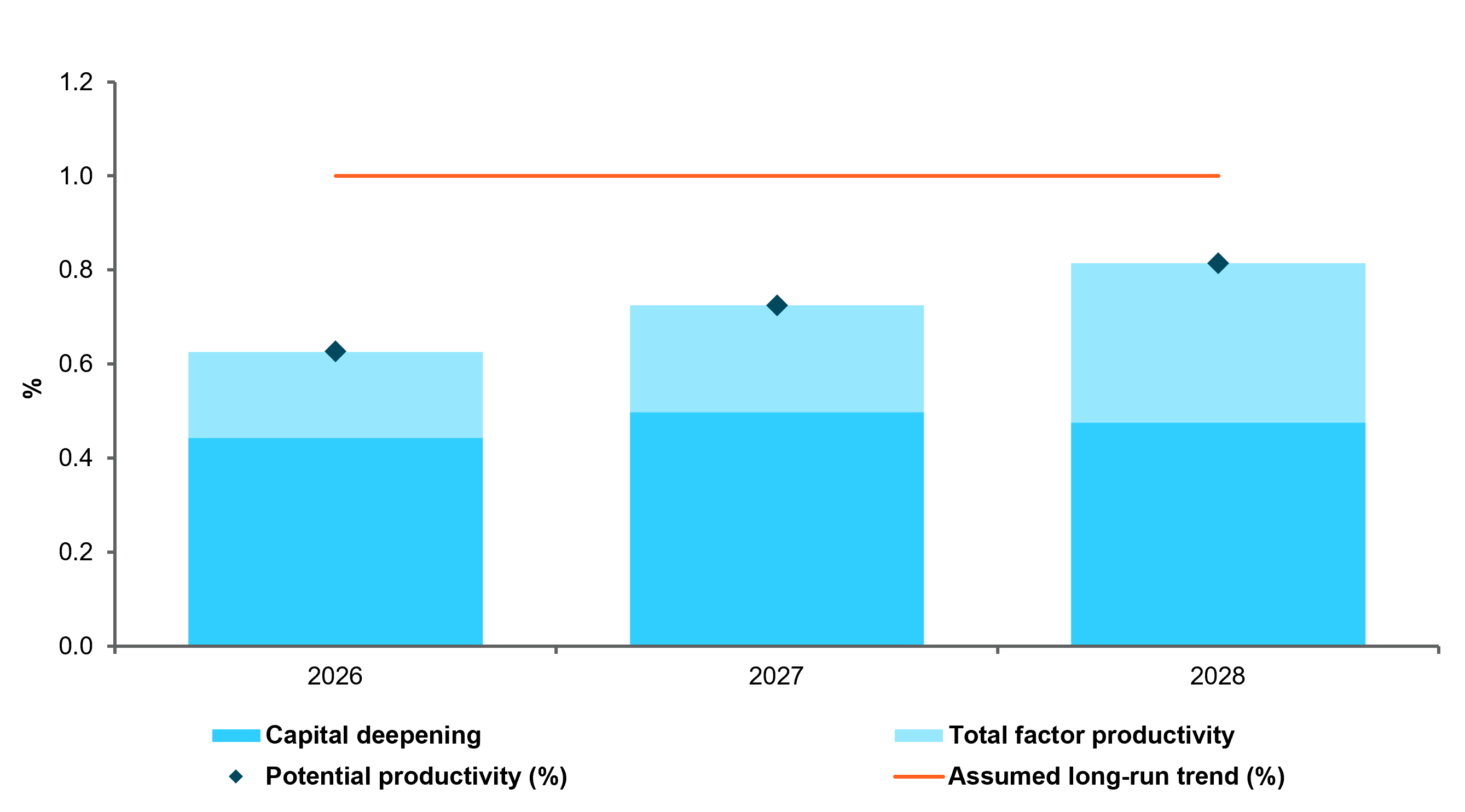
Capital deepening underscores the case for AI-driven business investment. The Decision Maker Panel estimate points to a substantial AI contribution of 0.9% to annual productivity growth, if realized. The survey estimate isn’t directly comparable with the 1% aggregate TFP growth baseline highlighted by the OBR and BOE. The U.K. ranks high in AI preparedness partly because of robust private sector business investment, which drives capital deepening – an increase in available capital services per worker. The BOE’s assumptions on the U.K.’s potential productivity growth rely heavily on sustained capital deepening alongside rising TFP (Exhibit 4). AI is making the difference: the BOE Agents’ survey (a key input to Monetary Policy Committee deliberations) highlighted that business contacts “intend to respond to future rises in demand by investing in automation and AI,” which counteracts second-round wage effects and is “consistent with further falls in monetary policy restrictiveness.” Labor substitution risks will arise, but they also support the case for looser policy by easing wage pressure.
Policy must lean into investment demand. Domestic and external bodies have validated the U.K.’s strengths and investment appeal. We believe government policy should “lean into” business investment and create stronger conditions for it. This is the classic case of fiscal spending delivering productivity gains and higher real rates through lower inflation and improved supply, rather than higher nominal rates. The IMF has already endorsed the U.K.’s fiscal rules and the annual budgetary process provides clarity. Together, lower nominal rates and looser monetary policy create a very favorable environment for government debt to perform. Capital deepening generates higher returns on additional capital invested in the economy, and continued TFP gains further raise potential productivity. At the current pace of TFP growth, the 1% long-run productivity growth rate assumed by the OBR and BOE can be reached within the next five years, and the additional 0.3pp of annual growth needed to meet the OBR’s long-term assumptions for fiscal sustainability is also in sight.
EXHIBIT #4: CAPITAL DEEPENING IS NOW ANCHORING POTENTIAL PRODUCTIVITY
Source: Bank of England, February 2026 Monetary Policy Report, BNY
The U.K. specializes in services. The erosion of services in the years after the global financial crisis directly contributed to the decline in productivity – the Organisation for Economic Co-operation and Development estimates that weakening productivity within services accounted for 60% of the total decline. The contribution from the decline in manufacturing was negligible. Even with a decline in sterling, there was no clear benefit to manufacturing, and the U.K. economy didn’t rebalance. In recent years, governments worldwide have been pushing for a “re-industrialization” narrative. While there’s a clear case for resilience, and reinvention was required after Brexit, there’s little reason for the U.K. to pursue a comprehensive shift from services toward manufacturing. There’s very little academic evidence to support the notion that a high manufacturing share makes an economy more productive.
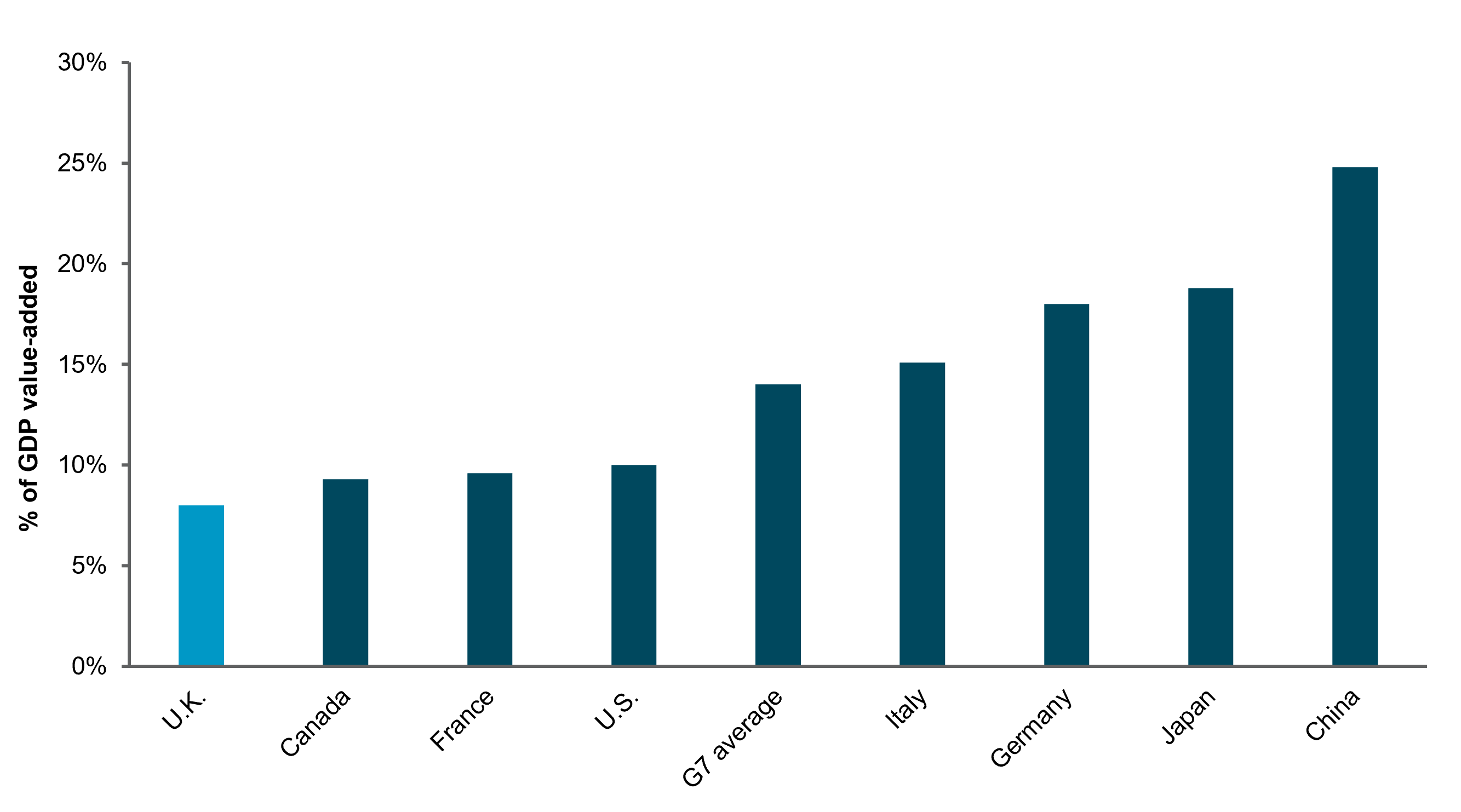
Rebalancing means moving against the U.K.’s strengths. Data show that the U.K.’s share of manufacturing in GDP value-added is the lowest in the G7. Services are the economy’s center of gravity, and government reforms or incentives should reflect that. The current AI investment drive in the U.S.-led technology stack is largely geared toward services. In contrast, China is looking more at industrial applications, while its access to global services markets is also more restricted. The U.K. is in a strong position to apply AI across its services base and reverse the services-related deterioration that accounted for 60% of the overall productivity decline after the global financial crisis. Over 80% of the U.K.’s economic output and labor force is in services; forcing a shift away from that base, rather than allowing a market-driven framework, would carry very high fiscal risks. As the U.K. revisits its relationship with the EU, it’s imperative that the final arrangement doesn’t require the U.K. to mirror the EU’s economic structure. It’s unreasonable to assume that the U.K. can push its manufacturing share of GDP value-added to continental levels with its current workforce.
EXHIBIT #5: U.K. RANKS WELL BELOW G7 AVERAGE IN MANUFACTURING SHARE OF GDP VALUE-ADDED
Source: World Bank, BNY
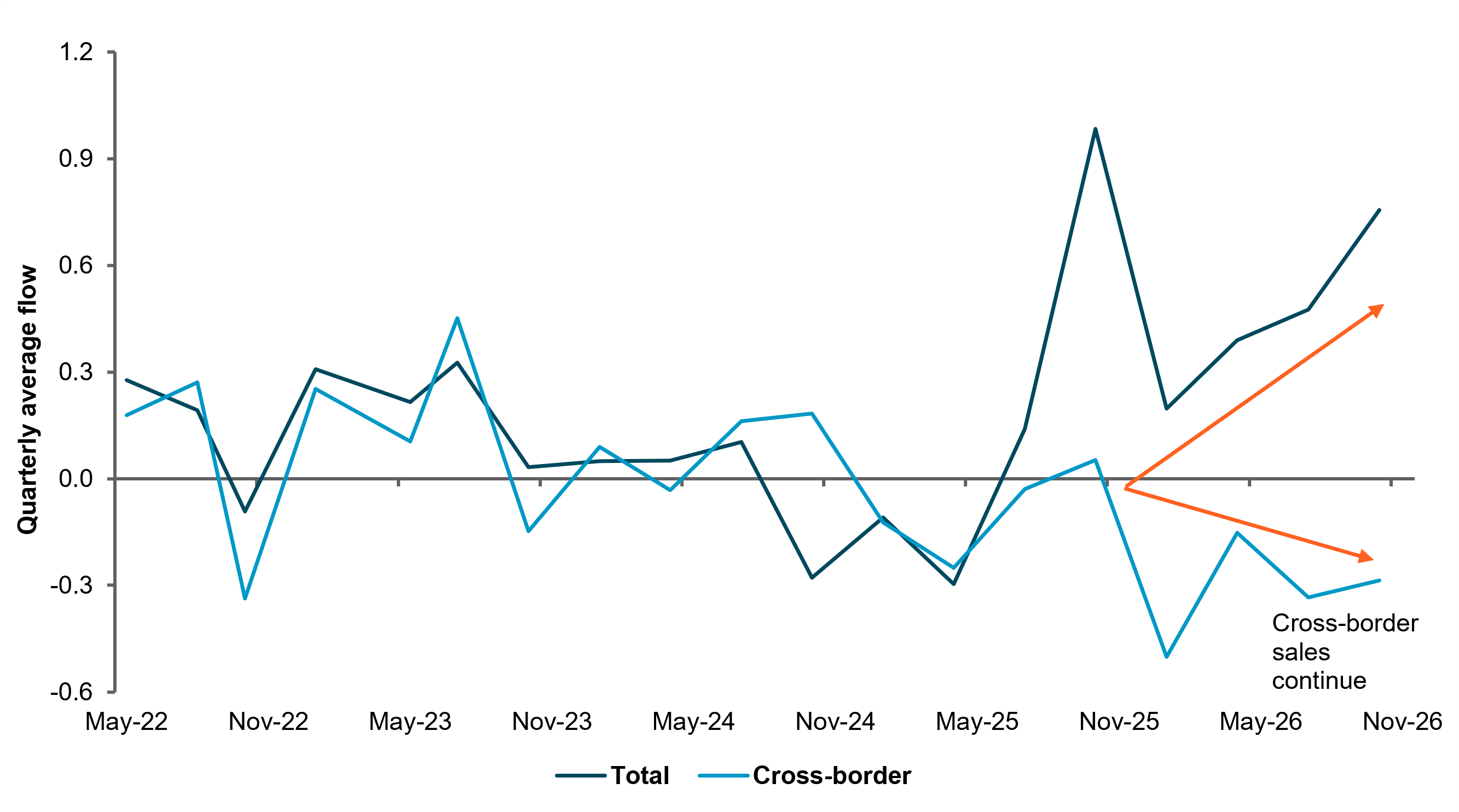
High real rates are a given. Even before we apply rosy scenarios, we believe gilts are very attractive at current levels. Domestic investors agree: iFlow has shown a surge in domestic gilt buying over the past two years. As gilt yields have risen, inflation expectations, as measured by breakeven rates, have remained stable. This has helped lift real yields, benefiting the U.K.’s large pool of liability-driven investment managers by making it easier to fund pension liabilities. Weak cross-border demand remains the main challenge and clearest reflection of elevated risk premia in gilts.
Flow alignment collapsed in 2024. Even during the mini-budget crisis of 2022, cross-border investors were closely aligned with U.K.-based investors in gilt flows. A major break began in H2 2024, and alignment hasn’t recovered. Concerns about fiscal sustainability, especially the lack of progress in containing spending, have been the main factor driving cross-border investors away from gilts. High real rates in the U.S. and a general preference for U.S. assets have also contributed to the outflow. Turning to U.K.-specific factors, we appreciate concerns over the lack of spending cuts. However, the change in the productivity narrative means the U.K. may have a fighting chance of generating sufficient growth to pay for current levels of spending in real terms, per the OBR’s projections above. If future governments can lower spending as a share of GDP while achieving stronger AI-led productivity growth, the U.K.’s fiscal trajectory will compare even more favorably to G7 peers than the IMF’s latest projections.
GBP’s level is a factor. Cross-border investors will have to contend with foreign exchange swings, and this may explain near-term hesitancy. We have greater sympathy with this view as current expectations for BOE tightening are excessive, and we expect one more rate hike in this cycle. Until it’s clear where rate differentials between the BOE, Fed and ECB will settle, cross-border interest will remain soft. Recent data suggest that selling isn’t increasing, and at the margin, some rotation away from the Eurozone and back into the U.K. is possible due to current stress in France. A weaker trade-weighted GBP, combined with fiscal credibility and peaking real yields, could be needed for a broad recovery in non-U.K. investors’ flows and holdings.
EXHIBIT #6: CROSS-BORDER INTEREST IN GILTS HAS BEEN WEAK SINCE LATE 2024
Source: BNY
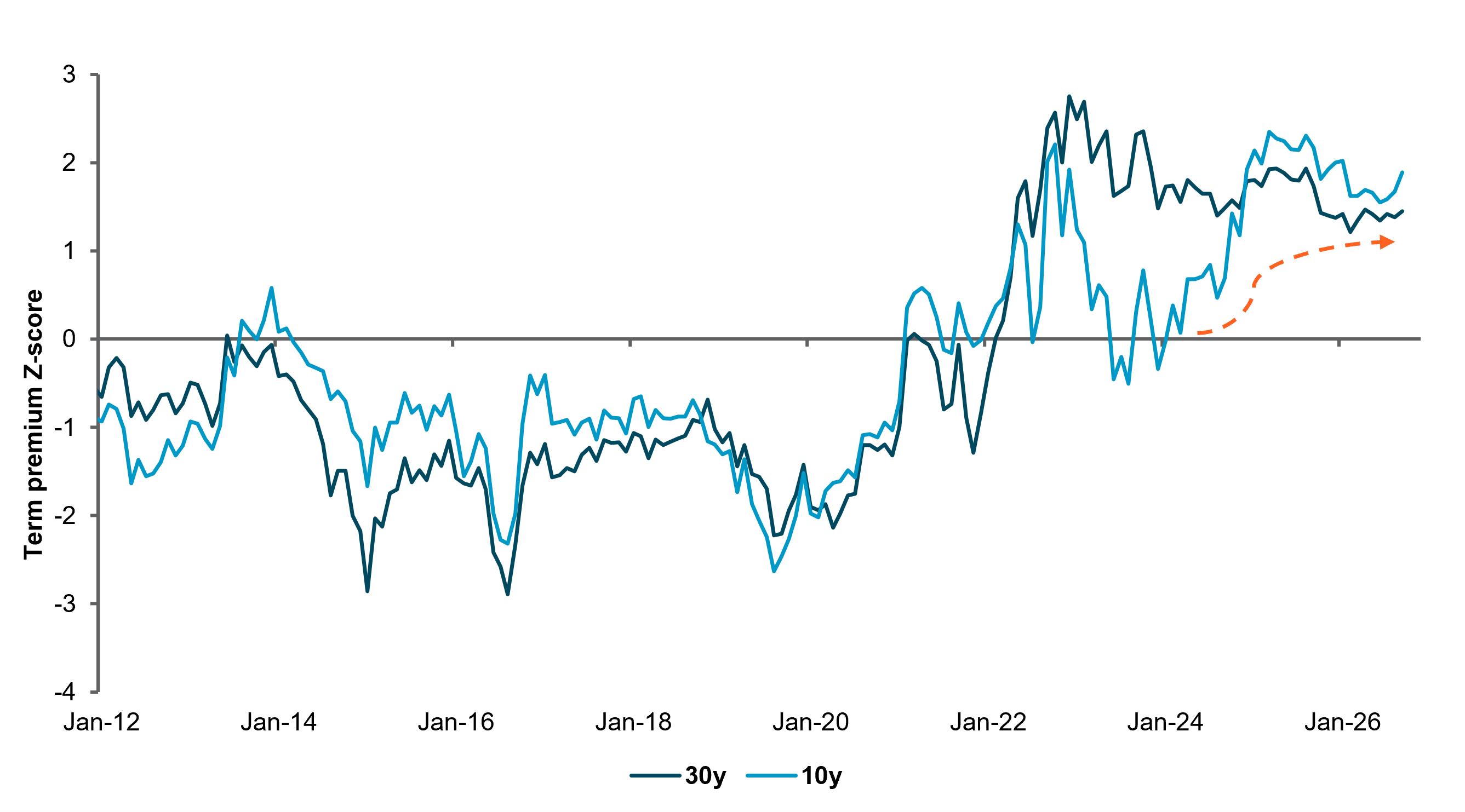
Term premia are the main test. Term premia are the best way to assess risk-reward in government bond markets. The 30y and 10y gilt term premia are currently at 1.5 and 1.9 standard deviations above their respective five-year means. These levels are just off the extremes but are at post-global financial crisis highs. The evolution of term premia suggests that the level of policy rates is the main determinant of performance, but there are episodes (e.g. the mini-budget) when term premia are pushed to extremes, which can attract value-driven buyers. For example, the 10y term premium collapsed between October 2022 and June 2023 but has recently rebounded to above mini-budget levels. Simple mean-reversion suggests scope for term premia to fall by 150bp in the 30y gilt and 100bp in the 10y gilt from current levels.
EXHIBIT #7: GILT TERM PREMIUM AT MULTI-CYCLE HIGHS
Source: Bloomberg, BNY
Prolonged inflation risks. Contrary to popular narratives, the main spending component that affected fiscal credibility in 2022 was the energy guarantee rather than income tax adjustments. There are similar pressures this winter, though the government is aware of limited fiscal tolerance for blanket guarantees and will take a more targeted approach. The U.K.’s energy resilience still leaves much to be desired, which means prolonged supply stress could result in fiscal slippage.
Second-round inflation effects. If the market’s current pricing on the BOE proves correct, second-round inflation effects will emerge through wages. While we remain confident that productivity gains can mitigate these effects over time, the immediate fiscal costs will be reflected in term premia, especially through the triple-lock mechanism. The triple lock raises the full state pension by the highest of inflation, 2.5% or wage growth. The additional fiscal cost of the policy this fiscal year is 0.4% of GDP. Without politically difficult decisions, sustained increases in pension spending will raise the productivity gains needed to offset these outlays.
AI doesn’t deliver. The OBR and BOE are raising their productivity forecasts based on realized gains, surveys and assumptions that investment in AI to boost services productivity will remain high. If the purported TFP gains prove optimistic, or financial conditions restrict investment and capital deepening, projected productivity levels and their long-term growth trends (Exhibit 4) would need to be revised down. The OBR’s “low productivity” scenario (Exhibit 1) could then move from downside risk to baseline, with a risk of severe adjustments within the next decade.