Please ensure Javascript is enabled for purposes of website accessibility Comparing concentration risk around the globe - CH - BNY Investments
ch
de
intermediary
intermediary
false
true
Gathering data
Disclaimer Not Available

Comparing concentration risk around the globe

comparing-concentration-risk-around-the-globe

While some fear the S&P 500 is too concentrated in its top 10 stocks, our analysis tells us something different. 
 

comparing-concentration-risk-around-the-globe


The top ten companies in the S&P 500 – largely technology names – comprise a third of the index’s market capitalization – near the highest in history. While these stocks have driven a period of strong outperformance relative to other regional equity indices, some investors worry that this concentration can lead to lower returns if these stocks’ profitability were to slow

However, when comparing the weight of the top 10 U.S. stocks to equity concentrations abroad, concentration becomes less worrisome. The top 10 stocks of Germany, Brazil, France, South Korea and China, respectively, constitute 50% or more of each country’s equity index. The concentration of the top 10 stocks in the S&P 500 of 34.4% appears less of a concern in comparison. In addition, the concentration in other regions like Japan and Emerging Markets is only marginally lower at 27-28%.

Like most metrics used to assess the qualities and appeal of an individual stock, index metrics such as concentration are most meaningful when considered relative to their peers. In our view, the lower concentration of S&P 500 stocks makes U.S. equities attractive relative to their foreign counterparts, supporting our preference for U.S. large cap stocks.
 

VERWANDTE THEMEN
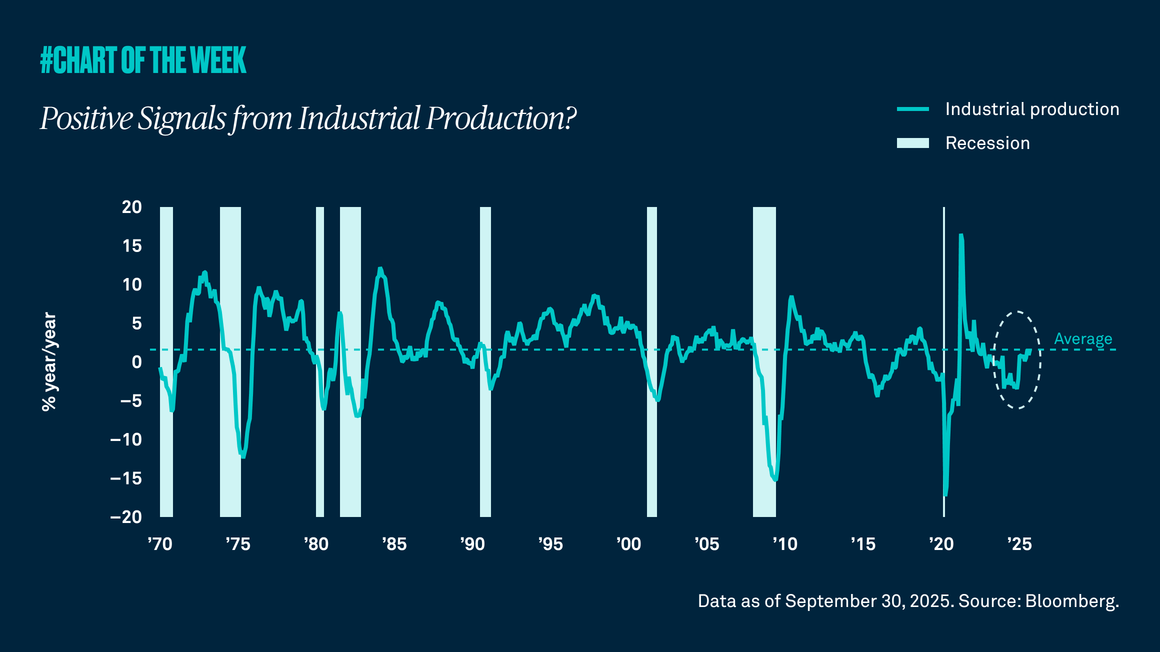
Positive signals from industrial production?
Chart of the week | Makroökonomisch

Industrial production is a proxy for the level of manufacturing in the economy, and last week’s report showed the highest growth rate in three years. Not only is this positive for the manufacturing sector and those companies tied to it, but it is also an indication that a recession may be unlikely in the near term.

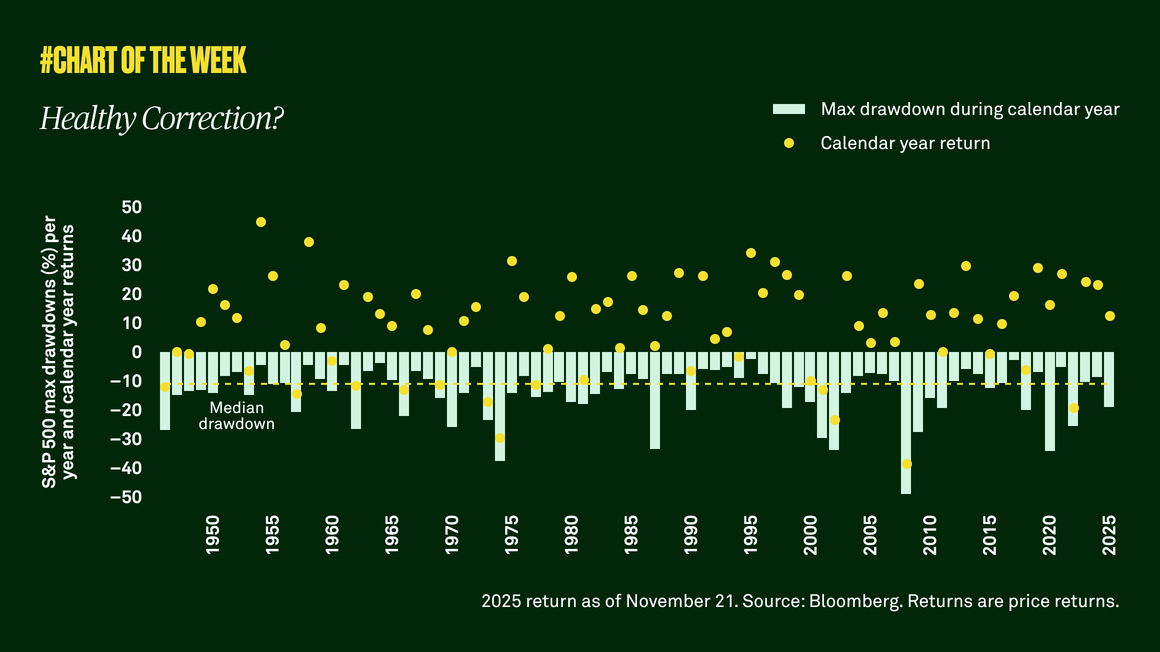
Healthy correction?
Chart of the week | Makroökonomisch

After climbing 17% year to date through late October, the S&P 500 declined 5% through November 20. We believe the market was due for a healthy correction. While further downside is possible, it would not concern us.

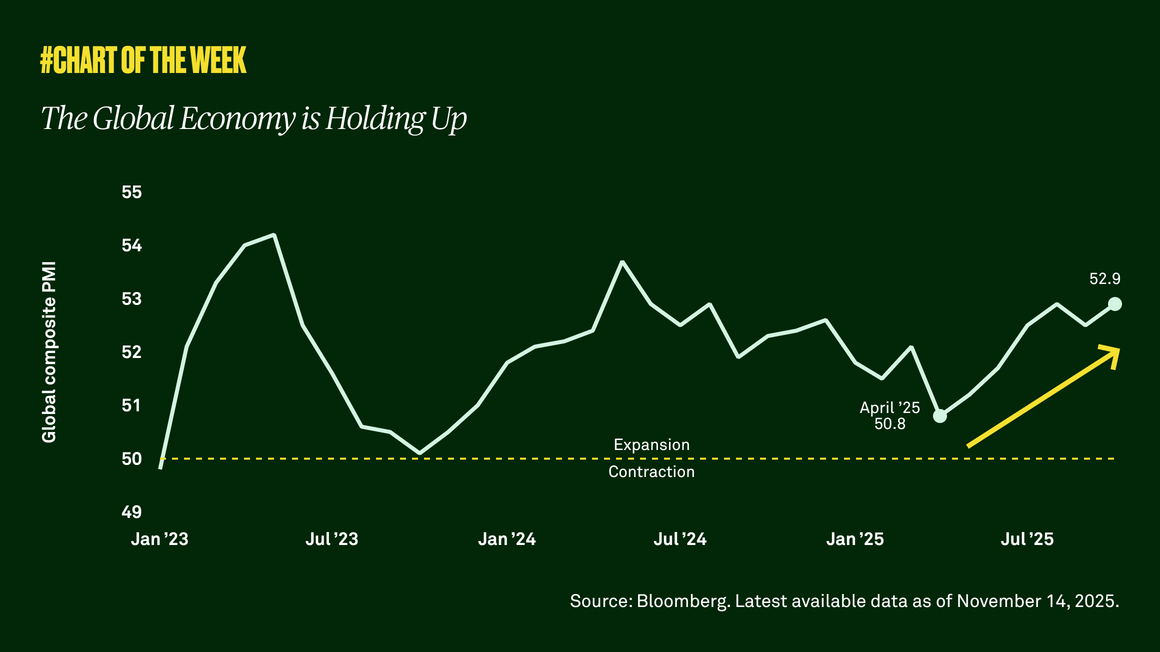
The global economy is holding up
Chart of the week | Makroökonomisch

This past year was rife with risks to the global economy: policy changes, tariff uncertainty and more. Yet, the global economy held up as manufacturing and services activity strengthened across the world. We see an opportunity for U.S. investors to diversify geographically.

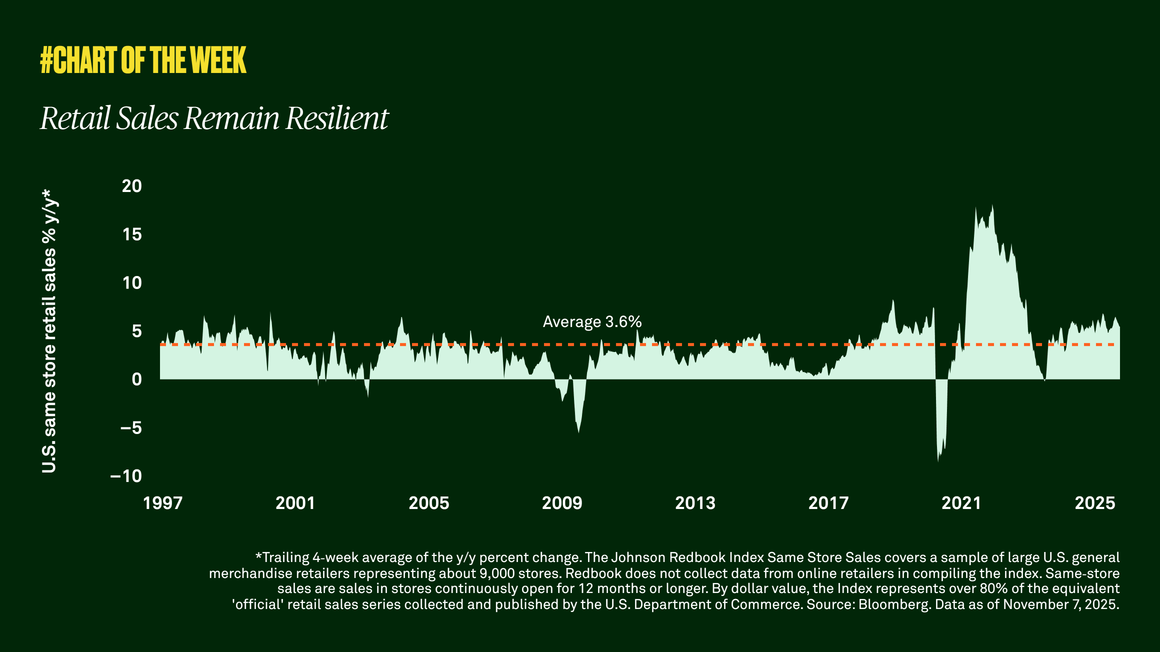
Retail sales remain resilient
Chart of the week | Makroökonomisch

Considering the slowing job market, we dove into retail sales data to search for signs of the direction of household spending. We analyzed existing-store sales and found that, despite the softening labor market and concerns about growth, aggregate consumer spending remains resilient.

Gathering data
Disclaimer Not Available

Dies ist eine Marketingkommunikation